Wind Power For My House: The Definitive Guide to Residential Wind Turbines
Ever gazed at your electricity bill and wondered if there’s a better, cleaner way? Maybe you’ve seen those towering wind turbines on the horizon and thought, “Could that work for my home?” You’re not alone. The idea of harnessing the wind for your own power is incredibly appealing, offering energy independence and a lighter carbon footprint.
Table of Contents
- Wind Power For My House: The Definitive Guide to Residential Wind Turbines
- Is Residential Wind Power Right For YOU? The Honest Truth Upfront
- The Golden Rule: Wind Speed is King
- Space, Zoning, and Aesthetics: More Than Just Wind
- Energy Needs vs. Wind Production
- How Does a Residential Wind Turbine System Actually Work?
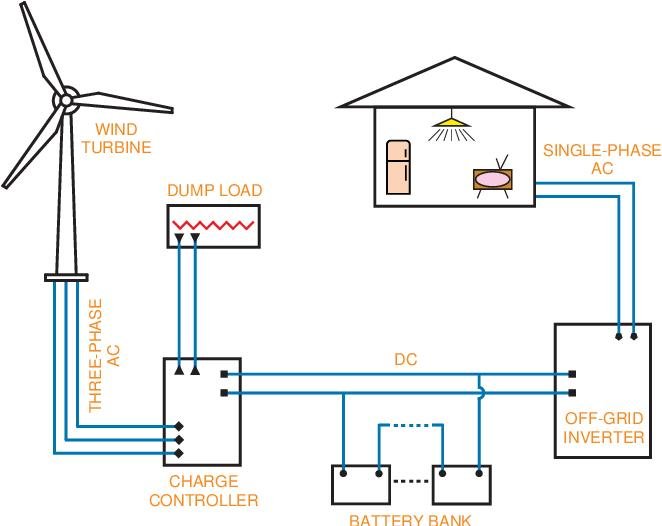
- Core Components of Your Wind Power Setup
- Types of Residential Wind Turbines
- What Size Wind Turbine Do You Really Need?
- Matching Power Output to Your Home’s Consumption
- Factors Affecting Turbine Sizing
- The Cost of Going Windy: Budgeting for Your Home Wind System
- Initial Investment: Turbines, Towers, & Installation
- Hidden Costs & Ongoing Maintenance
- Incentives and ROI: Making it More Affordable
- Wind vs. Solar: Which Renewable is Best For Your Home?
- A Head-to-Head Comparison
- The Hybrid Advantage: Why Not Both?
- The Road to Installation: From Assessment to Powering Up
- Step 1: Site Assessment & Wind Resource Evaluation
- Step 2: Navigating Permitting & Zoning
- Step 3: Choosing Your System & Installer
- Step 4: Installation & Grid Connection
- The Pros and Cons of Residential Wind Turbines
- Advantages: Why Go With Wind?
- Disadvantages: The Challenges to Consider
- Wind Power For My House: The Definitive Guide to Residential Wind Turbines
- Is Residential Wind Power Right For YOU? The Honest Truth Upfront
- The Golden Rule: Wind Speed is King
- Space, Zoning, and Aesthetics: More Than Just Wind
- Energy Needs vs. Wind Production
- How Does a Residential Wind Turbine System Actually Work?
- Core Components of Your Wind Power Setup
- Types of Residential Wind Turbines
- What Size Wind Turbine Do You Really Need?
- Matching Power Output to Your Home’s Consumption
- Factors Affecting Turbine Sizing
- The Cost of Going Windy: Budgeting for Your Home Wind System
- Initial Investment: Turbines, Towers, & Installation
- Hidden Costs & Ongoing Maintenance
- Incentives and ROI: Making it More Affordable
- Wind vs. Solar: Which Renewable is Best For Your Home?
- A Head-to-Head Comparison
- The Hybrid Advantage: Why Not Both?
- The Road to Installation: From Assessment to Powering Up
- Step 1: Site Assessment & Wind Resource Evaluation
- Step 2: Navigating Permitting & Zoning
- Step 3: Choosing Your System & Installer
- Step 4: Installation & Grid Connection
- The Pros and Cons of Residential Wind Turbines
- Advantages: Why Go With Wind?
- Disadvantages: The Challenges to Consider
But let’s be honest: residential wind power isn’t as straightforward as slapping some solar panels on your roof. It’s a powerful solution, but it’s also highly site-specific. So, before you start picturing a mini-turbine in your backyard, let’s cut through the noise and figure out if wind power truly makes sense for your house.
What You’ll Learn:
- Whether your property is genuinely suitable for wind power.
- How residential wind turbine systems actually work.
- How to size a system to meet your home’s energy demands.
- The real costs involved, including potential savings and incentives.
- A frank comparison between wind and solar power for homes.
- The practical steps from assessment to installation.
Is Residential Wind Power Right For YOU? The Honest Truth Upfront
The dream of a wind-powered home is fantastic, but the reality is, it’s not for every homeowner. The first step isn’t looking at turbines; it’s looking at your property and your local conditions. Here’s what you absolutely need to consider.
The Golden Rule: Wind Speed is King
This is the make-or-break factor. A wind turbine, regardless of its sophistication, is useless without consistent, strong wind. Most residential turbines require an average annual wind speed of at least 10 to 11 miles per hour (MPH), or about 4.5 to 5 meters per second, to be economically viable. Anything less, and you’ll struggle to generate enough power to justify the investment.
How to Assess Your Site’s Wind Potential:
- Online Wind Maps: Websites like the National Renewable Energy Laboratory (NREL) offer wind resource maps for the U.S. These provide a good starting point but are generalized.
- Local Weather Data: Check historical wind data from nearby airports or weather stations. Remember, your specific site might differ due to local topography.
- Anemometer Study: For the most accurate assessment, a professional might install an anemometer (a wind speed measuring device) on a temporary tower on your property for several months. This gives you site-specific data.
- Professional Site Assessment: This is highly recommended. An experienced installer will consider obstructions (trees, buildings), local topography, and other factors to give you a realistic estimate of your wind resource.
Here’s a rough idea of how wind speed impacts power generation:
| Average Annual Wind Speed (MPH) | Viability for Residential Wind | Notes |
|---|---|---|
| < 10 | Poor | Unlikely to produce sufficient energy for a reasonable ROI. |
| 10-12 | Marginal to Good | Requires careful consideration and potentially larger turbines. |
| 12-14 | Good | Favorable conditions for most residential turbines. |
| > 14 | Excellent | High energy production potential, faster ROI. |
Space, Zoning, and Aesthetics: More Than Just Wind
Unlike solar panels that can fit discreetly on a roof, wind turbines require significant space and height. This means:
- Land Requirements: You’ll need enough land for the turbine’s tower, guy wires (if applicable), and a sufficient setback from property lines and buildings to avoid turbulence and noise issues. Generally, rural properties are better suited than suburban ones.
- Local Permitting & Ordinances: This is a huge hurdle for many. Local governments have strict rules regarding turbine height, noise levels, and visual impact. You might face zoning restrictions, requiring special permits or variances. Some HOAs may ban them outright. This isn’t just a formality; it can be a deal-breaker.
- Visual Impact & Noise: Let’s be real – a turbine is a noticeable structure. While modern turbines are quieter than older models, they still produce some noise, especially in higher winds. Neighbors might have concerns about both the visual and auditory impact.
Energy Needs vs. Wind Production
Before investing, understand how much energy your home actually consumes. Look at your past utility bills to find your average monthly kilowatt-hour (kWh) usage. A 1.5-kW wind turbine, for example, might meet the needs of a home requiring 300 kWh per month in a location with good wind. The key is to match the turbine’s potential output to your specific consumption, or at least understand what percentage of your energy bill you realistically expect to offset.
How Does a Residential Wind Turbine System Actually Work?
Understanding the basics of how these systems convert wind into usable electricity helps you appreciate the technology and make informed decisions.
Core Components of Your Wind Power Setup
A residential wind power system is more than just a spinning propeller. It’s an integrated setup designed to capture, convert, and deliver electricity.
- Turbine: The heart of the system. It consists of:
- Rotor: The blades that catch the wind and spin.
- Nacelle: The housing behind the blades containing the gearbox (if present) and generator.
- Generator: Converts the mechanical energy of the spinning rotor into electricity.
- Tower: Lifts the turbine high enough to access smoother, faster winds above ground obstructions. Tower height significantly impacts energy production. Taller towers mean more wind and more power.
- Inverter: Converts the direct current (DC) electricity produced by the turbine into alternating current (AC) electricity, which is what your home appliances use and what the grid accepts.
- Controller: Manages the turbine’s operation, protecting it from high winds and optimizing power output.
- Batteries (Optional): For off-grid or hybrid systems, batteries store excess electricity for use when the wind isn’t blowing.
- Grid Connection: For grid-tied systems, this connects your home’s electrical system to the utility grid, allowing you to draw power when needed and send excess power back.
System Types:
- Grid-Tied: Connected to the utility grid. You use your wind power first, then draw from the grid if needed, or send excess power back for credits (net metering). Most common for homes.
- Off-Grid: Completely independent of the utility grid. Requires battery banks for storage and often a backup generator.
- Hybrid: Combines wind with another renewable source (like solar) and/or a battery bank, often still grid-tied. This offers greater reliability.
Types of Residential Wind Turbines
While all turbines harness wind, they come in a few different designs:
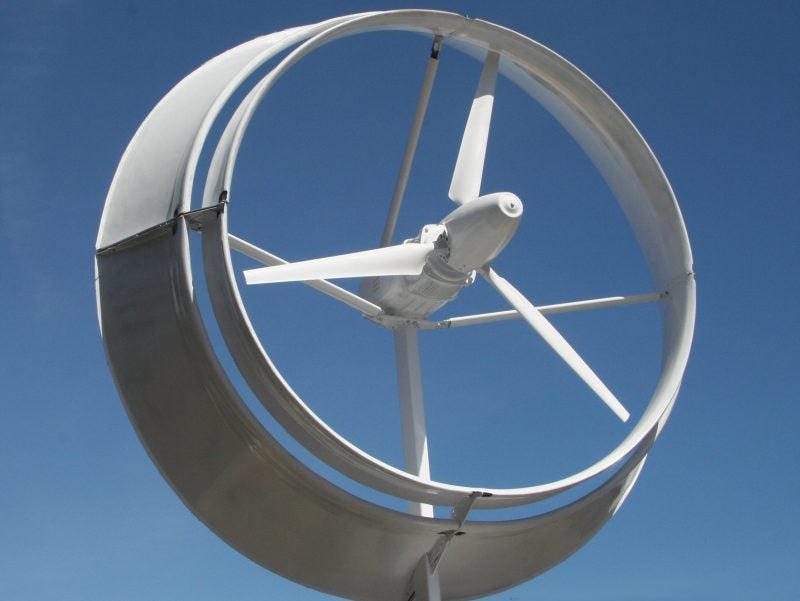
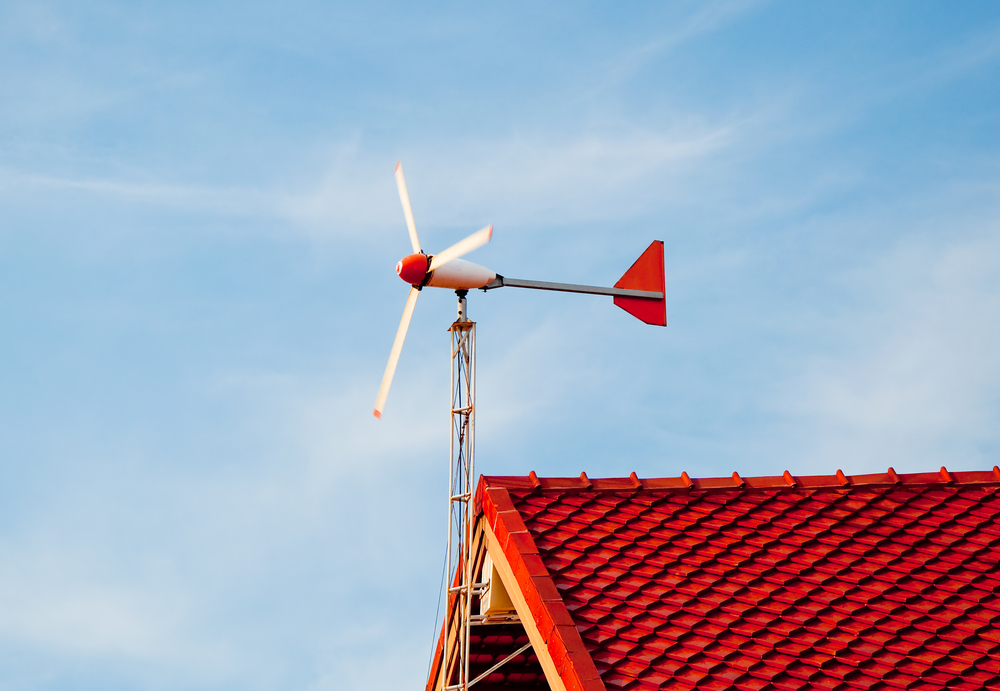
- Horizontal-Axis Wind Turbines (HAWTs): These are what most people picture – a propeller-like rotor facing into the wind, mounted on a tall tower. They are highly efficient but require a mechanism to yaw (turn) into the wind.
- Vertical-Axis Wind Turbines (VAWTs): These have blades that spin around a vertical axis. Think egg-beater or Darrieus designs.
- Pros: Don’t need to orient into the wind, can be quieter, often have a smaller footprint, and can potentially be mounted closer to the ground (though higher is always better for wind capture).
- Cons: Generally less efficient than HAWTs for the same swept area, often have lower starting torque.
For most residential applications, well-designed HAWTs often offer better efficiency and power output, assuming suitable wind conditions and space.
What Size Wind Turbine Do You Really Need?
This isn’t a one-size-fits-all question. The right turbine size depends on your energy appetite and your specific wind resource.
Matching Power Output to Your Home’s Consumption
First, grab those utility bills. Most American homes use between 700-1,000 kWh per month. Small residential turbines typically range from 400 watts to 10 kilowatts (kW).
- A 1.5 kW turbine in a location with a 14 MPH annual average wind speed could produce about 300 kWh per month, offsetting a portion of a smaller home’s bill.
- A 5 kW turbine in similar conditions might produce closer to 1,000 kWh per month, potentially covering most or all of a typical home’s needs.
Here’s a general guide:
| Home Size/Energy Needs | Typical Monthly Usage (kWh) | Estimated Turbine Capacity (kW) |
|---|---|---|
| Small/Supplemental Power | < 500 | 0.4 kW – 2 kW |
| Average Home | 500 – 1,000 | 2 kW – 5 kW |
| Large Home/High Usage | > 1,000 | 5 kW – 10 kW |
Remember, these are estimates. Your actual production will depend heavily on your specific wind resource.
:max_bytes(150000):strip_icc()/wind-turbine-generator-on-house-roof-90967703-b9619befbf954726ae92dfb6154711f2.jpg)
Factors Affecting Turbine Sizing
- Average Wind Speed: Higher average speeds mean you can get more power from a smaller turbine.
- Desired Offset: Do you want to cover 25%, 50%, or 100% of your electricity needs?
- Budget: Larger turbines mean higher upfront costs.
- Energy Efficiency: The best first step to ‘sizing’ any renewable system is to make your home as energy-efficient as possible. Less demand means a smaller, cheaper system.
The Cost of Going Windy: Budgeting for Your Home Wind System
Let’s talk money. Residential wind power is an investment, and understanding the costs involved is crucial for any homeowner considering this path.
Initial Investment: Turbines, Towers, & Installation
The total cost for a small residential wind system can range anywhere from $10,000 to $70,000 or more, depending heavily on the turbine size, tower height, and installation complexity. Here’s a breakdown:
- Turbine Itself: A 1 kW turbine might cost $3,000 – $8,000. A 5 kW turbine could be $15,000 – $30,000. These are just the turbine units.
- Tower: This is often as expensive as the turbine itself, if not more. A tall, sturdy tower can cost $5,000 – $20,000, depending on height and type (e.g., guyed vs. freestanding).
- Installation Labor: Erecting a tower and turbine requires specialized equipment and expertise. This can add another $5,000 – $15,000+.
- Balance of System (BOS) Components: Inverter, controller, wiring, foundation materials, and potentially batteries for off-grid or hybrid systems can easily add $2,000 – $10,000+.
Here’s an estimated cost range for a typical grid-tied residential system (excluding batteries):
| Component | Estimated Cost Range (USD) | Notes |
|---|---|---|
| Turbine (1kW – 5kW) | $3,000 – $30,000 | Price varies significantly with capacity and brand. |
| Tower | $5,000 – $20,000 | Cost depends on height, type (guyed/freestanding), and materials. |
| Inverter & Controller | $1,500 – $5,000 | Essential for converting DC to AC and managing power. |
| Installation & Labor | $5,000 – $15,000+ | Requires specialized equipment and skilled professionals. |
| Foundation & Wiring | $1,000 – $5,000+ | Groundwork, trenching, electrical conduits. |
| Total Estimated Cost (Pre-Incentives) | $15,500 – $75,000+ | Highly variable based on system size, location, and complexity. |
Hidden Costs & Ongoing Maintenance
Beyond the sticker price, factor in:
- Permitting Fees: These can vary widely by municipality.
- Professional Site Assessment: An essential upfront cost to ensure viability.
- Maintenance: While turbines are generally robust, they aren’t maintenance-free. Expect occasional inspections, lubrication, and potential repairs (e.g., blade damage, bearing replacement). This might be $100-$500 annually, plus larger repairs every 5-10 years.
- Insurance: You’ll likely need to inform your homeowner’s insurance provider.
Incentives and ROI: Making it More Affordable
The good news is that financial assistance can significantly reduce your net cost:
- Federal Solar Investment Tax Credit (ITC): This credit also applies to small wind turbines. As of early 2024, it’s 30% of the installed cost, a substantial saving. (Always verify current federal incentives).
- State and Local Programs: Many states, counties, and even utilities offer their own incentives, rebates, or grants for renewable energy. Check the DSIRE (Database of State Incentives for Renewables & Efficiency) for your area.
- Net Metering: If you’re grid-tied, net metering allows you to send excess electricity back to the grid and receive credits on your bill, further reducing your energy costs.
With incentives, your payback period (the time it takes for your energy savings to offset the initial cost) could be anywhere from 8 to 20 years, highly dependent on your electricity rates, system cost, and wind resource.
Wind vs. Solar: Which Renewable is Best For Your Home?
When thinking about home renewables, solar panels often come to mind first. But how does wind stack up?
A Head-to-Head Comparison
Both wind and solar are fantastic clean energy sources, but they have distinct characteristics:
| Feature | Residential Wind Power | Residential Solar Power |
|---|---|---|
| Primary Resource | Wind speed (consistent & strong) | Sunlight (consistent & abundant) |
| Space Requirements | Significant land for tower, setbacks. Requires clear air space. | Roof space or small ground mount area. |
| Cost per Watt | Generally higher upfront. (e.g., $3-$8/watt installed) | Generally lower upfront. (e.g., $2.50-$4/watt installed) |
| Intermittency | Generates power when wind blows (day/night, winter/summer). | Generates power when sun shines (daytime, stronger in summer). |
| Maintenance | Periodic inspections, lubrication, potential larger repairs. | Minimal; occasional cleaning, inverter check. |
| Permitting/Zoning | Often complex due to height, noise, visual impact. | Generally simpler, primarily structural and electrical. |
| Ideal Location | Rural, open areas with consistent high winds. | Anywhere with good sun exposure, urban or rural. |
For most homeowners, especially in suburban or urban settings, solar power remains the more accessible and often more cost-effective option due to lower upfront costs, simpler installation, and fewer zoning hurdles.
The Hybrid Advantage: Why Not Both?
Here’s where it gets interesting: wind and solar often complement each other beautifully. Wind tends to be stronger during winter months and at night, precisely when solar output is lower. By combining a smaller wind turbine with a solar array, you can achieve greater energy independence, more consistent power generation throughout the day and year, and potentially reduce the need for large battery storage.
The Road to Installation: From Assessment to Powering Up
If you’ve crunched the numbers, assessed your site, and decided residential wind power might be for you, here’s a typical path forward.
Step 1: Site Assessment & Wind Resource Evaluation
Your first real action should be to hire a professional wind energy consultant or installer to conduct a detailed site assessment. They’ll look at:
- Wind Speed and Direction: Using historical data and potentially temporary anemometers.
- Obstructions: Identifying trees, buildings, and terrain features that could create wind turbulence.
- Topography: How the land influences wind flow.
- Energy Audit: Helping you understand your current energy consumption and potential for efficiency improvements.
Step 2: Navigating Permitting & Zoning
This is often the most challenging part. Before you commit to purchasing equipment, understand your local regulations:
- Contact Your Local Planning Department: Inquire about specific zoning ordinances for wind turbines (height restrictions, setback requirements from property lines and public roads, noise ordinances).
- Homeowners Associations (HOAs): If you have one, review their bylaws, as they often have strict rules about exterior structures.
- Permit Applications: Be prepared for detailed paperwork, engineering plans, and potentially public hearings.
Step 3: Choosing Your System & Installer
- Certified Turbines: Look for turbines certified by bodies like the Small Wind Certification Council (SWCC) or recognized international standards. This ensures performance and safety.
- Reputable Installers: Seek out experienced, licensed, and insured installers specializing in small wind. Get multiple quotes and check references. A good installer will guide you through the entire process, including permitting and interconnection.
- System Design: Work with your installer to design a system that matches your energy needs, wind resource, and budget.
Step 4: Installation & Grid Connection
Once permits are secured and equipment is ordered:
- Foundation Work: A solid concrete foundation will be poured for the tower.
- Tower & Turbine Assembly: The tower sections are assembled, and the turbine is mounted atop. This often requires heavy machinery.
- Electrical Wiring: The system is wired to your home’s electrical panel and through an inverter.
- Utility Interconnection: For grid-tied systems, your installer will work with your utility company to complete the necessary paperwork and inspections for interconnection and net metering.
- Powering Up: After all inspections are passed, your system will be commissioned, and you can start generating your own clean wind power!
The Pros and Cons of Residential Wind Turbines
Let’s summarize the advantages and disadvantages to help you weigh your options.
Advantages: Why Go With Wind?
- Clean, Renewable Energy: Reduces your carbon footprint and reliance on fossil fuels.
- Reduced Electricity Bills: Significantly lower or even eliminate your monthly utility costs.
- Energy Independence: Less susceptible to utility rate hikes and grid outages (especially with battery storage).
- Complementary to Solar: Often generates power when solar doesn’t (night, cloudy days, winter), making it ideal for hybrid systems.
- Long Lifespan: Well-maintained turbines can last 20-25 years or more.
Disadvantages: The Challenges to Consider
- High Upfront Cost: One of the most significant barriers.
- Site-Specific Limitations: Requires consistent, strong wind and ample clear space – not suitable for all properties.
- Complex Permitting: Zoning restrictions and local ordinances can be difficult to navigate.
- Noise Concerns: While quieter than industrial turbines, residential units still produce some audible sound that can be a nuisance to close neighbors.
- Visual Impact: A tall tower and turbine are very noticeable and can be a point of contention for some.
- Potential for Bird/Bat Mortality: Though less significant for small residential turbines than large wind farms, it remains an environmental consideration.
- Maintenance Requirements: Needs periodic checks and occasional repairs.
So, is wind power for your house a realistic goal? Absolutely, but with significant caveats. It’s a fantastic solution for the right property – typically a rural home with consistent, unobstructed wind, sufficient land, and a homeowner prepared for the upfront investment and permitting process. For those homes, residential wind turbines offer a powerful, sustainable path to energy independence.
If you’re in an urban or suburban setting, or your wind resource is marginal, solar power might be a more practical starting point. However, if you meet the specific criteria for wind, don’t shy away – consult with a local expert to explore the incredible potential of harnessing the wind right in your backyard.
”
}
{ “content”: “
Wind Power For My House: The Definitive Guide to Residential Wind Turbines
Ever gazed at your electricity bill and wondered if there’s a better, cleaner way? Maybe you’ve seen those towering wind turbines on the horizon and thought, “Could that work for my home?” You’re not alone. The idea of harnessing the wind for your own power is incredibly appealing, offering energy independence and a lighter carbon footprint.
But let’s be honest: residential wind power isn’t as straightforward as slapping some solar panels on your roof. It’s a powerful solution, but it’s also highly site-specific. So, before you start picturing a mini-turbine in your backyard, let’s cut through the noise and figure out if wind power truly makes sense for your house.
 "Home Wind Turbines: When Do They Make Sense? | EnergySage")
What You’ll Learn:
- Whether your property is genuinely suitable for wind power.
- How residential wind turbine systems actually work.
- How to size a system to meet your home’s energy demands.
- The real costs involved, including potential savings and incentives.
- A frank comparison between wind and solar power for homes.
- The practical steps from assessment to installation.
Is Residential Wind Power Right For YOU? The Honest Truth Upfront
The dream of a wind-powered home is fantastic, but the reality is, it’s not for every homeowner. The first step isn’t looking at turbines; it’s looking at your property and your local conditions. Here’s what you absolutely need to consider.
The Golden Rule: Wind Speed is King
This is the make-or-break factor. A wind turbine, regardless of its sophistication, is useless without consistent, strong wind. Most residential turbines require an average annual wind speed of at least 10 to 11 miles per hour (MPH), or about 4.5 to 5 meters per second, to be economically viable. Anything less, and you’ll struggle to generate enough power to justify the investment.
How to Assess Your Site’s Wind Potential:
- Online Wind Maps: Websites like the National Renewable Energy Laboratory (NREL) offer wind resource maps for the U.S. These provide a good starting point but are generalized.
- Local Weather Data: Check historical wind data from nearby airports or weather stations. Remember, your specific site might differ due to local topography.
- Anemometer Study: For the most accurate assessment, a professional might install an anemometer (a wind speed measuring device) on a temporary tower on your property for several months. This gives you site-specific data.
- Professional Site Assessment: This is highly recommended. An experienced installer will consider obstructions (trees, buildings), local topography, and other factors to give you a realistic estimate of your wind resource.
Here’s a rough idea of how wind speed impacts power generation:
| Average Annual Wind Speed (MPH) | Viability for Residential Wind | Notes |
|---|---|---|
| < 10 | Poor | Unlikely to produce sufficient energy for a reasonable ROI. |
| 10-12 | Marginal to Good | Requires careful consideration and potentially larger turbines. |
| 12-14 | Good | Favorable conditions for most residential turbines. |
| > 14 | Excellent | High energy production potential, faster ROI. |
Space, Zoning, and Aesthetics: More Than Just Wind
Unlike solar panels that can fit discreetly on a roof, wind turbines require significant space and height. This means:
- Land Requirements: You’ll need enough land for the turbine’s tower, guy wires (if applicable), and a sufficient setback from property lines and buildings to avoid turbulence and noise issues. Generally, rural properties are better suited than suburban ones.
- Local Permitting & Ordinances: This is a huge hurdle for many. Local governments have strict rules regarding turbine height, noise levels, and visual impact. You might face zoning restrictions, requiring special permits or variances. Some HOAs may ban them outright. This isn’t just a formality; it can be a deal-breaker.
- Visual Impact & Noise: Let’s be real – a turbine is a noticeable structure. While modern turbines are quieter than older models, they still produce some noise, especially in higher winds. Neighbors might have concerns about both the visual and auditory impact.
Energy Needs vs. Wind Production
Before investing, understand how much energy your home actually consumes. Look at your past utility bills to find your average monthly kilowatt-hour (kWh) usage. A 1.5-kW wind turbine, for example, might meet the needs of a home requiring 300 kWh per month in a location with good wind. The key is to match the turbine’s potential output to your specific consumption, or at least understand what percentage of your energy bill you realistically expect to offset.
How Does a Residential Wind Turbine System Actually Work?
Understanding the basics of how these systems convert wind into usable electricity helps you appreciate the technology and make informed decisions.
Core Components of Your Wind Power Setup
A residential wind power system is more than just a spinning propeller. It’s an integrated setup designed to capture, convert, and deliver electricity.
- Turbine: The heart of the system. It consists of:
- Rotor: The blades that catch the wind and spin.
- Nacelle: The housing behind the blades containing the gearbox (if present) and generator.
- Generator: Converts the mechanical energy of the spinning rotor into electricity.
- Tower: Lifts the turbine high enough to access smoother, faster winds above ground obstructions. Tower height significantly impacts energy production. Taller towers mean more wind and more power.
- Inverter: Converts the direct current (DC) electricity produced by the turbine into alternating current (AC) electricity, which is what your home appliances use and what the grid accepts.
- Controller: Manages the turbine’s operation, protecting it from high winds and optimizing power output.
- Batteries (Optional): For off-grid or hybrid systems, batteries store excess electricity for use when the wind isn’t blowing.
- Grid Connection: For grid-tied systems, this connects your home’s electrical system to the utility grid, allowing you to draw power when needed and send excess power back.
System Types:
- Grid-Tied: Connected to the utility grid. You use your wind power first, then draw from the grid if needed, or send excess power back for credits (net metering). Most common for homes.
- Off-Grid: Completely independent of the utility grid. Requires battery banks for storage and often a backup generator.
- Hybrid: Combines wind with another renewable source (like solar) and/or a battery bank, often still grid-tied. This offers greater reliability.
Types of Residential Wind Turbines
While all turbines harness wind, they come in a few different designs:
- Horizontal-Axis Wind Turbines (HAWTs): These are what most people picture – a propeller-like rotor facing into the wind, mounted on a tall tower. They are highly efficient but require a mechanism to yaw (turn) into the wind.
- Vertical-Axis Wind Turbines (VAWTs): These have blades that spin around a vertical axis. Think egg-beater or Darrieus designs.
- Pros: Don’t need to orient into the wind, can be quieter, often have a smaller footprint, and can potentially be mounted closer to the ground (though higher is always better for wind capture).
- Cons: Generally less efficient than HAWTs for the same swept area, often have lower starting torque.
For most residential applications, well-designed HAWTs often offer better efficiency and power output, assuming suitable wind conditions and space.
What Size Wind Turbine Do You Really Need?
This isn’t a one-size-fits-all question. The right turbine size depends on your energy appetite and your specific wind resource.
Matching Power Output to Your Home’s Consumption
First, grab those utility bills. Most American homes use between 700-1,000 kWh per month. Small residential turbines typically range from 400 watts to 10 kilowatts (kW).
- A 1.5 kW turbine in a location with a 14 MPH annual average wind speed could produce about 300 kWh per month, offsetting a portion of a smaller home’s bill.
- A 5 kW turbine in similar conditions might produce closer to 1,000 kWh per month, potentially covering most or all of a typical home’s needs.
Here’s a general guide:
| Home Size/Energy Needs | Typical Monthly Usage (kWh) | Estimated Turbine Capacity (kW) |
|---|---|---|
| Small/Supplemental Power | < 500 | 0.4 kW – 2 kW |
| Average Home | 500 – 1,000 | 2 kW – 5 kW |
| Large Home/High Usage | > 1,000 | 5 kW – 10 kW |
Remember, these are estimates. Your actual production will depend heavily on your specific wind resource.
Factors Affecting Turbine Sizing
- Average Wind Speed: Higher average speeds mean you can get more power from a smaller turbine.
- Desired Offset: Do you want to cover 25%, 50%, or 100% of your electricity needs?
- Budget: Larger turbines mean higher upfront costs.
- Energy Efficiency: The best first step to ‘sizing’ any renewable system is to make your home as energy-efficient as possible. Less demand means a smaller, cheaper system.
The Cost of Going Windy: Budgeting for Your Home Wind System
Let’s talk money. Residential wind power is an investment, and understanding the costs involved is crucial for any homeowner considering this path.
Initial Investment: Turbines, Towers, & Installation
The total cost for a small residential wind system can range anywhere from $10,000 to $70,000 or more, depending heavily on the turbine size, tower height, and installation complexity. Here’s a breakdown:
- Turbine Itself: A 1 kW turbine might cost $3,000 – $8,000. A 5 kW turbine could be $15,000 – $30,000. These are just the turbine units.
- Tower: This is often as expensive as the turbine itself, if not more. A tall, sturdy tower can cost $5,000 – $20,000, depending on height and type (e.g., guyed vs. freestanding).
- Installation Labor: Erecting a tower and turbine requires specialized equipment and expertise. This can add another $5,000 – $15,000+.
- Balance of System (BOS) Components: Inverter, controller, wiring, foundation materials, and potentially batteries for off-grid or hybrid systems can easily add $2,000 – $10,000+.
Here’s an estimated cost range for a typical grid-tied residential system (excluding batteries):
| Component | Estimated Cost Range (USD) | Notes |
|---|---|---|
| Turbine (1kW – 5kW) | $3,000 – $30,000 | Price varies significantly with capacity and brand. |
| Tower | $5,000 – $20,000 | Cost depends on height, type (guyed/freestanding), and materials. |
| Inverter & Controller | $1,500 – $5,000 | Essential for converting DC to AC and managing power. |
| Installation & Labor | $5,000 – $15,000+ | Requires specialized equipment and skilled professionals. |
| Foundation & Wiring | $1,000 – $5,000+ | Groundwork, trenching, electrical conduits. |
| Total Estimated Cost (Pre-Incentives) | $15,500 – $75,000+ | Highly variable based on system size, location, and complexity. |
Hidden Costs & Ongoing Maintenance
Beyond the sticker price, factor in:
- Permitting Fees: These can vary widely by municipality.
- Professional Site Assessment: An essential upfront cost to ensure viability.
- Maintenance: While turbines are generally robust, they aren’t maintenance-free. Expect occasional inspections, lubrication, and potential repairs (e.g., blade damage, bearing replacement). This might be $100-$500 annually, plus larger repairs every 5-10 years.
- Insurance: You’ll likely need to inform your homeowner’s insurance provider.
Incentives and ROI: Making it More Affordable
The good news is that financial assistance can significantly reduce your net cost:
- Federal Solar Investment Tax Credit (ITC): This credit also applies to small wind turbines. As of early 2024, it’s 30% of the installed cost, a substantial saving. (Always verify current federal incentives).
- State and Local Programs: Many states, counties, and even utilities offer their own incentives, rebates, or grants for renewable energy. Check the DSIRE (Database of State Incentives for Renewables & Efficiency) for your area.
- Net Metering: If you’re grid-tied, net metering allows you to send excess electricity back to the grid and receive credits on your bill, further reducing your energy costs.
With incentives, your payback period (the time it takes for your energy savings to offset the initial cost) could be anywhere from 8 to 20 years, highly dependent on your electricity rates, system cost, and wind resource.
Wind vs. Solar: Which Renewable is Best For Your Home?
When thinking about home renewables, solar panels often come to mind first. But how does wind stack up?
A Head-to-Head Comparison
Both wind and solar are fantastic clean energy sources, but they have distinct characteristics:
| Feature | Residential Wind Power | Residential Solar Power |
|---|---|---|
| Primary Resource | Wind speed (consistent & strong) | Sunlight (consistent & abundant) |
| Space Requirements | Significant land for tower, setbacks. Requires clear air space. | Roof space or small ground mount area. |
| Cost per Watt | Generally higher upfront. (e.g., $3-$8/watt installed) | Generally lower upfront. (e.g., $2.50-$4/watt installed) |
| Intermittency | Generates power when wind blows (day/night, winter/summer). | Generates power when sun shines (daytime, stronger in summer). |
| Maintenance | Periodic inspections, lubrication, potential larger repairs. | Minimal; occasional cleaning, inverter check. |
| Permitting/Zoning | Often complex due to height, noise, visual impact. | Generally simpler, primarily structural and electrical. |
| Ideal Location | Rural, open areas with consistent high winds. | Anywhere with good sun exposure, urban or rural. |
For most homeowners, especially in suburban or urban settings, solar power remains the more accessible and often more cost-effective option due to lower upfront costs, simpler installation, and fewer zoning hurdles.
The Hybrid Advantage: Why Not Both?
Here’s where it gets interesting: wind and solar often complement each other beautifully. Wind tends to be stronger during winter months and at night, precisely when solar output is lower. By combining a smaller wind turbine with a solar array, you can achieve greater energy independence, more consistent power generation throughout the day and year, and potentially reduce the need for large battery storage.
The Road to Installation: From Assessment to Powering Up
If you’ve crunched the numbers, assessed your site, and decided residential wind power might be for you, here’s a typical path forward.
Step 1: Site Assessment & Wind Resource Evaluation
Your first real action should be to hire a professional wind energy consultant or installer to conduct a detailed site assessment. They’ll look at:
- Wind Speed and Direction: Using historical data and potentially temporary anemometers.
- Obstructions: Identifying trees, buildings, and terrain features that could create wind turbulence.
- Topography: How the land influences wind flow.
- Energy Audit: Helping you understand your current energy consumption and potential for efficiency improvements.
Step 2: Navigating Permitting & Zoning
This is often the most challenging part. Before you commit to purchasing equipment, understand your local regulations:
- Contact Your Local Planning Department: Inquire about specific zoning ordinances for wind turbines (height restrictions, setback requirements from property lines and public roads, noise ordinances).
- Homeowners Associations (HOAs): If you have one, review their bylaws, as they often have strict rules about exterior structures.
- Permit Applications: Be prepared for detailed paperwork, engineering plans, and potentially public hearings.
Step 3: Choosing Your System & Installer
- Certified Turbines: Look for turbines certified by bodies like the Small Wind Certification Council (SWCC) or recognized international standards. This ensures performance and safety.
- Reputable Installers: Seek out experienced, licensed, and insured installers specializing in small wind. Get multiple quotes and check references. A good installer will guide you through the entire process, including permitting and interconnection.
- System Design: Work with your installer to design a system that matches your energy needs, wind resource, and budget.
Step 4: Installation & Grid Connection
Once permits are secured and equipment is ordered:
- Foundation Work: A solid concrete foundation will be poured for the tower.
- Tower & Turbine Assembly: The tower sections are assembled, and the turbine is mounted atop. This often requires heavy machinery.
- Electrical Wiring: The system is wired to your home’s electrical panel and through an inverter.
- Utility Interconnection: For grid-tied systems, your installer will work with your utility company to complete the necessary paperwork and inspections for interconnection and net metering.
- Powering Up: After all inspections are passed, your system will be commissioned, and you can start generating your own clean wind power!
The Pros and Cons of Residential Wind Turbines
Let’s summarize the advantages and disadvantages to help you weigh your options.
Advantages: Why Go With Wind?
- Clean, Renewable Energy: Reduces your carbon footprint and reliance on fossil fuels.
- Reduced Electricity Bills: Significantly lower or even eliminate your monthly utility costs.
- Energy Independence: Less susceptible to utility rate hikes and grid outages (especially with battery storage).
- Complementary to Solar: Often generates power when solar doesn’t (night, cloudy days, winter), making it ideal for hybrid systems.
- Long Lifespan: Well-maintained turbines can last 20-25 years or more.
Disadvantages: The Challenges to Consider
- High Upfront Cost: One of the most significant barriers.
- Site-Specific Limitations: Requires consistent, strong wind and ample clear space – not suitable for all properties.
- Complex Permitting: Zoning restrictions and local ordinances can be difficult to navigate.
- Noise Concerns: While quieter than industrial turbines, residential units still produce some audible sound that can be a nuisance to close neighbors.
- Visual Impact: A tall tower and turbine are very noticeable and can be a point of contention for some.
- Potential for Bird/Bat Mortality: Though less significant for small residential turbines than large wind farms, it remains an environmental consideration.
- Maintenance Requirements: Needs periodic checks and occasional repairs.
So, is wind power for your house a realistic goal? Absolutely, but with significant caveats. It’s a fantastic solution for the right property – typically a rural home with consistent, unobstructed wind, sufficient land, and a homeowner prepared for the upfront investment and permitting process. For those homes, residential wind turbines offer a powerful, sustainable path to energy independence.
If you’re in an urban or suburban setting, or your wind resource is marginal, solar power might be a more practical starting point. However, if you meet the specific criteria for wind, don’t shy away – consult with a local expert to explore the incredible potential of harnessing the wind right in your backyard.
Frequently Asked Questions
What is the minimum average wind speed required for a residential wind turbine?
Most residential wind turbines need an average annual wind speed of at least 10 to 11 miles per hour (MPH) (4.5 to 5 meters per second) to be economically viable and produce sufficient electricity for a home.
How much does it cost to install a wind turbine for a house?
The total installed cost for a small residential wind system can range from $10,000 to over $70,000, depending on the turbine size (1kW to 10kW), tower height, and installation complexity. This includes the turbine, tower, inverter, controller, and labor.
Can a small wind turbine power an entire house?
Yes, a appropriately sized small wind turbine (typically 5kW to 10kW) in a location with excellent wind resources can potentially cover most or all of an average home’s electricity needs, especially when combined with a battery storage system or grid-tie agreement.
What are the main differences between residential wind and solar power?
Wind power requires consistent strong winds and significant land for a tall tower, often with complex permitting. Solar power primarily needs good sun exposure on a roof or small ground area, generally with simpler installation and permitting. Wind can generate power day and night, while solar is limited to daylight hours, making them complementary in hybrid systems.
What are the common challenges homeowners face with residential wind power?
Key challenges include high upfront costs, the strict requirement for consistent high wind speeds, significant land space for towers and setbacks, complex local zoning and permitting regulations, potential noise and visual impact concerns, and ongoing maintenance needs.
Are there any government incentives for installing home wind turbines?
Yes, small wind turbine installations are eligible for the federal Solar Investment Tax Credit (ITC), currently at 30% of the installed cost. Many states and local utilities also offer additional rebates, grants, or net metering programs to further reduce costs and maximize savings. It’s important to check current eligibility.