Can You Really Have a Wind Power Plant for Your Home? The Ultimate Guide to Residential Wind Energy
Dreaming of ditching the utility bill and powering your home with the wind? The idea of a personal “wind power plant” sounds liberating, doesn’t it? You envision a sleek turbine silently generating clean electricity, freeing you from fluctuating energy prices and grid dependency. But here’s the kicker: for most homeowners, the reality of residential wind power is far more complex than a simple plug-and-play solution.
Table of Contents
- Can You Really Have a Wind Power Plant for Your Home? The Ultimate Guide to Residential Wind Energy
- The Reality Check: When Residential Wind Power Makes Sense (and When It Doesn’t)
- Key Factors for Feasibility: More Than Just a Breezy Day
- Anatomy of a Home Wind Power Plant: Beyond Just the Turbine
- The Core Components You’ll Need
- Sizing Your Home Wind Power System: How Much Power Do You Really Need?
- Calculating Your Home’s Energy Consumption
- Matching Turbine Output to Demand
- The Cost of Going Wind: Breaking Down the Investment
- What Influences the Price Tag?
- Estimated Costs for a Residential Wind Power Plant
- Wind vs. Solar: Which Renewable is Right for Your Home?
- Key Differences and Complementary Roles
- Installation, Maintenance, and Longevity: What to Expect
- The Installation Process (Overview)
- Routine Maintenance
- System Lifespan and Warranties
- Looking Ahead: Innovations in Residential Wind Technology
- Bladeless Wind Turbines and Micro-turbines
- Making an Informed Decision for Your Home’s Energy Future
While small wind turbines can be a fantastic source of renewable energy, they’re not for everyone. Unlike solar panels, which are increasingly accessible, wind energy for homes demands specific conditions and a substantial investment. So, before you start researching turbine models, let’s cut through the marketing hype and explore the honest truth about bringing a wind power plant to your property.
The Reality Check: When Residential Wind Power Makes Sense (and When It Doesn’t)
Installing a wind power system isn’t like buying a new appliance. It’s a significant infrastructure project. The first and most crucial step is an honest assessment of whether your property, your energy needs, and even your local community are suitable. Ignore this, and you’re setting yourself up for disappointment and a costly mistake.
Key Factors for Feasibility: More Than Just a Breezy Day
Success with residential wind power hinges on a few critical elements:
- Consistent, Strong Wind Resource: This is the absolute non-negotiable. Intermittent gusts won’t cut it. You need a site with a high average annual wind speed (typically 10-12 mph or more) and minimal obstructions (trees, buildings). A professional wind resource assessment is essential.
- Ample Property Size and Zoning: Small wind turbines require significant clearance from property lines, buildings, and other obstacles. A typical 5 kW home turbine might need a tower 80-120 feet tall and a property of at least 1 acre. Local zoning ordinances will dictate setback requirements, tower height limits, and even aesthetic considerations. Don’t assume you can just put one up anywhere.
- Local Regulations & Permitting: This is often the biggest hurdle. You’ll likely need building permits, electrical permits, and possibly special use permits or variances from your local planning department. The process can be lengthy, complex, and expensive, sometimes involving public hearings if neighbors raise concerns.
- Significant Energy Needs & Consumption: If you’re only using a small amount of electricity, a wind turbine might be overkill and financially inefficient. Residential wind systems often make more economic sense for homes with high electricity consumption (e.g., 600-1,000+ kWh/month) or those looking to go completely off-grid.
- Grid Connection vs. Off-Grid: Most residential wind systems are grid-tied, meaning they send excess power back to the utility (often with net metering benefits) and draw from the grid when wind isn’t sufficient. Off-grid systems are more complex, requiring a robust battery bank for storage, which adds significant cost and maintenance.
- Financial Viability and Incentives: The upfront cost is high. You’ll need to consider the long-term ROI. Look into federal tax credits (like the Investment Tax Credit for renewables), state incentives, and local rebates that can significantly offset the cost. Without these, the payback period can be very long.
Anatomy of a Home Wind Power Plant: Beyond Just the Turbine
When you hear “wind power plant,” you might just picture the blades spinning. But a complete residential system is a complex integration of several key components working in harmony. It’s a system, not just a single piece of equipment.
The Core Components You’ll Need
Understanding these parts is crucial for planning your system:
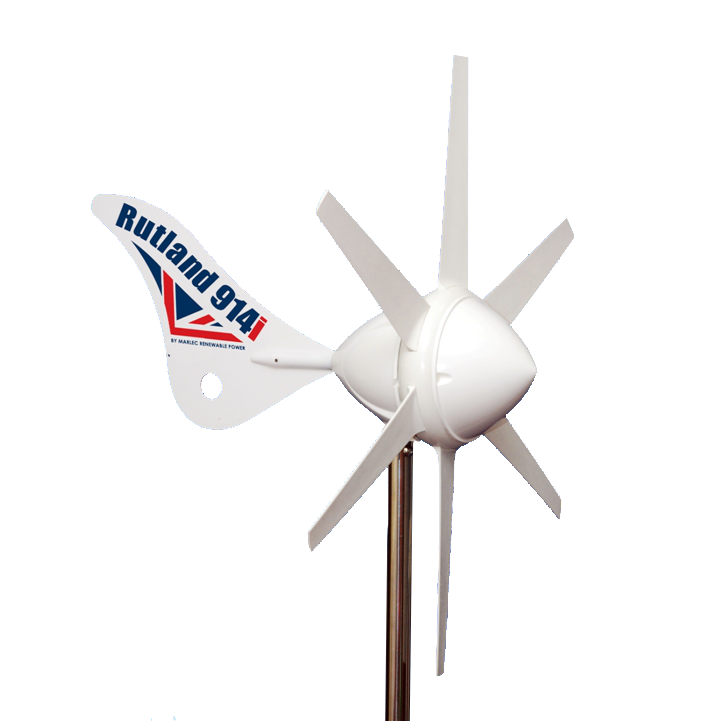
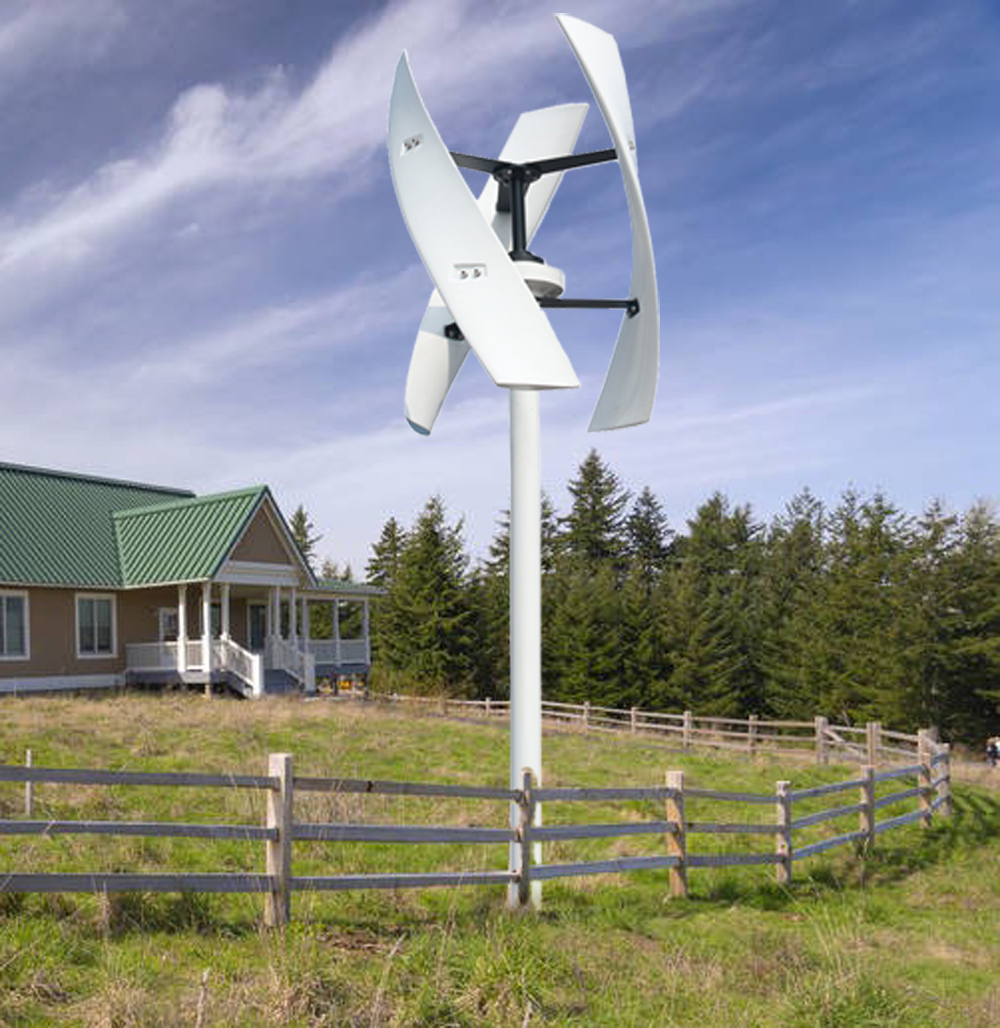
- The Wind Turbine: This is the centerpiece, capturing kinetic energy from the wind. Residential turbines typically range from 1 kW to 10 kW in capacity. You’ll encounter two main types:
- Horizontal-Axis Wind Turbines (HAWTs): The most common type, resembling large utility-scale turbines with blades that spin on a horizontal axis, facing into the wind. They are generally more efficient.
- Vertical-Axis Wind Turbines (VAWTs): These have blades that spin on a vertical axis. They are often touted as quieter and able to capture wind from any direction, but are typically less efficient for a given swept area.
- The Tower: Crucial for elevating the turbine into cleaner, faster, and less turbulent wind. Tower height directly impacts energy production. Common types include:
- Guyed Towers: Less expensive, require guy wires for support, meaning a larger footprint.
- Self-Supporting (Freestanding) Towers: More expensive, but require less ground space as they don’t need guy wires.
- Tilting Towers: Can be lowered for maintenance or in severe weather, but also more complex.
- Charge Controller/Inverter: Wind turbines generate DC (direct current) electricity, which fluctuates with wind speed. The charge controller manages this power, sending it to a battery bank (if off-grid) or directly to an inverter. The inverter then converts the DC power into usable AC (alternating current) electricity for your home or for feeding back into the grid.
- Battery Bank (for off-grid/backup): If you’re going off-grid or want backup power during grid outages, a bank of deep-cycle batteries is essential to store excess energy. This significantly adds to cost and requires careful sizing and maintenance.
- Wiring & Safety Disconnects: All components need to be safely wired by a licensed electrician, following local codes. Safety disconnects are critical for maintenance and emergency situations.
- Monitoring System: To track your system’s performance, energy production, and identify any issues.
Sizing Your Home Wind Power System: How Much Power Do You Really Need?
The biggest mistake homeowners make is choosing a turbine that’s either too small (not meeting demand) or too large (overspending for unused capacity). Accurate sizing is key to both performance and financial return.
)
Calculating Your Home’s Energy Consumption
Grab your electricity bills! The easiest way to determine your energy needs is to look at your past 12 months of usage. You’ll see your consumption measured in kilowatt-hours (kWh) per month. Average these values to get a clear picture.
For context, the average U.S. home uses around 877 kWh per month, but this varies wildly by region, home size, and lifestyle.
Matching Turbine Output to Demand
Turbines are rated in kilowatts (kW), which is their maximum instantaneous power output. However, their actual energy production over time (measured in kWh per year) depends heavily on the average wind speed at your site. A 5 kW turbine in a low-wind area might produce less annual energy than a 3 kW turbine in a very windy location.
To estimate, you’ll need data specific to your site’s average annual wind speed. Many turbine manufacturers provide power curves or annual energy production (AEP) estimates for various average wind speeds.
| Turbine Size (Rated Power) | Annual Energy Output (AEP) @ 12 mph Avg. Wind | Typical Home It Could Power (Approx.) |
|---|---|---|
| 1 kW | ~1,500 – 2,500 kWh/year | Very small cabin, supplement for small home, charging |
| 3 kW | ~4,500 – 7,500 kWh/year | Small to medium-sized home (e.g., 375-625 kWh/month) |
| 5 kW | ~7,500 – 12,500 kWh/year | Medium to large home (e.g., 625-1040 kWh/month) |
| 10 kW | ~15,000 – 25,000 kWh/year | Large home, farm, or small business |
| Actual output varies significantly with site-specific wind speeds, turbine model, and tower height. | ||
The Cost of Going Wind: Breaking Down the Investment
Let’s be upfront: residential wind power is a significant investment. Unlike rooftop solar, where installation can be relatively straightforward, wind turbines often require specialized equipment, heavy machinery, and complex permitting. The price tag isn’t just for the turbine itself.
What Influences the Price Tag?
Several factors contribute to the total cost:
- Turbine Size and Quality: Larger, higher-quality turbines cost more. Reputable brands with good warranties are worth the investment.
- Tower Height and Type: A taller, freestanding tower will be significantly more expensive than a shorter, guyed tower. Foundation work for the tower can also be substantial.
- Installation Complexity: Site access for cranes and construction equipment, soil conditions, and the need for significant trenching for electrical lines all add to labor costs.
- Balance of System (BOS) Components: This includes the inverter, charge controller, wiring, grounding, and safety equipment. For off-grid systems, a large battery bank is a major additional expense.
- Permitting, Site Assessment, and Engineering: These upfront costs can be substantial, including wind resource assessment, soil testing, engineering drawings, and permit fees.
- Interconnection Fees: If you’re connecting to the grid, the utility may charge fees for grid studies and interconnection.
Estimated Costs for a Residential Wind Power Plant
For a complete, installed small wind electric system (1.5 kW to 10 kW), expect costs to range widely, typically from $30,000 to $80,000 or more before incentives. The lower end might be for a smaller, guyed tower system, while the higher end covers larger, freestanding tower systems with battery backup.
| Component/Service | Estimated Cost Range (USD) | Notes |
|---|---|---|
| Wind Turbine (1-10 kW) | $8,000 – $50,000 | Depends on size, brand, and quality. |
| Tower (50-120 ft) | $5,000 – $25,000 | Guyed vs. Freestanding; height is a major factor. |
| Inverter/Charge Controller | $2,000 – $8,000 | For converting DC to AC, managing power. |
| Battery Bank (Off-Grid/Backup) | $5,000 – $20,000+ | Significant cost for true energy independence. |
| Installation Labor | $5,000 – $15,000 | Site prep, foundation, tower erection, electrical. |
| Permits, Site Assessment, Engineering | $1,000 – $5,000 | Varies by location and complexity. |
| Total Estimated Cost (before incentives) | $30,000 – $80,000+ | This is a rough estimate; always get multiple quotes. |
Wind vs. Solar: Which Renewable is Right for Your Home?
It’s a common question: if I’m looking for home renewable energy, should I go with wind or solar? While both are excellent sources of clean power, they have distinct characteristics that make one a better fit than the other for specific situations.
:max_bytes(150000):strip_icc()/wind-turbine-generator-on-house-roof-90967703-b9619befbf954726ae92dfb6154711f2.jpg)
Key Differences and Complementary Roles
Think about your property, climate, and energy goals:
- Space Requirements: Solar panels can go on a rooftop, requiring minimal ground space. Wind turbines need significant ground area for the tower and setback requirements.
- Intermittency Patterns: Solar power peaks during the day when the sun is shining. Wind power can be strong at night or on cloudy days. This difference in generation patterns can make a hybrid wind-solar system particularly effective for consistent power generation.
- Efficiency in Different Conditions: Solar performs best in clear, sunny conditions. Wind performs best in consistently windy areas. Areas with strong, consistent wind are rarer than areas with good sun exposure.
- Noise and Aesthetics: While modern small wind turbines are much quieter than older models, some noise can still be a concern for homeowners and neighbors. The visual impact of a tall tower is also a significant aesthetic consideration that solar panels rarely face.
- Maintenance: Solar panels require relatively little maintenance (occasional cleaning). Wind turbines have moving parts that require periodic inspection, lubrication, and potential blade repair or replacement over their lifespan.
| Feature | Residential Wind Power | Residential Solar Power |
|---|---|---|
| Ideal Location | Rural, open areas with high, consistent wind. | Any location with good sun exposure, rooftop or ground. |
| Space Required | Significant (1+ acre for tower and setbacks). | Minimal (rooftop space, small ground mount). |
| Typical Cost (Installed) | $30,000 – $80,000+ | $15,000 – $40,000 (typical 5-10 kW system). |
| Primary Energy Output | Often stronger at night/winter. | Stronger during the day/summer. |
| Noise/Aesthetics | Potential noise and visual impact of a tall tower. | Generally silent, less visual impact. |
| Maintenance | Periodic inspections, lubrication, moving parts. | Minimal (occasional cleaning, inverter check). |
| Permitting Complexity | Often very complex with zoning & height restrictions. | Generally simpler, but still requires permits. |
Installation, Maintenance, and Longevity: What to Expect
So, you’ve decided wind power is feasible for your home. What does the journey from decision to generation look like, and what responsibilities come with it?
The Installation Process (Overview)
Installing a home wind turbine is not a DIY project. It requires skilled professionals and often heavy equipment:
- Site Assessment & Planning: Detailed wind resource analysis, soil testing, engineering design for the foundation and tower.
- Permitting & Approvals: Navigating local zoning, building, and electrical codes. This can be the longest phase.
- Foundation Work: Excavating and pouring a concrete foundation for the tower, which must be extremely robust.
- Tower Erection: This often requires a crane to safely lift and secure the tower sections.
- Turbine Assembly & Mounting: The turbine generator and blades are assembled and mounted atop the tower.
- Electrical Wiring & Connection: Licensed electricians handle all wiring, connecting the turbine to the charge controller, inverter, battery bank (if applicable), and your home’s electrical panel/grid.
- Commissioning & Testing: The system is powered up, tested, and fine-tuned for optimal performance.
Routine Maintenance
Like any mechanical system, a wind turbine requires periodic maintenance to ensure efficiency and longevity. Expect:
- Annual Inspections: Visual checks of blades, tower, guy wires (if applicable), wiring, and connections.
- Lubrication: Moving parts in the gearbox (if present) and yaw mechanism will need lubrication.
- Blade Cleaning: Over time, dirt and debris can accumulate on blades, reducing efficiency.
- Monitoring: Regularly checking the system’s performance data to spot any anomalies.
- Emergency Shut-down: Knowing how to safely shut down the turbine in extreme weather or for maintenance.
System Lifespan and Warranties
A well-maintained residential wind turbine can last 20-25 years or more. The turbine itself typically has a lifespan in this range, while inverters usually need replacement every 10-15 years, and batteries every 5-15 years, depending on type and usage. Look for turbines with strong manufacturer warranties, typically 5-10 years on major components.
Looking Ahead: Innovations in Residential Wind Technology
The field of residential wind power isn’t stagnant. While traditional HAWTs dominate, new technologies are emerging that could make home wind more accessible and efficient in the future.
Bladeless Wind Turbines and Micro-turbines
- Bladeless Wind Turbines: Companies like Vortex Bladeless are developing innovative designs that generate electricity from vibrations caused by wind (vortex shedding) rather than rotating blades. These promise quieter operation, less maintenance, and reduced bird impact. While currently in development and more suited for specific niches, they represent a fascinating future direction.
- Micro-turbines: Ultra-compact designs that are even smaller than typical residential turbines, often designed for very specific low-power applications (e.g., RVs, remote cabins) or as supplements in urban environments where larger turbines are impractical.
These innovations aim to address some of the current drawbacks of residential wind power, such as noise, aesthetics, and complex installation. However, they are still nascent technologies and not yet widely available or proven for whole-home power generation.
Making an Informed Decision for Your Home’s Energy Future
A personal “wind power plant” for your home is indeed a powerful vision – a symbol of energy independence and environmental stewardship. But it’s also a significant undertaking that demands careful planning, a suitable site, and a substantial financial commitment. It’s not a silver bullet for every home.
Before investing, conduct a thorough site assessment, research local regulations, obtain multiple quotes from certified installers, and critically evaluate the long-term economics. For many, a combination of solar panels, energy efficiency upgrades, and perhaps a small supplemental wind turbine (if conditions are ideal) might be the most practical and cost-effective path to a greener, more self-sufficient home.
The wind is a powerful, free resource. With the right approach and realistic expectations, you might just harness it to power your home for decades to come.
Frequently Asked Questions
Is a ‘wind power plant’ for my home really feasible for everyone?
No, residential wind power is not feasible for everyone. It requires specific conditions, including consistently strong wind resources (average 10-12+ mph), a large property (typically 1+ acre) for tower setbacks, and favorable local zoning regulations. Unlike solar, which is broadly applicable, wind power is highly site-specific.
How much does a home wind power plant cost to install?
A complete residential wind power system (1.5 kW to 10 kW) can cost anywhere from $30,000 to $80,000 or more before incentives. This includes the turbine, tower, inverter, installation labor, permitting, and potentially a battery bank for off-grid or backup power. The exact cost depends on turbine size, tower height, and installation complexity.
What’s the typical size of a home wind turbine and how much power does it generate?
Residential wind turbines typically range from 1 kW to 10 kW in rated power. A 5 kW turbine in a location with a 12 mph average annual wind speed might generate 7,500 to 12,500 kWh per year, which can power a medium to large home (625-1040 kWh/month). Actual output varies significantly with site-specific wind conditions and turbine efficiency.
What are the main components of a home wind power plant?
Beyond the wind turbine itself, a home wind power plant includes a tall tower to access higher winds, a charge controller and inverter to convert the turbine’s DC power into usable AC electricity, and often a battery bank for energy storage (especially for off-grid systems or backup power). Wiring, safety disconnects, and a monitoring system are also crucial.
How does home wind power compare to solar power?
Wind power often requires more space and faces stricter zoning, but can generate power at night or on cloudy days when solar is inactive. Solar is generally more widespread and simpler to install, requiring only rooftop or limited ground space. Many homeowners consider a hybrid wind-solar system for more consistent year-round energy production.
What kind of maintenance does a home wind turbine require?
Home wind turbines require periodic maintenance due to their moving parts. This includes annual inspections of blades, tower, and wiring, lubrication of mechanical components, occasional blade cleaning, and monitoring system performance. Modern turbines are designed for reliability, but routine checks are essential for longevity.
Are there any new technologies for residential wind power?
Yes, innovations like bladeless wind turbines (e.g., Vortex Bladeless) are being developed, aiming for quieter operation, lower maintenance, and reduced visual impact by generating power from wind-induced vibrations rather than rotating blades. Micro-turbines are also emerging for very small-scale or supplemental power needs.