Is a Wind Turbine Right For Your Home? The Honest Guide to Residential Wind Power
Dreaming of harnessing the wind to power your home, cutting ties with the grid, and watching your electricity meter spin backward? It’s a compelling vision, and for good reason: wind power is clean, renewable, and can offer a significant step towards energy independence.
Table of Contents
- Is a Wind Turbine Right For Your Home? The Honest Guide to Residential Wind Power
- Why You’re Considering a Home Wind Turbine (And Why It’s Often Not That Simple)
- The Critical First Question: Do You Have Enough Wind?
- Understanding Average Wind Speed (MPH)
- Site Assessment is Non-Negotiable
- How Much Power Do You Really Need? Sizing Your Home Wind Turbine
- Calculating Your Household’s Energy Consumption
- Matching Turbine Size to Needs
- Breaking Down the Costs: What You’ll Actually Pay
- Turbine Unit Cost
- Tower & Foundation Costs
- Installation & Electrical Work
- Balance of System (BoS) Costs
- Wind Turbine vs. Solar Panels: Which Is Right For Your Home?
- Understanding the Core Differences
- When Wind Might Win (Rarely) & When Solar Reigns Supreme (Often)
- Types of Home Wind Turbines: HAWT vs. VAWT
- Horizontal Axis Wind Turbines (HAWT)
- Vertical Axis Wind Turbines (VAWT)
- The Installation Journey: What to Expect
- Step 1: Site Assessment & Wind Resource Evaluation
- Step 2: Local Regulations, Zoning & Permitting
- Step 3: System Design & Component Selection
- Step 4: Installation & Grid Connection (or Off-Grid Setup)
- Step 5: Post-Installation Monitoring & Maintenance
- Real-World Challenges & Honest Truths You Need to Know
- Is Residential Wind Power For YOU? Making an Informed Decision
But let’s get real, right from the start: for most homeowners, installing a wind turbine isn’t as straightforward or universally beneficial as, say, rooftop solar panels. While the idea of a personal wind generator is exciting, the reality involves a complex interplay of wind resources, local regulations, upfront costs, and realistic energy needs. It’s not just about buying a turbine; it’s about whether your property, your budget, and your local environment are truly ready for one.
So, can a wind turbine power your home? The honest answer is: it depends heavily on your specific circumstances. For a select few, it’s an excellent solution. For many others, it’s a costly venture with limited returns. This guide will walk you through the hard truths and practical considerations so you can make an informed decision for your home.
Why You’re Considering a Home Wind Turbine (And Why It’s Often Not That Simple)
The allure of a home wind turbine is strong. Imagine:
- Energy Independence: Generating your own electricity means less reliance on utility companies and protection from rising energy prices.
- Environmental Impact: Reducing your carbon footprint by using a clean, renewable energy source.
- Financial Savings: Potentially lower or even eliminated electricity bills over the long term.
These benefits are real, but they come with significant hurdles that often get overlooked. Unlike solar, which benefits from consistent sunlight across much of the country, wind resources are far more variable and site-specific. This isn’t a minor detail; it’s the single biggest factor in determining whether a residential wind turbine makes any sense at all.
The Critical First Question: Do You Have Enough Wind?
This is where dreams meet reality. Without sufficient, consistent wind, even the most advanced turbine is just an expensive lawn ornament. Wind is not uniform; it’s affected by topography, obstacles, and even microclimates on your property.
Understanding Average Wind Speed (MPH)
For a home wind turbine to be economically viable, you generally need an average annual wind speed of at least 10-12 MPH (4.5-5.4 m/s). Anything less, and the turbine simply won’t generate enough electricity to justify its cost. Many smaller, vertical-axis turbines are marketed for lower wind speeds, but their energy production at those speeds is often minimal.
Wind speeds often increase significantly with height. A measurement taken at ground level won’t tell you much about the wind at the top of a 60-foot tower.
Site Assessment is Non-Negotiable
You can’t just guess your wind resource. A professional site assessment is crucial. They’ll look at:
- Obstacles: Trees, buildings, hills – anything that creates turbulence or blocks wind flow will drastically reduce turbine efficiency. You need clear, unobstructed wind from all directions.
- Turbulence: Wind isn’t always smooth. Turbulent wind, caused by obstacles, can damage turbines and reduce output.
- Tower Height: To overcome ground-level obstacles and access stronger, smoother wind, residential turbines often require substantial towers (50-120 feet), which adds significantly to cost and visual impact.
The Department of Energy’s WINDExchange program is an excellent resource for preliminary wind maps, but it’s no substitute for a real-world assessment.
:max_bytes(150000):strip_icc()/wind-turbine-generator-on-house-roof-90967703-b9619befbf954726ae92dfb6154711f2.jpg)
| Average Annual Wind Speed (MPH) | Feasibility for Residential Wind | Notes |
|---|---|---|
| Less than 9 MPH (4 m/s) | Not Recommended | Insufficient energy production; very long ROI, if any. Consider other renewables. |
| 9-12 MPH (4-5.4 m/s) | Marginal to Possible | Requires careful site selection, tall towers, and high energy consumption to justify. |
| 12-15 MPH (5.4-6.7 m/s) | Good Potential | Where residential wind starts to become economically viable. |
| Above 15 MPH (6.7 m/s) | Excellent Potential | Prime conditions for maximizing output and ROI. |
How Much Power Do You Really Need? Sizing Your Home Wind Turbine
Once you’ve established you have a viable wind resource, the next step is determining how much power you actually need to generate. This will dictate the size (and cost) of your turbine.
Calculating Your Household’s Energy Consumption
Look at your past utility bills. Most households in the USA consume between 700-1200 kWh per month. This number is critical for sizing your system. A small 1.5 kW turbine, for example, might produce 300 kWh per month in a location with a 14 MPH average wind speed, which means it would only offset a portion of an average home’s usage.
Matching Turbine Size to Needs
Residential wind turbines typically range from 1 kW to 10 kW in rated power. A 10 kW turbine, under ideal conditions, can often meet the full energy needs of a large, energy-efficient home.
| Turbine Size (Rated Power) | Typical Home Usage Covered (Approx.) | Notes |
|---|---|---|
| 1 kW (Micro) | Small portion of energy, or very minimal cabins/RV use. | Often used for supplemental power or very low-demand scenarios. Output highly variable. |
| 3-5 kW (Small) | Significant portion of average home, or full power for energy-efficient homes. | Common size for grid-tied residential systems. Requires good wind. |
| 10 kW (Large Residential) | Full power for most average-to-large homes. | Can produce substantial power, but requires significant space, cost, and wind. |
Breaking Down the Costs: What You’ll Actually Pay
This is often the biggest shock for prospective wind turbine owners. Unlike solar panels, which have seen dramatic price drops, residential wind turbine systems remain a substantial investment.
Total costs can range from $15,000 to $80,000+ for a complete, installed system, depending on size, tower height, location, and whether it’s grid-tied or off-grid. Here’s a breakdown:
Turbine Unit Cost
The turbine itself (rotor, generator, nacelle) can cost anywhere from $3,000 to $20,000+ for residential sizes. This is just the hardware that spins.
Tower & Foundation Costs
This is frequently underestimated. A robust tower (often 60-120 feet tall) to get above turbulence is essential. Towers can be guyed (supported by cables) or freestanding. Foundations are also critical for stability. Expect to pay $5,000 to $25,000+ just for the tower and its foundation.
Installation & Electrical Work
Installing a tall tower and a heavy turbine requires specialized equipment and expertise. Electrical wiring to connect the turbine to your home’s electrical panel (and possibly the grid) is also a significant expense. This can run $5,000 to $15,000+.
Balance of System (BoS) Costs
These are the other components needed for a functional system:
- Inverter: Converts the turbine’s DC power to usable AC power for your home. Costs $1,000 – $5,000.
- Controller: Manages charging and protects the turbine from over-speeding. Costs $500 – $2,000.
- Batteries (for off-grid): If you’re going off-grid, a battery bank to store excess energy is essential and very costly, adding $5,000 – $20,000+ and requiring regular maintenance/replacement.
- Wiring, Disconnects, Safety Equipment: Miscellaneous but necessary.
All told, for a typical 5 kW residential wind turbine system, a realistic total cost range is often $30,000 to $50,000 before incentives.
| Component | Estimated Cost Range (USA) | Notes |
|---|---|---|
| Wind Turbine (1-10 kW) | $3,000 – $20,000+ | Rotor, generator, nacelle unit. |
| Tower & Foundation | $5,000 – $25,000+ | Depends on height (60-120ft) and type (guyed vs. freestanding). |
| Installation Labor | $5,000 – $15,000+ | Specialized equipment and crew needed. |
| Inverter & Controller | $1,500 – $7,000 | Converts power, manages system. |
| Battery Bank (Optional, for Off-Grid) | $5,000 – $20,000+ | Significant cost and maintenance for energy storage. |
| Permitting & Fees | $500 – $3,000+ | Varies greatly by location. |
| TOTAL ESTIMATED COST (Grid-Tied) | $15,000 – $80,000+ | Highly variable based on size, wind resource, and complexity. |
Wind Turbine vs. Solar Panels: Which Is Right For Your Home?
For most residential applications, solar power has a significant edge. However, there are niche scenarios where wind *might* be a better fit, or a great complement.
)
Understanding the Core Differences
- Intermittency: Solar produces during the day; wind produces whenever the wind blows (day or night). This is why a hybrid wind-solar system with battery storage can be very effective for off-grid living.
- Footprint: Solar panels require significant roof space or ground area. Wind turbines require less ground space for the tower but need a wide, clear area around them (often several acres depending on turbine size) for optimal, turbulence-free wind.
- Noise & Visual Impact: Modern solar panels are silent and blend into roofs. Wind turbines, especially larger ones, produce some audible noise (though often exaggerated for residential sizes) and are a significant visual presence.
- Cost & ROI: Solar generally has a lower upfront cost and a faster, more predictable return on investment for most homeowners due to widespread incentives and mature technology.
When Wind Might Win (Rarely) & When Solar Reigns Supreme (Often)
Consider wind if:
- You live in a very rural area with consistently high average wind speeds (12+ MPH) and few obstructions.
- Your property has limited sun exposure but excellent wind.
- You have ample land and are comfortable with a tall structure.
- You’re looking for an off-grid solution where wind can complement solar during cloudy periods or at night.
Solar is almost always the better default choice for:
- Most suburban or urban homes with good roof space.
- Homes where cost-effectiveness and faster ROI are primary concerns.
- Homeowners who want a silent, visually unobtrusive renewable energy source.
- Areas with less than ideal wind resources.
| Feature | Home Wind Power | Home Solar Power |
|---|---|---|
| Resource Dependence | Consistent high wind (12+ MPH avg.) | Consistent sunlight |
| Best Location | Rural, open properties with few obstructions. | Urban, suburban, or rural with good roof/ground space. |
| Footprint | Requires a tall tower and large clear area around it. | Roof or ground space for panels. |
| Noise | Audible hum/whoosh, especially close up. | Silent. |
| Visual Impact | Significant tall structure, generally more noticeable. | Blends into rooflines or ground mounts. |
| Upfront Cost (5kW system est.) | $30,000 – $50,000+ | $15,000 – $25,000 (before incentives) |
| Maintenance | More frequent (moving parts), inspect yearly. | Minimal (cleaning panels, inverter checks). |
| ROI / Payback Period | Longer, highly dependent on wind resource and energy prices. | Generally shorter and more predictable. |
Types of Home Wind Turbines: HAWT vs. VAWT
When you start researching, you’ll encounter two primary designs:
Horizontal Axis Wind Turbines (HAWT)
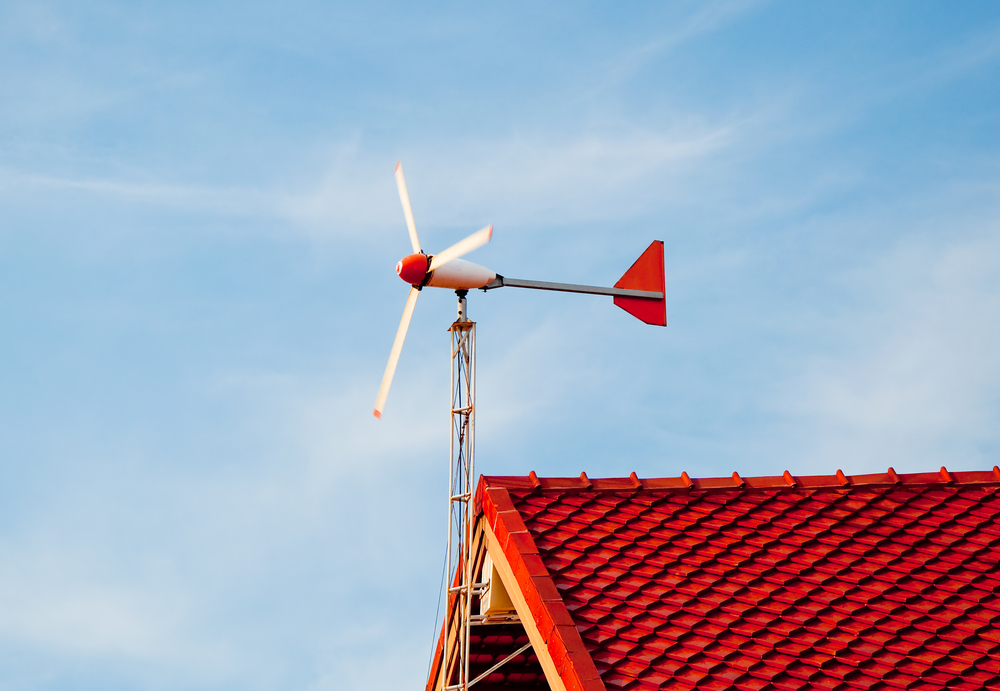
These are the classic ‘windmill’ design, with blades spinning around a horizontal rotor axis, similar to large utility-scale turbines.
- Pros: Generally more efficient at converting wind energy into electricity, well-proven technology.
- Cons: Need to orient into the wind, often require taller towers, can be noisier, and have moving parts exposed to the elements.
Vertical Axis Wind Turbines (VAWT)
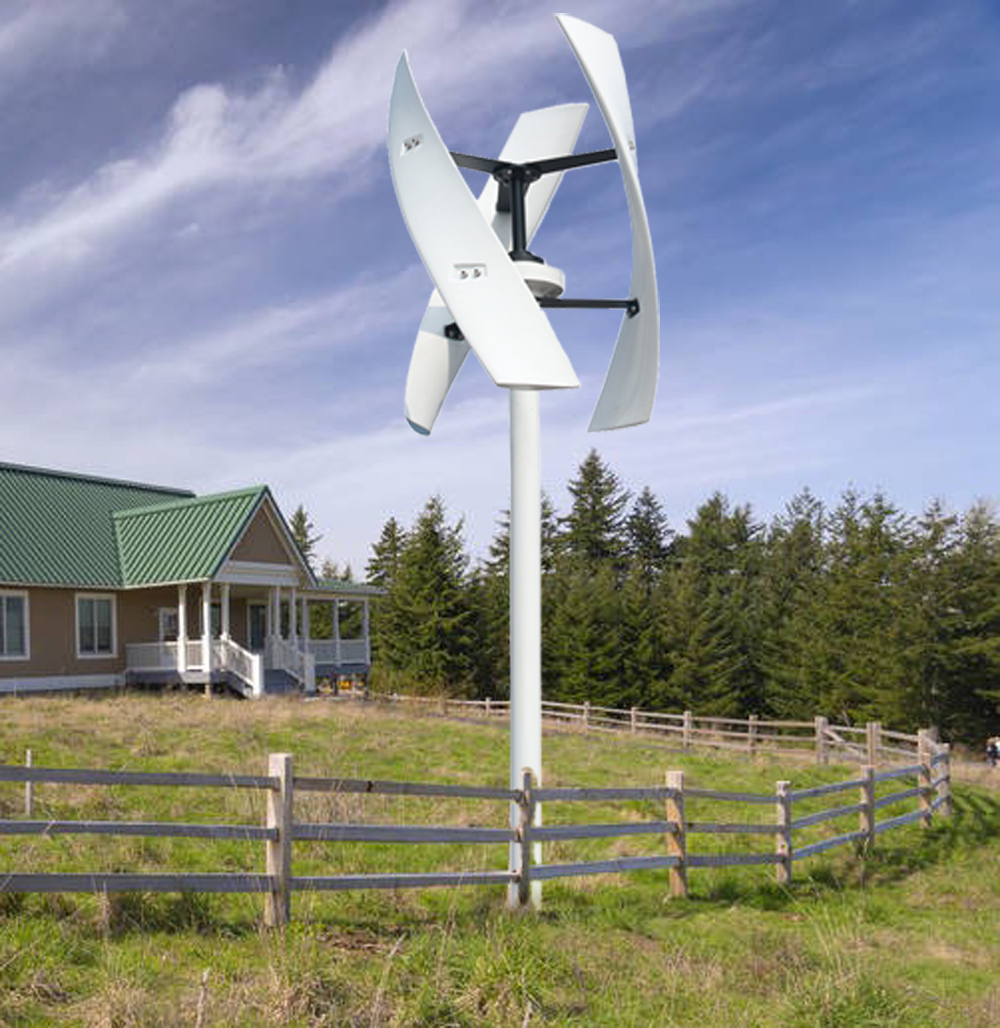
These have blades that spin around a vertical axis. They often look like egg beaters or spirals.
- Pros: Don’t need to yaw (turn) into the wind, potentially lower noise levels (though still present), can be installed closer to the ground (though this compromises wind resource). Often marketed as ‘urban friendly.’
- Cons: Generally less efficient than HAWTs, especially for the same rotor swept area. Their ‘low wind speed startup’ doesn’t mean high power output at low speeds, which is a common misconception. Often overhyped for residential use in areas without strong, consistent wind.
While VAWTs can seem appealing due to their different aesthetic and lower claimed noise, for serious power generation, HAWTs are still the more effective choice for residential scale if you have the right conditions.
The Installation Journey: What to Expect
If you’ve crunched the numbers, assessed your wind, and are still serious, here’s a general roadmap:
Step 1: Site Assessment & Wind Resource Evaluation
As mentioned, this is paramount. Work with a qualified wind energy professional to deploy anemometers (wind measuring devices) on your property for at least 6-12 months to get accurate, site-specific data.
Step 2: Local Regulations, Zoning & Permitting
This is where many residential wind projects hit a wall. Local ordinances regarding tower height, setbacks from property lines, noise levels, and visual aesthetics vary wildly. Some communities ban them outright. You’ll need to research your local zoning laws and be prepared for a potentially lengthy and complex permitting process. Expect to get approval from your homeowners’ association if applicable.
Step 3: System Design & Component Selection
Based on your energy needs and wind resource, a certified installer will design the optimal system, including turbine size, tower height, inverter, and any battery storage. They’ll also ensure all components are certified (e.g., by Small Wind Certification Council – SWCC).
Step 4: Installation & Grid Connection (or Off-Grid Setup)
The physical installation involves pouring a concrete foundation, erecting the tower (often with a crane), mounting the turbine, and running electrical lines. If you’re connecting to the grid (grid-tied system), your utility company will need to approve and inspect the system, and you’ll typically need to establish a net metering agreement to get credit for excess energy you produce.
Step 5: Post-Installation Monitoring & Maintenance
Once operational, it’s essential to monitor your system’s performance. Routine maintenance includes annual inspections, checking bolts, lubricating moving parts, and ensuring blades are free of debris. Turbines have moving parts, so unlike solar, they will require more active maintenance over their lifespan.
Real-World Challenges & Honest Truths You Need to Know
Beyond the technicalities and costs, there are practical considerations that can impact your experience significantly.
- Noise & Visual Impact: Yes, they make noise. While modern turbines are quieter than older models, a consistent hum or whoosh can be noticeable, especially if you or your neighbors are sensitive to sound. And a 100-foot tower in your backyard is a significant visual change. Be prepared for potential neighbor objections.
- Maintenance Requirements: Turbines have gearboxes, bearings, and other moving parts that wear out. They are exposed to extreme weather. Regular professional inspections and potential component replacements are part of owning one. This isn’t a ‘set it and forget it’ system.
- Return on Investment (ROI): The payback period for residential wind turbines is often longer than for solar, sometimes 10-20 years or more, largely due to higher upfront costs and the variability of wind. Your ROI hinges heavily on your local wind resource and electricity rates.
- Finding Qualified Installers: The market for residential wind installation is much smaller and more specialized than for solar. Finding reputable, experienced installers can be challenging, particularly outside of very windy regions.
- Policy & Incentives: While federal tax credits (like the Investment Tax Credit for renewables) apply to wind, state and local incentives are less common and less generous than those for solar power.
Is Residential Wind Power For YOU? Making an Informed Decision
So, after all this, is a wind turbine for your home a pipe dream or a viable reality?
For the vast majority of homeowners, especially those in suburban or urban settings, solar power remains the more practical, cost-effective, and aesthetically agreeable choice. The upfront cost is lower, the technology is more mature, the installation process is simpler, and the return on investment is generally faster and more predictable.
However, if you live in a very rural location with abundant, consistent, unobstructed wind, plenty of land, and a desire for true energy independence (or off-grid living), then a home wind turbine could absolutely be a powerful asset. It requires a significant commitment in terms of research, upfront cost, and ongoing maintenance, but for the right property, the rewards of harnessing the wind can be substantial.
Before making any decision, do your homework. Get multiple, detailed quotes from certified wind energy professionals. Insist on a thorough site assessment. Understand your local zoning laws. Compare the long-term economics honestly. And remember, the best renewable energy solution is the one that truly fits your unique home and lifestyle.
Frequently Asked Questions
How much does it cost to install a wind turbine for my home?
The total cost for a residential wind turbine system in the USA typically ranges from $15,000 to $80,000+. This includes the turbine unit, tower, foundation, installation labor, inverter, controller, and potentially batteries for off-grid systems. Costs vary significantly based on turbine size, tower height, and site-specific conditions.
Do I need a lot of wind for a home wind turbine to be effective?
Yes, consistent and strong wind is the most critical factor. For economic viability, your property generally needs an average annual wind speed of at least 10-12 MPH (4.5-5.4 m/s) at the turbine’s installed height. Lower wind speeds result in significantly reduced power generation and a much longer, if any, return on investment.
Are home wind turbines noisy?
Modern residential wind turbines are much quieter than older models, but they do produce some audible noise – typically a low hum or whoosh, especially at higher wind speeds. While often within acceptable limits, it can be a concern for some homeowners and their neighbors, especially in quieter rural settings. Site selection and turbine quality impact noise levels.
Is a wind turbine better than solar panels for home use?
For most homeowners, especially in suburban or urban areas, solar panels are a more practical, cost-effective, and aesthetically agreeable choice. Solar has lower upfront costs, simpler installation, and a more predictable ROI. Wind turbines are generally only superior in very rural locations with consistently high average wind speeds, ample land, and limited sun exposure, or as part of a hybrid off-grid system.
What kind of maintenance does a home wind turbine require?
Residential wind turbines require more active maintenance than solar panels due to their moving parts. This includes annual professional inspections, checking bolts, lubricating components, and ensuring blades are free of debris or ice. Component replacement (like bearings or gearboxes) may be necessary over the system’s lifespan.
What are the common challenges homeowners face with wind turbines?
Common challenges include high upfront costs, securing local zoning and permitting approvals (especially for tall towers), finding reputable and experienced installers, managing potential noise and visual impact concerns from neighbors, and achieving a desirable return on investment due to variable wind resources and electricity rates.