Can a Wind Turbine Power YOUR Home? A Realistic Guide to Residential Wind Energy
Dreaming of slashing your electricity bills? Imagining your home completely off the grid, powered by the clean, free energy of the wind? A personal wind turbine for your house sounds incredibly appealing, and for some, it’s a powerful reality.
Table of Contents
- Can a Wind Turbine Power YOUR Home? A Realistic Guide to Residential Wind Energy
- First Things First: Is Your Home Even a Candidate for Wind Power?
- The Absolute Non-Negotiable: Wind Speed
- Space Requirements: More Than Just a Backyard
- Zoning, Permits, and Neighborly Relations
- Understanding Home Wind Turbines: Types and How They Work
- Horizontal-Axis Wind Turbines (HAWTs)
- Vertical-Axis Wind Turbines (VAWTs)
- How They Generate Electricity: Grid-Tied vs. Off-Grid
- Sizing Your System: How Much Power Do You Really Need?
- Calculate Your Home’s Energy Consumption
- Matching Turbine Output to Your Needs
- The Elephant in the Room: Cost of a Home Wind Turbine
- Initial Investment: What You’ll Pay For
- Ongoing Costs: Maintenance and Beyond
- Incentives and Financial Aid
- Wind vs. Solar: Which is Right for You? (Or Both?)
- Key Differences: Sunlight vs. Wind
- Benefits of a Hybrid Wind-Solar System
- The Real-World Pros and Cons of Residential Wind
- Pros:
- Cons:
- Navigating the Path to Home Wind Power: Your Action Plan
- Step 1: Preliminary Site Assessment
- Step 2: Budgeting and Financial Planning
- Step 3: Finding Qualified Professionals
- Step 4: Permitting and Approvals
- Step 5: Installation and Grid Connection
- Step 6: Maintenance and Monitoring
- Is a Home Wind Turbine Worth It For You? A Final Reality Check.
But let’s be real: putting a wind turbine on your property isn’t quite as straightforward as installing a few solar panels. While the concept is simple, the practicalities are complex. This isn’t a simple ‘yes’ or ‘no’ answer. It depends heavily on your specific circumstances, especially your wind resources, available space, local regulations, and financial goals.
Here, we’ll cut through the hype and give you a definitive, human-first guide to understanding if a wind turbine is a viable, sensible, and ultimately rewarding investment for your home.
First Things First: Is Your Home Even a Candidate for Wind Power?
Before you get swept away by the idea, the most crucial step is a brutally honest assessment of your property’s potential. Not every home is suitable, and understanding why will save you time, money, and frustration.
The Absolute Non-Negotiable: Wind Speed
This is the big one. Wind turbines need consistent, strong wind to be efficient. Think about it: a small fan isn’t going to cool a stadium. Similarly, a small turbine won’t power your home with just a gentle breeze. Most residential turbines require an average annual wind speed of at least 10-12 mph (4.5-5.4 m/s) to be economically viable. Higher speeds mean significantly more power generation, as the power available in the wind is proportional to the cube of the wind speed.
How do you figure out your wind speed?
- Local Wind Maps: Government energy agencies (like the U.S. Department of Energy) often provide wind resource maps. These are a good starting point but don’t account for microclimates or local obstructions.
- On-Site Anemometer: For a truly accurate assessment, you might need to install an anemometer (a device that measures wind speed) on your property for at least a year. This gives you real-world data at the specific height your turbine would be.
- Professional Site Assessment: The best approach is to hire a qualified professional who can analyze your property’s topography, obstructions, and local wind patterns to give you a precise wind resource estimate.
| Average Annual Wind Speed | Feasibility for Residential Wind |
|---|---|
| Less than 10 mph (4.5 m/s) | Highly Unlikely to be Economical. Energy output too low for the investment. |
| 10-12 mph (4.5-5.4 m/s) | Potentially Viable. Requires careful sizing and cost analysis. |
| 12-14 mph (5.4-6.3 m/s) | Good Potential. Often the minimum for good return on investment. |
| More than 14 mph (6.3 m/s) | Excellent Potential. Strong candidate for residential wind energy. |
Space Requirements: More Than Just a Backyard
A residential wind turbine needs significant space. This isn’t just for the tower’s footprint, but also for its effective operation and to comply with setback regulations. Turbines need to be tall enough to clear any obstacles (trees, buildings) that create wind turbulence. A general rule of thumb is that the bottom of the turbine’s rotor should be at least 30 feet higher than any obstacle within a 300-foot radius.
This means a 60-foot tall tree could require a 90-foot tower! Such tall structures aren’t suitable for small suburban lots and are generally only feasible in rural areas with ample land.
Zoning, Permits, and Neighborly Relations
This is often the biggest hurdle. Local governments have varying regulations regarding structure height, noise limits, and visual impact. You’ll likely need:
- Building Permits: For the tower and foundation.
- Electrical Permits: For connecting to your home’s system or the grid.
- Zoning Variances: If your desired tower height exceeds local limits.
- Homeowner Association (HOA) Approval: If you live in a community with one.
Expect scrutiny from neighbors regarding aesthetics and potential noise. While modern small turbines are much quieter than older models, they still produce a hum, especially in higher winds. Proactive communication and understanding local ordinances are critical.
Understanding Home Wind Turbines: Types and How They Work
If your property passes the initial feasibility test, let’s look at the machinery itself. Residential wind turbines come in two main flavors:
:max_bytes(150000):strip_icc()/wind-turbine-generator-on-house-roof-90967703-b9619befbf954726ae92dfb6154711f2.jpg)
Horizontal-Axis Wind Turbines (HAWTs)
These are what most people visualize: the classic propeller-style turbines with blades that rotate on a horizontal axis, facing into the wind. They are generally:
- More Efficient: HAWTs are typically more efficient at capturing wind energy.
- Require Higher Towers: To avoid turbulence and maximize wind capture.
- Louder: The blades can generate noticeable noise, especially at higher wind speeds.
- Require Yawing Mechanisms: To turn the rotor into the wind, which adds mechanical complexity.
Vertical-Axis Wind Turbines (VAWTs)
These turbines have blades that rotate around a vertical axis. They often look like egg beaters or Savonius rotors. Their characteristics include:
- Less Efficient: Generally capture less energy for the same swept area compared to HAWTs.
- Lower to the Ground: Can operate closer to the ground, making them potentially more suitable for sites with less open space (though still subject to turbulence).
- Quieter: Typically produce less noise, making them more neighbor-friendly.
- Omnidirectional: Don’t need to turn into the wind, simplifying design.
How They Generate Electricity: Grid-Tied vs. Off-Grid
Regardless of type, a wind turbine system for your home will typically include:
- Blades/Rotor: Captures the wind’s kinetic energy.
- Generator: Converts mechanical energy into electricity.
- Controller: Manages charging for batteries (off-grid) and regulates output.
- Inverter: Converts the turbine’s DC (direct current) electricity into AC (alternating current) usable by your home appliances and the grid.
Most residential wind turbines are grid-tied, meaning they are connected to your utility grid. Excess power generated is fed back into the grid, often earning you credits (net metering). When the wind isn’t blowing, you draw power from the grid as usual. Off-grid systems require a battery bank to store excess energy for when the wind is calm, making them significantly more complex and expensive.
Sizing Your System: How Much Power Do You Really Need?
The goal is to match the turbine’s output to your home’s energy consumption. This isn’t a simple wattage-to-wattage comparison; it requires understanding your usage and the turbine’s actual performance.
Calculate Your Home’s Energy Consumption
Grab your past 12 months’ utility bills. Look for your average monthly kilowatt-hour (kWh) usage. A typical U.S. home uses around 900-1,000 kWh per month, but this varies wildly based on climate, home size, and habits.
For example, if your home uses 900 kWh/month, you need a system that can reliably produce that much energy over the course of a month.
Matching Turbine Output to Your Needs
Turbines are rated by their peak power output (e.g., 1.5 kW, 5 kW). However, they rarely operate at peak capacity. The actual energy produced depends on:
- Rated Power: The maximum power the turbine can generate.
- Wind Speed: The most critical factor. The turbine’s power curve shows its output at different wind speeds.
- Capacity Factor: This is the ratio of actual energy produced by a turbine over a period to the maximum possible energy it could have produced if it had operated at full rated power continuously. For residential wind, this might range from 20-40% depending on wind resources.
Let’s do a quick calculation example for a home needing 900 kWh/month (30 kWh/day):
- If you have an average wind speed supporting a 30% capacity factor, a 5 kW (5,000 Watt) turbine could theoretically produce:
- 5 kW * 24 hours/day * 30 days/month * 0.30 (capacity factor) = 1,080 kWh/month.
This suggests a 5 kW turbine might be appropriate. However, this is a simplified example. A professional site assessor will use more sophisticated modeling based on your specific wind resource and the chosen turbine’s power curve.
The Elephant in the Room: Cost of a Home Wind Turbine
Let’s not sugarcoat it: installing a home wind turbine is a significant financial investment. It’s often more expensive per watt than solar power, primarily due to the complex installation of the tower.
Initial Investment: What You’ll Pay For
The total cost can range dramatically, typically between $15,000 and $70,000 for a grid-tied system (1-10 kW), not including batteries for off-grid. Here’s a breakdown:
 "Home Wind Turbines: When Do They Make Sense? | EnergySage")
- Turbine Itself: The generator, blades, and hub.
- Tower: Foundation, structure, guy wires (if applicable). This is a substantial cost.
- Balance of System (BOS): Inverter, controller, wiring, disconnects.
- Installation Labor: Skilled professionals are required for tower erection and electrical work.
- Permits and Assessments: Zoning applications, building permits, environmental reviews, wind resource assessments.
- Optional: Battery bank (for off-grid or backup), additional land clearing.
| Cost Component | Estimated Cost Range (1-10 kW system) |
|---|---|
| Turbine (Generator, Blades) | $3,000 – $20,000 |
| Tower & Foundation | $5,000 – $30,000 |
| Inverter, Controller & Wiring (BOS) | $2,000 – $8,000 |
| Installation Labor | $5,000 – $15,000+ |
| Permits & Assessments | $500 – $3,000+ |
| Total Estimated Cost (Grid-Tied) | $15,500 – $76,000+ |
| Add Battery Storage (Off-Grid/Backup) | Additional $5,000 – $20,000+ |
Ongoing Costs: Maintenance and Beyond
Unlike solar panels, which are largely set-and-forget, wind turbines have moving parts that require maintenance. You can expect:
- Annual Inspections: To check blades, bearings, and electrical connections.
- Component Replacement: Bearings might need replacement every 5-10 years. Blades can get damaged by severe weather.
- Battery Replacement: If you have an off-grid system, batteries typically last 5-15 years and are a significant recurring cost.
Incentives and Financial Aid
Don’t forget to factor in incentives! These can significantly offset the upfront cost:
- Federal Solar Investment Tax Credit (ITC): While named “solar,” this credit often applies to small wind energy systems, offering a significant percentage (e.g., 30% for systems installed through 2032) off the total cost.
- State and Local Incentives: Many states, counties, and even utilities offer their own rebates, tax credits, or grant programs for renewable energy.
- Net Metering: Allows you to sell excess electricity back to the grid, reducing your overall utility bill.
Always check with your local and state energy offices, and a reputable installer, for the most current incentives.
Wind vs. Solar: Which is Right for You? (Or Both?)
It’s natural to compare wind to its more common renewable cousin, solar. For most homeowners, solar is the easier, less complex, and often more economical choice. However, wind has its unique advantages.
Key Differences: Sunlight vs. Wind
Solar panels need direct sunlight. Wind turbines need consistent wind. The peak production times often differ: solar peaks midday, while wind can be strong at night or during cloudy, windy days. This complementarity is key.
Benefits of a Hybrid Wind-Solar System
For true energy independence or maximum reliability, a hybrid system combining both wind and solar is often the most effective solution. This approach leverages the strengths of both technologies:
- When the sun isn’t shining (e.g., at night or on cloudy days), wind can pick up the slack.
- When the wind is calm, solar panels are still producing.
- This reduces reliance on grid power or oversized battery banks for off-grid homes.
| Feature | Residential Wind Turbine | Residential Solar Panels |
|---|---|---|
| Primary Resource Needed | Consistent high wind speeds | Direct sunlight exposure |
| Space Requirements | Large, clear area for tall tower, away from obstacles | Roof space or ground space with good sun exposure |
| Upfront Cost | Higher, often $15,000 – $70,000+ | Lower, often $15,000 – $30,000 |
| Noise/Visual Impact | Can be significant, especially HAWTs; tall structure | Minimal noise; aesthetic impact generally lower |
| Maintenance | Moderate (moving parts, annual checks) | Low (occasional cleaning) |
| Ideal Scenarios | Rural properties with strong, consistent wind & space; off-grid needs | Most residential properties with good sun exposure |
The Real-World Pros and Cons of Residential Wind
Let’s weigh the good against the challenging, considering what real homeowners experience.
Pros:
- Reduced Carbon Footprint: Generate clean, renewable electricity and lessen reliance on fossil fuels.
- Energy Independence: Lessen your dependence on the utility grid, especially valuable in remote locations or for those seeking full self-sufficiency.
- Lower Electricity Bills: Significant savings over the long term, potentially even earning credits for excess power.
- Complementary to Solar: Wind often blows when the sun isn’t shining, making it an excellent partner in a hybrid system for more consistent power generation.
- Tax Incentives: Federal and sometimes state/local incentives can substantially reduce the upfront cost.
Cons:
- Site-Specific Requirements: Highly dependent on consistent, strong wind and ample open space – not suitable for most suburban or urban homes.
- High Upfront Cost: Generally more expensive per watt than solar, due to complex tower installation.
- Visual Impact: A tall turbine tower is a very visible structure and can be aesthetically controversial for neighbors.
- Noise: While quieter than industrial turbines, residential models still produce some audible hum, which can be a nuisance.
- Permitting Complexity: Zoning laws, building permits, and environmental reviews can be a bureaucratic headache.
- Wildlife Concerns: While small turbines pose less risk than large wind farms, bird and bat mortality can be a concern.
- Intermittency: Wind doesn’t blow all the time, necessitating grid connection or battery storage.
- Maintenance: Requires more active maintenance than solar panels due to moving parts.
Navigating the Path to Home Wind Power: Your Action Plan
If, after reading all this, you’re still convinced a home wind turbine might be for you, here’s a step-by-step action plan.
Step 1: Preliminary Site Assessment
Start with a desktop review. Check online wind maps for your general area. Look at your property and surrounding obstacles. Do you have enough open space? Are there obvious zoning restrictions (e.g., height limits)? This initial check helps rule it out quickly if it’s clearly not feasible.
Step 2: Budgeting and Financial Planning
Estimate your potential costs based on the ranges provided. Research federal, state, and local incentives that apply to your location. Understand your budget and how much you’re willing to invest upfront versus long-term savings.
Step 3: Finding Qualified Professionals
This is not a DIY project. Seek out experienced wind energy professionals. Look for installers who have a track record with small wind systems in your region. They should be able to conduct a detailed wind resource assessment, recommend turbine types and sizes, and guide you through the permitting process.
Step 4: Permitting and Approvals
Your chosen installer or a specialized consultant can help navigate the complex world of local zoning, building codes, and environmental regulations. Prepare for potential delays and the need for neighbor consultations. This phase can take months.
Step 5: Installation and Grid Connection
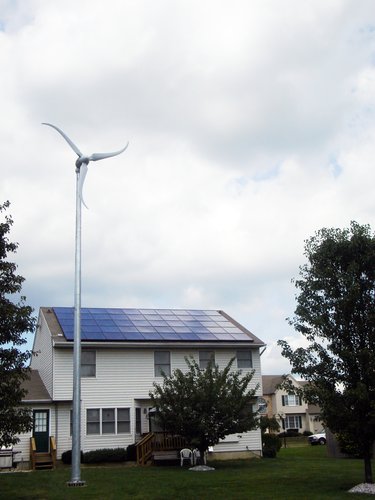
Once approvals are secured, the installer will prepare the foundation, erect the tower, mount the turbine, and complete the electrical connections. If grid-tied, they will coordinate with your utility for interconnection and net metering.
Step 6: Maintenance and Monitoring
After installation, establish a maintenance schedule with your installer. Regularly monitor your system’s performance, either through an app or manual readings, to ensure it’s operating efficiently and generating the expected power.
Is a Home Wind Turbine Worth It For You? A Final Reality Check.
A home wind turbine is not for everyone. For the vast majority of homeowners, especially those in suburban or urban environments, solar power will be a more practical, affordable, and less complex renewable energy solution.
However, if you live in a rural area with consistent, strong winds, ample open land, high electricity consumption, and a willingness to navigate the complexities, a residential wind turbine can be an incredibly powerful tool for energy independence and significant long-term savings. It’s an investment in your future, the planet’s future, and a testament to harnessing nature’s raw power right in your own backyard.
The key takeaway? Do your homework. Get professional assessments. Understand the full picture of costs, regulations, and realistic energy production. If it aligns with your unique circumstances, then yes, a wind turbine can absolutely power your home.
Frequently Asked Questions
How much does it cost to install a home wind turbine?
A grid-tied home wind turbine system (1-10 kW) typically costs between $15,000 and $70,000, including the turbine, tower, inverter, installation labor, and permits. Off-grid systems requiring battery storage will be significantly more expensive.
What is the minimum wind speed required for a home wind turbine to be effective?
For a home wind turbine to be economically viable, your property generally needs an average annual wind speed of at least 10-12 mph (4.5-5.4 m/s). Higher wind speeds lead to significantly greater energy production and faster payback times.
Are home wind turbines noisy?
While modern small wind turbines are much quieter than large industrial ones, they do produce some audible hum, especially horizontal-axis models in higher winds. This can be a concern for neighbors and may be subject to local noise ordinances.
Can I install a wind turbine in a suburban or urban area?
It is highly unlikely. Residential wind turbines require significant open space for tall towers (often 60-100+ feet) to clear surrounding obstacles and access consistent, non-turbulent wind. Local zoning laws and neighbor concerns typically make them unfeasible in dense areas.
Do home wind turbines qualify for tax credits or incentives?
Yes, small wind energy systems often qualify for the Federal Solar Investment Tax Credit (ITC), which can cover a significant percentage of the system’s cost. Many states, local governments, and utilities also offer additional rebates or incentives. It’s crucial to check current programs in your area.
Is a hybrid wind-solar system better than a standalone wind turbine?
For many homes, a hybrid wind-solar system offers greater reliability and energy independence. Wind often produces power when solar panels don’t (e.g., at night or on cloudy days), and vice versa, creating a more consistent and robust energy supply.