Can a Wind Turbine Really Power Your Entire Home? The Honest Truth About Residential Wind Energy
Picture this: a sleek, elegant wind turbine silently spinning in your backyard, generating all the electricity your home needs, freeing you from utility bills and reliance on fossil fuels. It’s a powerful vision, isn’t it? Many homeowners dream of harnessing the wind, but the reality of powering an entire house with a residential wind turbine is often more complex than the dream.
Table of Contents
- Can a Wind Turbine Really Power Your Entire Home? The Honest Truth About Residential Wind Energy
- The Dream vs. The Reality: What Residential Wind Power Really Means
- Understanding Your Home’s Energy Needs (kWh)
- Supplemental vs. Standalone Power: Setting Expectations
- How Do Small Wind Turbines Work for Homes?
- Horizontal Axis Wind Turbines (HAWTs)
- Vertical Axis Wind Turbines (VAWTs)
- Key Components of a Home Wind System
- What Size Wind Turbine Do You Need? (And What Can It Power?)
- Calculating Your Power Needs: It’s All About kWh
- Estimating Turbine Output Based on Wind Speed
- The Cost of Going Windy: Installation & Ownership
- Upfront Installation Costs: What to Expect
- Maintenance Costs & Lifespan
- Potential Savings & ROI: Is It Worth It?
- Cost Comparison Table: Wind Turbine vs. Solar Panels (for typical home)
- Advantages and Disadvantages of Home Wind Power
- The Upsides: Why Consider Wind?
- The Downsides: Real Challenges to Overcome
- Is Your Home a Good Candidate for a Wind Turbine? Key Factors to Consider
- Location, Location, Location: Wind Resource Assessment
- Zoning, Permitting, and HOAs: Navigating the Red Tape
- Space Requirements: Towers Need Room
- Your Energy Consumption Profile
- Wind vs. Solar: Which Renewable Energy is Right for You?
- Complementary Systems: The Best of Both Worlds?
- Before You Buy: Essential Steps to Take
- Step 1: Reduce, Reuse, Recycle (Your Energy) – Energy Efficiency First!
- Step 2: Conduct a Professional Wind Resource Assessment
- Step 3: Understand Local Regulations
- Step 4: Get Multiple Quotes from Reputable Installers
- The Future of Residential Wind Energy
So, can a wind turbine power your whole house? The honest truth is: yes, it’s possible, but it’s rarely a simple plug-and-play solution for the average suburban home. For most, residential wind power serves as a fantastic supplemental energy source, significantly reducing electricity bills and grid dependency. For others, particularly those in rural, windy locations with high energy needs or off-grid living, it can indeed be the primary power source. Let’s break down what it really takes.
The Dream vs. The Reality: What Residential Wind Power Really Means
Before we dive into turbines, we need to talk about your home. Just like any energy solution, the first step isn’t about generating more, but about consuming less.
Understanding Your Home’s Energy Needs (kWh)
You can’t power your home if you don’t know how much power it actually uses. Electricity is measured in kilowatt-hours (kWh). Your monthly utility bill is the easiest place to find this number. A typical U.S. home uses around 900 kWh per month, but this varies wildly based on size, location, and habits. Want to get serious? Conduct an energy audit to pinpoint energy vampires and areas for improvement. Every kWh you don’t use is a kWh you don’t have to generate.
Supplemental vs. Standalone Power: Setting Expectations
When someone asks if a wind turbine can power a house, they’re often imagining complete energy independence. Here’s what that looks like:
- Standalone (Off-Grid) Power: This means your wind turbine, often paired with batteries and sometimes solar panels, is your *only* source of electricity. It requires careful sizing, robust battery storage, and often a backup generator for calm periods. This is most common in remote locations where extending the grid is cost-prohibitive.
- Supplemental (Grid-Tied) Power: This is the more common scenario for most homeowners. Your turbine generates electricity that offsets what you’d otherwise draw from the grid. When your turbine produces more than you need, the excess can be fed back into the grid (if your utility offers net metering), potentially earning you credits. When the wind isn’t blowing, you seamlessly draw power from the grid. This approach is generally more cost-effective and less complex than going entirely off-grid.
Most residential wind turbines fall into the supplemental category, helping to lower bills and carbon footprint, rather than completely severing ties with the utility company.
How Do Small Wind Turbines Work for Homes?
At their core, wind turbines convert the kinetic energy of wind into mechanical power, which is then converted into electricity. For residential use, we’re typically talking about much smaller systems than the giant turbines you see in wind farms. There are two primary types:
Horizontal Axis Wind Turbines (HAWTs)
These are what most people picture: the classic “propeller” style turbines. They have blades that rotate around a horizontal axis, typically facing into the wind. They are generally more efficient at capturing wind energy in consistent, unidirectional wind flows.
- Pros: Higher efficiency, well-established technology, often better power output for their size.
- Cons: Require a tall tower, need to face into the wind (yawing mechanism), can be noisier, visual impact, potential bird/bat mortality (though less common with smaller residential units).
Vertical Axis Wind Turbines (VAWTs)
VAWTs have blades that rotate around a vertical axis. They often look like egg beaters or Savonius rotors. They don’t need to be pointed into the wind, making them potentially suitable for more turbulent urban environments.
- Pros: Operate in any wind direction, can be installed closer to the ground, potentially quieter, less visual impact for some designs, easier maintenance (generator at ground level).
- Cons: Generally less efficient than HAWTs, lower power output for their footprint, can be less robust in very high winds.
Key Components of a Home Wind System
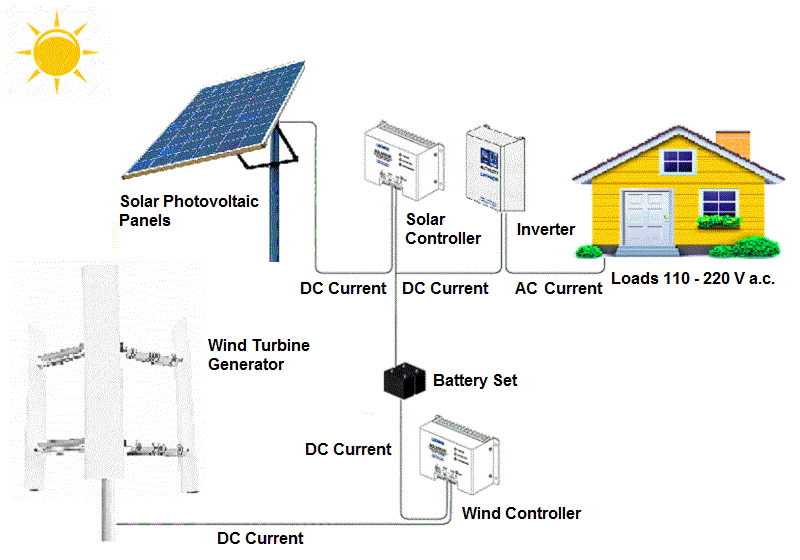
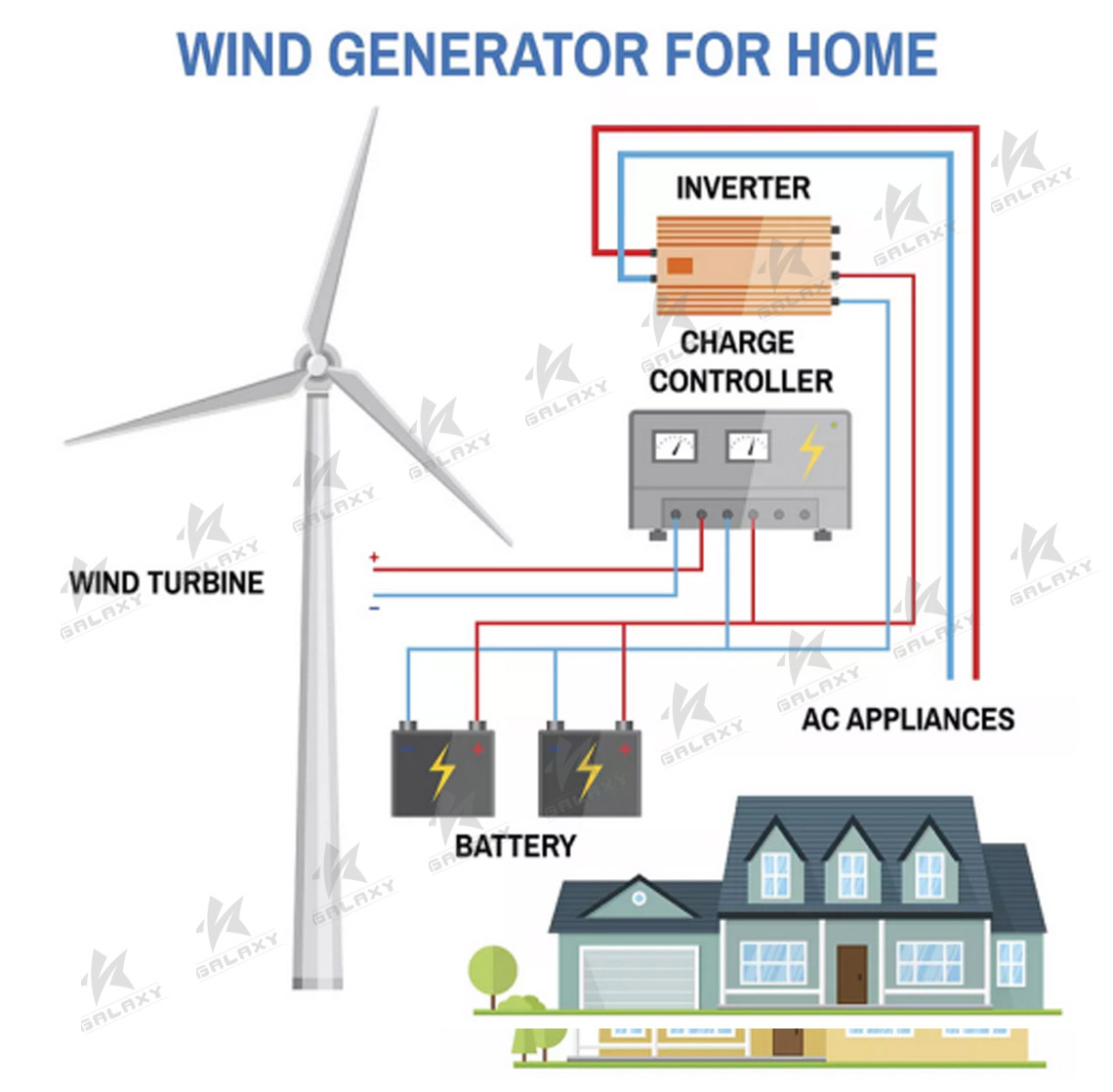
Regardless of the turbine type, a complete residential wind energy system usually includes:
:max_bytes(150000):strip_icc()/wind-turbine-generator-on-house-roof-90967703-b9619befbf954726ae92dfb6154711f2.jpg)
- Turbine: The blades and generator that convert wind into electricity.
- Tower: Lifts the turbine to capture higher, less turbulent wind. Height is crucial.
- Charge Controller: Manages the power from the turbine, preventing overcharging if batteries are used, or regulating power to the inverter.
- Inverter: Converts the DC (direct current) electricity produced by the turbine into AC (alternating current) electricity usable by your home appliances and compatible with the grid.
- Battery Bank (Optional): Essential for off-grid systems or for grid-tied systems that want backup power during outages. Stores excess energy for later use.
- Grid Connection Equipment: For grid-tied systems, includes meters and safety disconnects required by your utility.
What Size Wind Turbine Do You Need? (And What Can It Power?)
This is where the rubber meets the road. Sizing a wind turbine for your home is critical and depends on two main factors: your energy consumption and your local wind resource.
Calculating Your Power Needs: It’s All About kWh
Again, check those electricity bills. Let’s say your average monthly usage is 900 kWh. You’ll want a turbine that can reliably generate that amount over the course of a month, or at least a significant portion of it if you’re aiming for supplemental power.
Estimating Turbine Output Based on Wind Speed
This is the trickiest part. A wind turbine’s power output is highly dependent on wind speed. Crucially, power increases exponentially with wind speed. Double the wind speed, and you get eight times the power! This means a site with an average wind speed of 12-14 mph (5-6 m/s) is generally considered the minimum viable for cost-effective residential wind generation. Lower wind speeds lead to significantly lower output and much longer payback periods.
Here’s a general guide to what different turbine sizes can realistically provide:
| Turbine Size (kW) | Average Home Size Served (kWh/month) | What it Can Realistically Power |
|---|---|---|
| 0.5 – 1 kW | 100 – 300 kWh | Very small loads, supplemental power for small appliances, off-grid sheds/cabins. |
| 1 – 5 kW | 300 – 800 kWh | Significant supplemental power, can offset a large portion of a typical home’s bill with good wind. |
| 5 – 15 kW | 800 – 2,000+ kWh | Potentially full power for an energy-efficient home in high-wind areas, or robust supplemental power. |
| 15+ kW | 2,000+ kWh | Large homes, multiple buildings, or commercial applications, typically grid-tied. |
Keep in mind, these are averages. A 5 kW turbine in a consistently windy location could produce far more than the same turbine in a less windy spot. A professional wind resource assessment is non-negotiable.
The Cost of Going Windy: Installation & Ownership
One of the biggest hurdles for many homeowners is the upfront cost. Residential wind turbines are a significant investment.
Upfront Installation Costs: What to Expect
A typical 5 kW residential wind turbine system, installed, can range from $20,000 to $50,000 or more. This includes:
- The Turbine: The unit itself.
- The Tower: Often the most expensive component, especially for taller towers required for optimal wind capture.
- Balance of System: Inverter, controller, wiring, grounding, safety equipment.
- Installation Labor: Erecting the tower, wiring, commissioning.
- Permitting & Site Preparation: Engineering studies, permits, foundation work.
- Battery Bank (for off-grid/backup): Adds significant cost, often $10,000 – $20,000+.
Maintenance Costs & Lifespan
Wind turbines have moving parts, so they require more maintenance than solar panels. You might need annual inspections, lubrication, and occasional component replacement. Expect to budget $100 – $300 annually for routine maintenance. A well-maintained residential wind turbine can last 20-25 years or more.
Potential Savings & ROI: Is It Worth It?
The financial viability of a home wind turbine depends on several factors:
- Your Electricity Rates: The higher your current utility rates, the more you save by generating your own power.
- Net Metering: If your utility buys back excess power at a fair rate, your savings potential increases dramatically.
- Incentives: The federal Investment Tax Credit (ITC) offers a 30% tax credit for small wind turbines, significantly reducing the net cost. Many states and local municipalities also offer rebates, grants, or property tax exemptions.
- Wind Resource: Consistently high winds mean more power generation, leading to faster payback.
With strong incentives and a good wind resource, the payback period for a residential wind turbine can be anywhere from 8 to 20 years. Without good incentives or wind, it can be much longer, making it less of an economic investment and more of a lifestyle choice.
Cost Comparison Table: Wind Turbine vs. Solar Panels (for typical home)
| Factor | Small Wind Turbine (5 kW) | Typical Home Solar System (7 kW) |
|---|---|---|
| Initial Cost (Installed) | $20,000 – $50,000 | $15,000 – $25,000 |
| Key Variable for Output | Average Wind Speed | Sunlight Hours / Roof Angle |
| Space Required | Significant (tower + setback) | Roof space or ground mount |
| Noise/Visual Impact | Potential Issue | Generally minimal |
| Maintenance | More frequent checks, moving parts | Relatively low, occasional cleaning |
| Typical ROI Period (with incentives) | 8 – 20 years | 5 – 12 years |
Advantages and Disadvantages of Home Wind Power
Like any energy solution, residential wind power comes with its own set of pros and cons.
The Upsides: Why Consider Wind?
- 24/7 Power Potential: Unlike solar, which only generates during daylight, wind turbines can produce electricity day or night, as long as the wind blows.
- Reduced Electricity Bills: Significantly offset your reliance on grid power, leading to lower monthly expenses.
- Environmental Benefits: Clean, renewable energy reduces your carbon footprint and reliance on fossil fuels.
- Energy Independence: Less susceptible to utility rate hikes and grid outages (especially with battery backup).
- High Performance in Winter: Wind is often stronger in colder months when solar output might be lower due to shorter days and snow cover.
The Downsides: Real Challenges to Overcome
- Intermittency: No wind, no power. Storage solutions (batteries) or grid-tie systems mitigate this.
- Noise: While modern turbines are much quieter, some noise (a whooshing or whirring sound) can still be a concern for neighbors or the homeowner, especially older or cheaper models.
- Visual Impact: A tall turbine tower can be an eyesore for some, impacting property aesthetics.
- Upfront Cost: As discussed, the initial investment is substantial.
- Space Requirements: Requires significant land area for the turbine and its necessary setback from property lines and buildings.
- Local Regulations: Zoning laws, building codes, and HOA rules can make installation difficult or impossible.
- Wildlife Impact: While less of an issue for smaller residential units compared to large wind farms, bird and bat mortality can be a concern.
Is Your Home a Good Candidate for a Wind Turbine? Key Factors to Consider
So, how do you know if residential wind power is right for you? It boils down to a few critical questions:
Location, Location, Location: Wind Resource Assessment
This is arguably the most important factor. You need consistent, strong, and unobstructed wind. Trees, buildings, and terrain features create turbulence and block wind. Ideally, your turbine needs to be installed on a tower that extends at least 20-30 feet higher than any obstruction within 500 feet. You can check preliminary wind maps (like those from the Department of Energy) but a professional site assessment using an anemometer is essential for accurate data. Without sufficient wind, your investment won’t pay off.
Zoning, Permitting, and HOAs: Navigating the Red Tape
Before you even think about buying a turbine, contact your local planning or zoning department. They will have regulations regarding:
- Tower Height: Strict limits are common.
- Setbacks: Minimum distances from property lines, roads, and buildings.
- Noise Ordinances: Limits on decibel levels.
- Permit Requirements: Building permits, electrical permits, and sometimes special use permits.
If you live in a homeowner’s association (HOA), be prepared for even more restrictions, as they often have rules about external structures and visual aesthetics.
Space Requirements: Towers Need Room
A typical 5 kW turbine might require a tower height of 60-100 feet. The footprint for the tower foundation and guy wires (if applicable) can be substantial. You’ll need ample clear space, not just for the tower itself, but also for safety setbacks.
Your Energy Consumption Profile
Are you a heavy energy user? Do you have large power demands at night? If your goal is significant bill reduction or energy independence, your consumption patterns influence the ideal size and whether battery storage is necessary.
Wind vs. Solar: Which Renewable Energy is Right for You?
Often, homeowners considering wind are also looking at solar. Here’s a quick comparison:
- Solar: Generally lower upfront cost, simpler installation, less maintenance, no moving parts, less noise/visual impact, widely applicable (most homes have sun). However, it only generates during the day.
- Wind: Higher upfront cost, more complex installation, more maintenance, can generate day and night, but requires specific site conditions (strong, unobstructed wind).
Complementary Systems: The Best of Both Worlds?
For ultimate energy independence and reliability, a hybrid wind and solar system can be incredibly effective. Wind often peaks when solar is low (e.g., winter, cloudy days, night), and vice-versa. Combining them can provide a more consistent power supply, reducing the need for massive battery banks or grid reliance.
Before You Buy: Essential Steps to Take
Considering a residential wind turbine is a big decision. Don’t rush into it. Here are your essential next steps:
Step 1: Reduce, Reuse, Recycle (Your Energy) – Energy Efficiency First!
Seriously, make your home as energy-efficient as possible first. Insulate, seal air leaks, upgrade to LED lighting, get energy-efficient appliances. Every dollar spent on efficiency saves you money twice: once by lowering your bills and again by reducing the size (and cost) of the renewable energy system you need.
Step 2: Conduct a Professional Wind Resource Assessment
Do NOT rely on general wind maps or anecdotal evidence. Hire a professional to assess your specific site. They will install an anemometer for a period (often 3-12 months) to accurately measure average wind speeds and turbulence at your proposed tower height. This data is indispensable for accurate turbine sizing and performance predictions.
)
Step 3: Understand Local Regulations
Before any major investment, know your local zoning laws, building codes, and HOA rules. A great turbine means nothing if you can’t get a permit to install it.
Step 4: Get Multiple Quotes from Reputable Installers
Seek out installers with experience in residential wind. Ask for references, check their certifications, and get detailed quotes that include all components, installation, and permitting costs. Compare not just price, but also warranties, estimated power output, and system design.
The Future of Residential Wind Energy
The field of small wind is continuously evolving. Innovations in design are leading to quieter, more efficient, and aesthetically pleasing turbines. Research into micro-turbines and urban wind solutions is ongoing, aiming to overcome some of the traditional challenges of residential wind in less-than-ideal environments. As technology advances and economies of scale improve, residential wind may become a more accessible option for a broader range of homeowners.
For now, while a wind turbine can power a house, it’s a commitment best suited for specific locations and homeowners willing to invest in a comprehensive, data-driven approach. It’s a powerful step towards energy independence, but one that requires careful planning and a realistic understanding of its potential and limitations.
Frequently Asked Questions
Can a single small wind turbine power an entire average-sized house?
While technically possible in ideal, high-wind conditions and for energy-efficient homes, it’s more common for a single residential wind turbine to act as a significant supplemental power source, offsetting a large portion of electricity consumption rather than providing 100% of a typical home’s needs entirely off-grid. For complete independence, it often requires a larger turbine, battery storage, and possibly a hybrid wind-solar system.
How much does it cost to install a wind turbine for a home?
The installed cost for a residential wind turbine system (e.g., 5 kW) typically ranges from $20,000 to $50,000 or more, depending on the turbine size, tower height, installation complexity, and whether batteries are included for off-grid or backup power. This cost can be offset by federal, state, and local incentives.
What wind speed is required for a home wind turbine to be effective?
For cost-effective residential wind power, an average annual wind speed of at least 12-14 mph (5-6 meters per second) at the turbine’s proposed height is generally recommended. Power output increases exponentially with wind speed, so sites with lower average speeds will yield significantly less electricity and longer payback periods.
Are there noise concerns with residential wind turbines?
Modern residential wind turbines are significantly quieter than older models, but some noise (a low whooshing or whirring sound) can still be present, particularly for those sensitive to sound or with turbines installed close to living areas. It’s an important factor to consider, especially concerning neighbors and local noise ordinances.
How do I know if my property is suitable for a wind turbine?
Suitability depends on three key factors: a strong, unobstructed wind resource (requiring a professional site assessment), sufficient clear land area for the turbine and its required setbacks, and compliance with local zoning laws, building codes, and any homeowner’s association restrictions regarding tower height and visual impact.
Is wind power better than solar power for homes?
Neither is inherently ‘better’; they are different and often complementary. Solar generally has a lower upfront cost, simpler installation, and fewer site-specific constraints (most homes have sun). Wind can generate power day and night but requires specific, consistently windy conditions and a larger initial investment. A hybrid wind-solar system can offer increased reliability.
What maintenance is required for a home wind turbine?
Residential wind turbines, having moving parts, require more maintenance than solar panels. This typically includes annual inspections, lubrication, checking bolts and connections, and occasional replacement of components like blades or bearings. Budgeting around $100-$300 annually for routine maintenance is advisable.