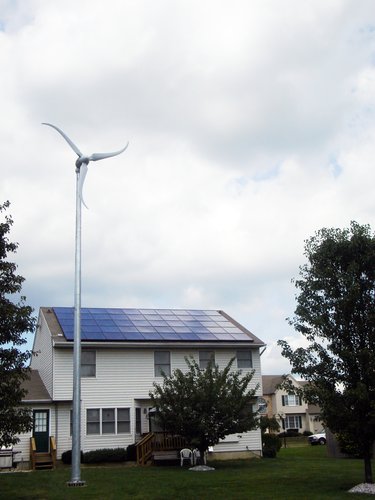
Can a Wind Turbine Power My House? The Honest Truth About Residential Wind Energy
Picture this: a sleek wind turbine gracefully turning in your backyard, silently churning out clean electricity, freeing you from fluctuating utility bills, and shrinking your carbon footprint. It’s a compelling vision, right? The idea of a wind turbine powering your entire house is undeniably attractive, a true symbol of energy independence.
Table of Contents
- Can a Wind Turbine Power My House? The Honest Truth About Residential Wind Energy
- The Short Answer: Is Residential Wind Power Right for Your Home?
- Understanding How Small Wind Turbines Work for Homes
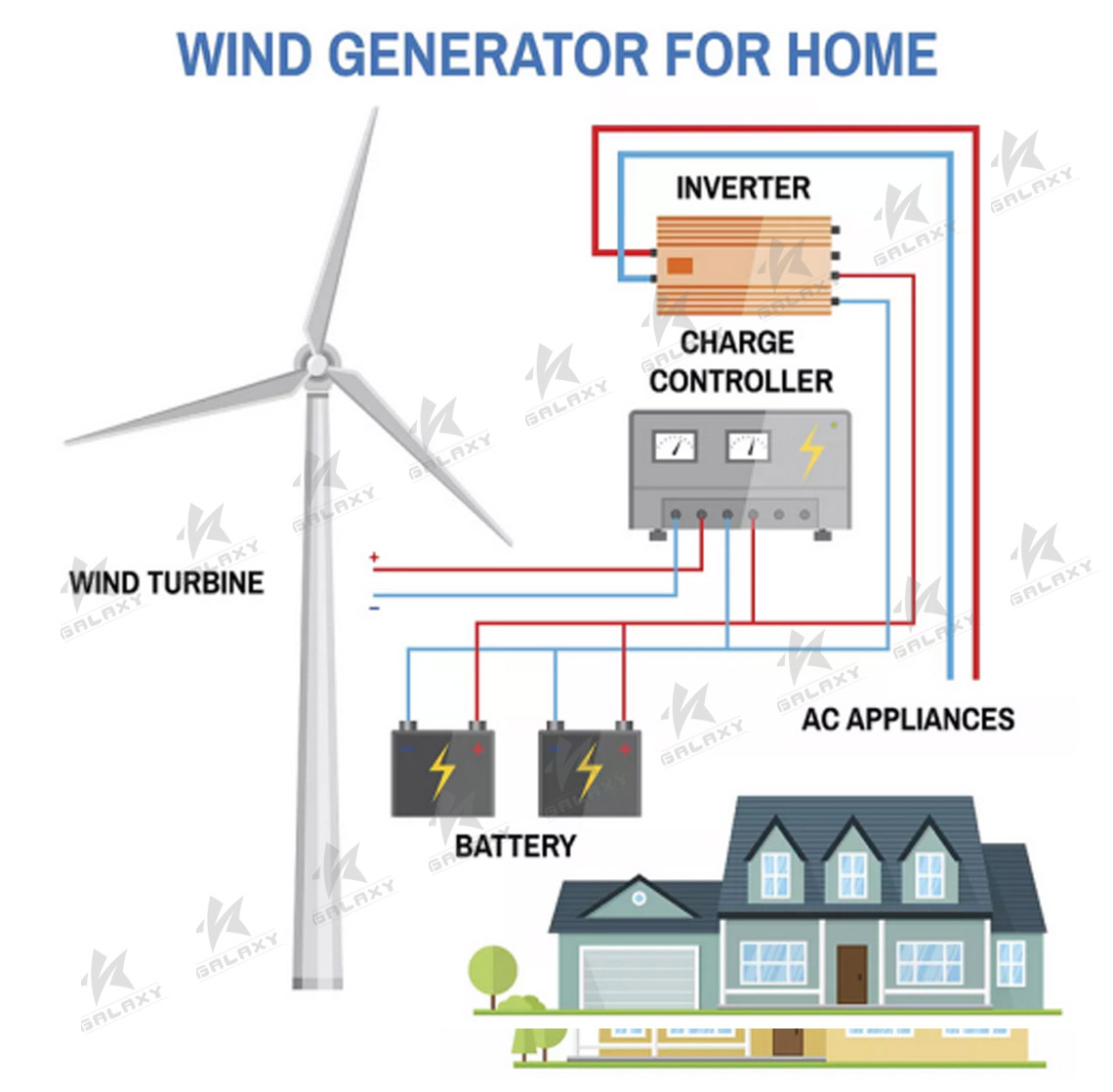
- Basic Components of a Small Wind Electric System
- How It Generates Power: From Breeze to Kilowatt-Hour
- Types of Residential Wind Turbines
- Horizontal Axis Wind Turbines (HAWTs)
- Vertical Axis Wind Turbines (VAWTs)
- Sizing Your Home Wind Turbine: How Much Power Do You Really Need?
- Calculate Your Energy Consumption
- Match Turbine Output to Demand
- Wind Speed is King: The Exponential Relationship
- The “Balance of System” (BOS)
- The Cost of Going Wind: Installation, Maintenance, and ROI
- Initial Investment: Beyond the Turbine Price Tag
- Operating & Maintenance Costs
- Incentives & Rebates: Boosting Your Savings
- Return on Investment (ROI)
- Wind Power vs. Solar Power for Your Home: A Head-to-Head Comparison
- Complementary, Not Mutually Exclusive
- Factors to Consider: Wind vs. Solar
- The Installation Journey: What to Expect from Site Assessment to Operation
- Step 1: Site Assessment & Wind Resource Evaluation
- Step 2: Zoning, Permitting & Local Regulations
- Step 3: Choosing a Reputable Installer & Turbine Manufacturer
- Step 4: Installation Process
- Step 5: Grid Interconnection (or Off-Grid Setup)
- Advantages and Disadvantages of Residential Wind Energy
- Pros of Home Wind Turbines:
- Cons of Home Wind Turbines:
- Making Your Home Energy Efficient FIRST: The Smartest Investment
- The Wind Beneath Your Wings: Is It Worth It?
But let’s get real for a moment. Is this dream a practical reality for the average homeowner? Can you truly cut the cord and rely solely on wind to keep your lights on, your fridge cold, and your devices charged? The honest truth is: it’s absolutely possible, but it’s far from a one-size-fits-all solution.
Unlike simply plugging in a new appliance, integrating residential wind power into your home requires a deep dive into your property, local regulations, energy consumption, and, of course, your wallet. This isn’t just about buying a turbine; it’s about investing in an entire system tailored to your unique circumstances.
In this definitive guide, we’re going to cut through the hype and give you the actionable, no-nonsense information you need to determine if a home wind turbine is a viable, smart choice for your household. We’ll explore how they work, what they cost, how they stack up against solar, and the crucial steps you need to take before making this significant investment.
The Short Answer: Is Residential Wind Power Right for Your Home?
You’re looking for a straight answer, and I get it. So, here it is: A wind turbine CAN power your house, either partially or entirely, but it depends heavily on specific conditions. It’s not a magic bullet, but for the right home in the right location, it can be an incredibly powerful and sustainable energy solution.
Think of it like this: not every house is perfect for solar panels (e.g., heavily shaded roofs), and similarly, not every house is ideal for a wind turbine. Here are the key factors that determine feasibility:
- Wind Resource (Average Wind Speed): This is the absolute king. If you don’t have consistently strong, unobstructed wind, a turbine simply won’t generate enough power to justify the investment. We’re talking about an average annual wind speed of at least 10 mph (4.5 m/s) to be seriously considered, and ideally 12-14 mph (5.5-6.3 m/s) for optimal performance.
- Space & Zoning: Wind turbines require significant clear space, both for the tower itself and for surrounding airflow. You’ll need enough property to meet local zoning setbacks (distance from property lines, other structures) and to ensure the turbine’s rotor is well above any nearby obstacles (trees, buildings) that could create turbulence. Tall towers are often necessary, which leads to visual impact considerations.
- Energy Needs (kWh/month): How much electricity do you actually use? A small 1 kW turbine won’t cut it for a large, energy-hungry home. Knowing your average monthly kilowatt-hour (kWh) consumption is crucial for sizing the right system.
- Budget & Financial Incentives: Home wind turbines represent a substantial upfront investment. While long-term savings are possible, you need to be prepared for the initial cost. Federal, state, and local incentives (tax credits, rebates) can significantly improve the financial viability.
- Grid-Tied vs. Off-Grid Goals: Do you want to supplement your grid power (grid-tied system with net metering) or completely disconnect (off-grid system requiring battery storage)? This choice profoundly impacts system design and cost.
If you’re in a rural area, have ample unobstructed land, consistently good wind, and are ready for a significant investment, then residential wind power moves from a dream to a very tangible possibility.
Understanding How Small Wind Turbines Work for Homes
At its core, a wind turbine is remarkably simple: it harnesses the kinetic energy of moving air and converts it into electricity. But for your home, it’s part of a larger, integrated system.
Basic Components of a Small Wind Electric System
- Turbine: This is the star of the show, comprising:
- Rotor (Blades): Catches the wind, causing the turbine to spin.
- Nacelle: Houses the generator, gearbox (in some models), and control electronics.
- Tower: Lifts the turbine high enough to capture stronger, less turbulent wind. Taller towers generally mean more consistent power.
- Controller: Manages the electrical output from the turbine, protecting the batteries (if used) from overcharging and the turbine from over-speeding in high winds.
- Inverter: Converts the direct current (DC) electricity produced by the turbine into alternating current (AC) electricity, which is what your home appliances use and what the grid accepts.
- Battery Bank (for Off-Grid or Hybrid Systems): Stores excess electricity for use when the wind isn’t blowing.
- Wiring & Safety Disconnects: Connects all components safely and allows for system shutdown.
How It Generates Power: From Breeze to Kilowatt-Hour
When wind passes over the turbine blades, it creates lift and drag, causing the rotor to spin. This rotational energy turns a shaft connected to a generator inside the nacelle. The generator then converts this mechanical energy into DC electricity. This DC power is then routed through a charge controller (to manage charging if batteries are present) and then to an inverter, which transforms it into usable AC power for your home or to be fed back into the electrical grid.
Types of Residential Wind Turbines
Residential turbines generally fall into two main categories, each with its own advantages and disadvantages:
Horizontal Axis Wind Turbines (HAWTs)
These are the iconic, propeller-like turbines you typically picture. They have blades that rotate around a horizontal axis, similar to a plane propeller. HAWTs are generally more efficient at capturing wind energy in steady, consistent winds.
Vertical Axis Wind Turbines (VAWTs)
VAWTs have blades that rotate around a vertical axis. They come in various designs, often resembling an egg beater (Darrieus type) or S-shape (Savonius type). They are less common for residential use but have niche applications.
| Type | Description | Pros | Cons | Best Suited For |
|---|---|---|---|---|
| Horizontal Axis (HAWT) | Propeller-like blades rotating on a horizontal shaft. | Generally more efficient in steady high winds; well-established technology. | Requires a yawing mechanism to face wind; higher noise potential; needs tall towers for optimal performance; sensitive to turbulence. | Rural areas with consistent, unobstructed wind flow; larger energy demands. |
| Vertical Axis (VAWT) | Blades rotating on a vertical shaft (e.g., Darrieus, Savonius). | Less sensitive to wind direction; lower noise output; can be installed closer to ground; easier maintenance access. | Generally less efficient than HAWTs; higher torque ripple; can be less reliable at very low wind speeds; specific designs may be less robust. | Urban or suburban settings with turbulent wind; smaller scale applications; where visual or noise impact is a major concern. |
Sizing Your Home Wind Turbine: How Much Power Do You Really Need?
This is where the rubber meets the road. Getting the right size turbine is critical for both performance and financial viability. Too small, and you won’t meet your needs; too large, and you’ve overspent.
Calculate Your Energy Consumption
Before you even look at a turbine, look at your electricity bills. Find your average monthly kWh consumption over the past year. This is your baseline. A typical US home uses around 900 kWh per month, but this varies wildly.
Pro Tip: Even before considering wind, focus on making your home more energy-efficient! Reducing your overall demand means you need a smaller, less expensive wind system.
Match Turbine Output to Demand
Turbines are rated in kilowatts (kW), which refers to their maximum instantaneous power output. However, their actual energy production is measured in kilowatt-hours (kWh) over time, and it’s heavily dependent on wind speed. A 5 kW turbine in a low-wind area will produce far less energy annually than a 3 kW turbine in a consistently windy location.
| Home Size (Approx.) | Average Monthly Usage (kWh) | Recommended Turbine Size (kW) | Estimated Annual Output (kWh) (at good wind speeds) |
|---|---|---|---|
| Small (1-2 people, efficient) | 300-500 | 1-3 | 3,600-6,000 |
| Medium (2-4 people, typical) | 500-1000 | 3-5 | 6,000-12,000 |
| Large (4+ people, high usage) | 1000-2000+ | 5-15+ | 12,000-24,000+ |
Note: Annual output estimations are highly generalized and depend critically on the specific turbine model and your average wind speed. A professional site assessment is essential.
Wind Speed is King: The Exponential Relationship
This is perhaps the most important concept in residential wind power. The amount of power a turbine can generate is proportional to the cube of the wind speed. This isn’t linear; it’s exponential.
- If you double the wind speed, you get EIGHT times the power (2 x 2 x 2 = 8).
- This means a small difference in average wind speed can lead to a massive difference in energy production and, ultimately, your ROI.
This is why a professional wind resource assessment is non-negotiable.
The “Balance of System” (BOS)
Remember, the turbine itself is just one part. The BOS includes:
- Charge Controller: Essential for battery-based systems to prevent overcharging.
- Inverter: Converts DC to AC. Often the same type used in solar systems.
- Batteries: If you’re going off-grid or want backup power, these are a major component. Sizing them correctly for your energy needs and desired autonomy (days without wind) is complex.
- Wiring & Electrical Panels: Connecting everything safely and efficiently.
The Cost of Going Wind: Installation, Maintenance, and ROI
Let’s talk money. A residential wind turbine is a significant investment, often comparable to or exceeding a large solar panel system. Understanding the costs involved is crucial for informed decision-making.
Initial Investment: Beyond the Turbine Price Tag
The total cost isn’t just the turbine itself. You’re paying for a complete energy generation system, installed and ready to go. Here’s a general breakdown:
| Turbine Size (kW) | Estimated Turbine Cost ($) | Estimated Tower Cost ($) | Estimated Installation & BOS Cost ($) | Total Estimated Cost ($) |
|---|---|---|---|---|
| 1 kW (Very Small Home/Supplemental) | $3,000 – $7,000 | $2,000 – $4,000 | $2,000 – $5,000 | $7,000 – $16,000 |
| 5 kW (Medium Home) | $15,000 – $25,000 | $5,000 – $10,000 | $5,000 – $15,000 | $25,000 – $50,000 |
| 10 kW (Large Home/Off-Grid) | $25,000 – $40,000 | $8,000 – $15,000 | $10,000 – $20,000 | $43,000 – $75,000 |
These figures are estimates and can vary significantly based on location, specific equipment chosen, site complexity, and labor rates. Off-grid systems requiring large battery banks will be on the higher end of these ranges.
Operating & Maintenance Costs
Wind turbines, having moving parts, require more maintenance than a typical solar array. You can expect:
- Annual Inspections: Checking bolts, blades, tower integrity, and electrical connections.
- Component Replacement: Bearings, brushes, or even blades might need replacement over the system’s lifespan (typically 20-25 years).
- Inverter Replacement: Like solar inverters, these typically last 10-15 years and will need replacing.
Budget roughly 1-3% of the initial system cost annually for maintenance and potential repairs.
:max_bytes(150000):strip_icc()/wind-turbine-generator-on-house-roof-90967703-b9619befbf954726ae92dfb6154711f2.jpg "Is a Home Wind Turbine Right for You?")
Incentives & Rebates: Boosting Your Savings
Don’t overlook these! They can dramatically improve your financial case:
- Federal Investment Tax Credit (ITC): Currently, you can claim a significant percentage (e.g., 30% for systems placed in service by 2032) of the cost of new, qualified small wind energy property as a tax credit. This is huge!
- State & Local Programs: Many states, counties, and even utility companies offer additional incentives, rebates, or performance-based payments for renewable energy installations. Check DSIRE (Database of State Incentives for Renewables & Efficiency) for your area.
- Net Metering: If you’re grid-tied, net metering allows you to send excess electricity generated by your turbine back to the grid for credits on your utility bill, essentially “spinning your meter backward.” This is key for maximizing your savings.
Return on Investment (ROI)
The payback period for a residential wind turbine can range anywhere from 6 to 20+ years. Factors influencing this include:
- Initial Cost (after incentives): Lower upfront cost means faster payback.
- Average Wind Speed: Higher, more consistent wind leads to more energy production and higher savings.
- Electricity Rates: If you pay high electricity rates, your savings will be more substantial, shortening the payback period.
- Maintenance Costs: Lower maintenance means quicker ROI.
A detailed financial analysis with a local installer is essential to get a realistic ROI estimate for your specific situation.
Wind Power vs. Solar Power for Your Home: A Head-to-Head Comparison
It’s natural to compare wind to solar, as they are the two most common residential renewable energy options. Often, they are not mutually exclusive; in fact, a hybrid wind-solar system can be incredibly effective, leveraging the strengths of both.
Complementary, Not Mutually Exclusive
Solar panels perform best on sunny days, while wind turbines often produce more power during stormy or cloudy periods when the wind is strongest. This seasonal and daily variability can make a hybrid system more consistent and reliable, especially for off-grid applications.
Factors to Consider: Wind vs. Solar
| Feature | Residential Wind Power | Residential Solar Power |
|---|---|---|
| Primary Energy Source | Wind (kinetic energy) | Sun (photovoltaic effect) |
| Availability | Variable (day/night, seasonal wind patterns); often stronger in winter. | Variable (day/night, seasonal sun angle); stronger in summer. |
| Space Requirements | Tall tower (requires clear land, setbacks); significant visual impact. | Roof or ground space (unshaded); generally less visually prominent. |
| Cost per Watt | Generally higher upfront per unit of power. | Generally lower upfront per unit of power. |
| Maintenance | More mechanical parts, annual checks, potential component replacement. | Fewer moving parts, occasional cleaning, inverter replacement. |
| Aesthetic Impact | Can be visually prominent, subject to local objections. | Generally less noticeable on rooftops; ground mounts are more visible. |
| Grid Connection | Often requires grid-tied with net metering; off-grid possible. | Often requires grid-tied with net metering; off-grid possible. |
| Best Suited For | Rural, windy areas with open space and less visual constraint. | Most homes with unshaded roof/yard space and good sun exposure. |
Ultimately, the best choice depends on your specific site, local resources, budget, and energy goals. For many, solar is the easier entry point due to lower costs and simpler installation, but wind offers unique advantages in certain environments.
The Installation Journey: What to Expect from Site Assessment to Operation
So, you’ve done your homework and think wind power might be for you. What’s next? Here’s a typical roadmap:
Step 1: Site Assessment & Wind Resource Evaluation
This is arguably the most critical step. A qualified professional will:
- Analyze Wind Data: They’ll review local wind maps and historical data, but also assess your specific property for obstructions (trees, buildings, hills) that could create turbulence or block wind flow.
- On-Site Measurement (Optional but Recommended): For truly accurate data, some experts recommend installing an anemometer (wind speed measuring device) on a temporary mast for 6-12 months to get precise readings specific to your location.
- Topographical Survey: Understanding your land’s contours and proximity to other structures.
Step 2: Zoning, Permitting & Local Regulations
This is where many aspiring wind power enthusiasts hit roadblocks. Before you buy anything, contact your local planning or zoning department. You need to understand:
- Height Restrictions: How tall can your tower be? (This is crucial for turbine efficiency).
- Setbacks: How far must the turbine be from property lines, roads, and dwellings?
- Noise Ordinances: Are there limits on sound levels? (Modern turbines are much quieter, but noise can still be a concern).
- Permit Requirements: What specific permits are needed (building, electrical, environmental)?
- Utility Interconnection: If you’re grid-tied, your utility company will have specific requirements for connecting your system to their grid.
Step 3: Choosing a Reputable Installer & Turbine Manufacturer
This isn’t a DIY project for most. You need experienced professionals:
- Look for Certifications: Ask about certifications for both the turbine (e.g., Small Wind Certification Council – SWCC) and the installer.
- Check References: Speak to previous customers and look at their installations.
- Warranty & Support: Understand what’s covered for the turbine, tower, and installation.
- Comprehensive Quotes: Get detailed quotes that include all components, installation labor, permitting fees, and estimated energy production.
Step 4: Installation Process
Once permits are secured and equipment ordered, installation typically involves:
- Foundation Preparation: Pouring concrete for the tower base.
- Tower Erection: Raising the tower using specialized equipment.
- Turbine Assembly: Mounting the nacelle and blades onto the tower.
- Electrical Wiring: Connecting the turbine to the controller, inverter, and your home’s electrical panel (or battery bank).
Step 5: Grid Interconnection (or Off-Grid Setup)
If grid-tied, the utility company will inspect the system and install any necessary meters for net metering. For off-grid systems, the battery bank and charge controller setup are finalized, ensuring reliable power supply.
Advantages and Disadvantages of Residential Wind Energy
Like any major home improvement, there are clear upsides and downsides to consider.
 "Home Wind Turbines: When Do They Make Sense? | EnergySage")
Pros of Home Wind Turbines:
- Renewable & Clean Energy: Zero carbon emissions during operation, reducing your environmental footprint.
- Lower/No Electricity Bills: Significant savings, especially with net metering or full energy independence off-grid.
- Energy Independence & Security: Less reliance on fossil fuels and external power grids.
- Potential for High Output: In consistently windy areas, turbines can produce power day and night, regardless of sun availability.
- Resilience: Can be a vital power source during grid outages, especially when paired with battery storage.
Cons of Home Wind Turbines:
- High Initial Cost: A substantial investment compared to other home improvements.
- Site-Specific Requirements: Needs consistent, strong wind and ample clear space – not suitable for all properties.
- Intermittency: Wind doesn’t always blow, meaning power production fluctuates. Battery storage or grid connection is essential.
- Noise & Visual Impact: Turbines can generate some noise (though modern ones are much quieter) and are a prominent visual feature, leading to potential aesthetic concerns or neighbor objections.
- Zoning & Permitting Challenges: Navigating local regulations can be complex and time-consuming.
- Maintenance: Requires more active maintenance than solar panels due to moving parts.
- Wildlife Impact: Potential, though generally low for small residential turbines, for bird or bat strikes.
Making Your Home Energy Efficient FIRST: The Smartest Investment
Before you even dream of a turbine, always, always, ALWAYS prioritize energy efficiency. It’s the lowest-hanging fruit and the smartest first step in any renewable energy journey.
- Insulation: Proper attic, wall, and floor insulation prevents heat loss in winter and heat gain in summer.
- Window & Door Sealing: Stop drafts.
- LED Lighting: Dramatically reduce lighting energy consumption.
- Energy-Efficient Appliances: Look for ENERGY STAR ratings when replacing appliances.
- Smart Thermostats: Optimize heating and cooling schedules.
By reducing your overall energy demand, you can potentially install a smaller, less expensive wind (or solar) system, making the entire project more cost-effective and achievable.
The Wind Beneath Your Wings: Is It Worth It?
So, can a wind turbine power your house? Yes, it can, given the right circumstances. It’s not a simple ‘yes’ or ‘no’ but a carefully considered ‘yes, if…’
Residential wind energy offers incredible potential for energy independence, significant long-term savings, and a genuine commitment to sustainable living. However, it demands a thorough understanding of your property’s wind resources, a significant upfront investment, and a willingness to navigate local regulations.
If you have that rural plot, the consistent breeze, and the vision for a truly self-sufficient home, then exploring residential wind power with a qualified local expert is absolutely a journey worth taking. It’s a powerful way to take control of your energy future, one gust at a time.
n
Frequently Asked Questions
How much does a wind turbine cost to power a house?
The total estimated cost for a residential wind turbine system (including the turbine, tower, installation, and balance of system components like inverters and controllers) can range from $7,000 for a small 1 kW system up to $75,000 or more for larger 10 kW systems, especially if off-grid with extensive battery storage. Costs vary significantly based on location, wind resource, specific equipment, and labor.
What size wind turbine do I need for my home?
The size of the wind turbine you need depends on your average monthly electricity consumption (in kWh) and your site’s average wind speed. A typical medium-sized home using 500-1000 kWh per month might require a 3-5 kW turbine in a good wind resource area. Always calculate your energy use and get a professional site assessment for accurate sizing.
Can a small wind turbine power an entire house off-grid?
Yes, a small wind turbine can power an entire house off-grid, but it requires careful planning, significant investment, and often a hybrid system (e.g., wind and solar) for reliability. A large battery bank is essential to store energy for periods of low wind, and the system must be sized generously to meet all your energy demands year-round.
Is wind power more efficient than solar power for homes?
Neither wind nor solar is universally ‘more efficient’ for homes; their effectiveness is site-specific. Wind turbines can generate power day and night, especially in consistently windy seasons (often winter), while solar panels depend on sunlight. In locations with excellent, consistent wind resources, wind can be highly productive. Many homeowners find a hybrid wind-solar system offers the most reliable and consistent power production.
What are the disadvantages of having a home wind turbine?
Disadvantages include high initial cost, strict site-specific requirements (consistent high wind, ample clear space), intermittency of power production (wind doesn’t always blow), potential noise and visual impact, and complexities with local zoning and permitting regulations. They also require more maintenance than solar panels due to moving parts.
Do I need permits to install a residential wind turbine?
Absolutely. You will almost certainly need various permits, including building permits, electrical permits, and potentially environmental permits, from your local municipality or county. Local zoning ordinances will dictate requirements like tower height restrictions, setbacks from property lines, and noise limits. Always check with your local planning department before proceeding.
How long does a home wind turbine last?
A well-maintained residential wind turbine system typically has a lifespan of 20 to 25 years or more. Major components like the turbine itself and the tower are built for durability. However, parts like inverters usually need replacement every 10-15 years, and other components like batteries (in off-grid systems) will have their own lifespans, requiring periodic replacement.