Powering Your Entire Home with a Wind Turbine: The Ultimate Guide to Residential Wind Energy
You’ve seen them dotting the landscape, those majestic giants harnessing the invisible power of the wind. And maybe you’ve wondered: Can I bring that kind of power home? Can a single wind turbine really power my entire house, give me true energy independence, and drastically cut my electricity bills?
Table of Contents
- Powering Your Entire Home with a Wind Turbine: The Ultimate Guide to Residential Wind Energy
- Decoding Residential Wind Power: Is It Right for You?
- The Core Question: How Much Power Does a House Need?
- The Unpredictable Nature of Wind: Why Site Assessment is Key
- Wind vs. Solar: A Symbiotic Relationship (or a Solo Act?)
- Sizing Up Your Solution: What Size Wind Turbine Do You Need?
- Calculating Your Home’s Energy Demand: A Step-by-Step Guide
- Matching Turbines to Your Needs: Power Output & Capacity
- Horizontal Axis vs. Vertical Axis: Which Is Best for Your Home?
- The Full Picture: Costs, Installation & Return on Investment
- Breaking Down the Costs: Beyond the Turbine Price Tag
- Estimating Total Investment: A Realistic Budget
- Incentives and Financial Aid: Making Wind Power More Affordable
- Installation Realities: What You Need to Know Before You Build
- Site Selection: More Than Just ‘Windy’
- Permitting and Zoning: Navigating Local Regulations
- Grid-Tied vs. Off-Grid Systems: Choosing Your Path
- Finding a Qualified Installer: Vetting Your Pros
- The Pros and Cons of Residential Wind Energy: A Balanced View
- Advantages: Why Go Wind?
- Disadvantages: The Challenges
- Is a Wind Turbine for Your Whole House a Realistic Dream?
It’s a fantastic question, and one many homeowners like you are asking as they seek sustainable, cost-effective energy solutions. The short answer? Yes, it absolutely can – but with some crucial caveats. It’s not as simple as buying a turbine off the shelf and plugging it in. To truly power your whole home with wind, you need the right site, the right turbine, and a clear understanding of your energy needs.
This isn’t about generalities; it’s about the nitty-gritty. I’m going to walk you through everything you need to know, from assessing your property’s wind potential to understanding costs, choosing the right system, and navigating the installation process. By the end, you’ll know if a whole-house wind turbine is a realistic dream or if another renewable path might suit you better.
Decoding Residential Wind Power: Is It Right for You?
Before we dive into turbines and kilowatts, let’s address the fundamental questions that determine if residential wind power is even on your horizon.
The Core Question: How Much Power Does a House Need?
To power your entire house, you first need to know how much electricity your house actually consumes. This isn’t a one-size-fits-all number.
- Average U.S. Household Consumption: The U.S. Energy Information Administration (EIA) reports that the average residential customer in the U.S. uses about 889 kilowatt-hours (kWh) per month. But remember, that’s an average.
- Factors Influencing Your Home’s Energy Use: Your actual consumption depends heavily on factors like:
- House Size: Larger homes typically use more energy.
- Occupancy: More people generally mean more energy use.
- Appliance Efficiency: Older appliances can be energy hogs.
- Heating and Cooling: HVAC systems are often the biggest energy consumers.
- Lifestyle: How often you run laundry, dishwashers, or leave lights on.
Your goal isn’t just to match the average, but to understand your specific energy footprint. This will be the baseline for sizing any wind system.
The Unpredictable Nature of Wind: Why Site Assessment is Key
Unlike solar panels that reliably produce power during daylight hours (weather permitting), wind is, well, windy. It’s intermittent and highly site-dependent. This is perhaps the single most critical factor in determining the viability of a whole-house wind turbine.
- Wind Speed is Everything: The power available in the wind is proportional to the cube of the wind speed. This means if you double the wind speed, you get eight times the power! A marginal site (e.g., 9-10 mph average) will produce significantly less power than an excellent site (e.g., 14-16 mph average). Most residential turbines need an annual average wind speed of at least 10 mph (4.5 m/s) to be economically viable, and often closer to 12-14 mph for true whole-house power.
- Understanding Your Property’s Wind Potential: This isn’t guesswork. You’ll need to assess:
- Obstacles: Trees, buildings, hills – anything that creates turbulence or blocks wind flow can drastically reduce a turbine’s efficiency. Turbines need to be installed significantly above these obstructions (typically 30 feet higher than anything within a 500-foot radius).
- Topography: Open, elevated sites away from urban clutter are ideal. Ridges and coastal areas often have better wind resources.
- Local Data: While online wind maps are a starting point, a professional wind resource assessment using an anemometer placed at potential turbine height provides the most accurate data for your specific location.
Wind vs. Solar: A Symbiotic Relationship (or a Solo Act?)
Many people compare wind and solar, but savvy homeowners often consider them complementary rather than competing technologies.
- When Wind Excels:
- Winter Months: Wind speeds are often higher in winter.
- Nighttime: Wind turbines generate power 24/7 as long as there’s wind, unlike solar panels.
- Cloudy Days: Unaffected by cloud cover.
- When Solar Excels:
- Daylight Hours: Peak production during the day.
- Summer Months: Generally more sunshine.
- Predictability: Easier to predict output based on sun exposure.
- The Power of Hybrid Systems: For many, a hybrid wind and solar system offers the best of both worlds, providing a more consistent and reliable power supply throughout the year, especially for off-grid applications. Wind can charge batteries when the sun isn’t shining, and solar can pick up the slack on calm days.
Sizing Up Your Solution: What Size Wind Turbine Do You Need?
Once you understand your energy needs and wind potential, it’s time to talk turbine size. This is where the rubber meets the road for powering your whole home.
Calculating Your Home’s Energy Demand: A Step-by-Step Guide
You need a precise number, not an estimate, to size your system correctly.
- Reviewing Your Electricity Bills: Gather at least 12 months of electricity bills. This will give you your average monthly (and annual) kWh consumption. Look for the “usage” section, not just the dollar amount.
- Conducting an Energy Audit: Before installing any renewable system, optimize your energy efficiency! An energy audit (DIY or professional) can identify areas where you’re wasting energy. Sealing leaks, upgrading insulation, and switching to LED lighting can significantly reduce your overall energy demand, meaning you’ll need a smaller (and cheaper) wind system.
- Future Energy Needs: Are you planning to add an electric vehicle, a hot tub, or new energy-intensive appliances? Factor these into your future consumption estimates.
Let’s say your average consumption is 900 kWh/month. That’s 900 kWh / 30 days = 30 kWh/day. A wind turbine needs to consistently produce at least 30 kWh per day, on average, to cover your needs.
Matching Turbines to Your Needs: Power Output & Capacity
Wind turbines are rated by their peak power output in kilowatts (kW). But it’s their energy production over time (kWh) that matters for powering your home.
- Understanding Kilowatts (kW) and Kilowatt-hours (kWh): kW is like the speed of a car (how much power it can produce at one moment), while kWh is like the distance traveled (how much energy it produces over time).
- Typical Residential Turbine Sizes:
- Small (≤1 kW): These are typically for supplemental power, cabins, or charging batteries. Not usually enough for a whole house.
- Medium (1-5 kW): Some smaller, very energy-efficient homes in excellent wind sites might get by with a 5 kW turbine, but it’s still a stretch for average consumption.
- Large (5-20 kW+): This is the range you’re looking at to reliably power an average U.S. home (around 900 kWh/month). A 10 kW turbine is often cited as a benchmark for whole-house power, assuming good wind speeds.
To put this into perspective, a 10 kW turbine in a location with a strong average wind speed of 12-14 mph (around 5-6 m/s) could realistically produce 800-1200 kWh per month, which aligns with or exceeds average U.S. household consumption.
| Turbine Size (kW) | Approx. Monthly Output (kWh) | Best For | Approx. Turbine Cost (Excl. Install) |
|---|---|---|---|
| 1 kW | 80-150 | Small loads, battery charging, supplemental power | $2,000 – $8,000 |
| 5 kW | 400-700 | Energy-efficient homes, significant supplemental power | $15,000 – $30,000 |
| 10 kW | 800-1200 | Average U.S. home (whole-house power in good wind) | $30,000 – $60,000 |
| 15-20 kW | 1200-2000+ | Larger homes, small businesses, significant energy needs | $50,000 – $100,000+ |
Assumes an average wind speed of 12-14 mph (5.4-6.2 m/s) at turbine height. Actual output varies significantly by site and turbine model.
Horizontal Axis vs. Vertical Axis: Which Is Best for Your Home?
You’ll primarily encounter two types of residential wind turbines:
- Horizontal Axis Wind Turbines (HAWTs): These are what most people picture – the propeller-style turbines, often on tall towers. They are generally more efficient at converting wind energy into electricity.
- Vertical Axis Wind Turbines (VAWTs): These have blades that rotate around a vertical axis, sometimes resembling an eggbeater or a Darrieus rotor. They can catch wind from any direction without needing to yaw and often operate at lower wind speeds.
| Feature | Horizontal Axis Wind Turbines (HAWT) | Vertical Axis Wind Turbines (VAWT) |
|---|---|---|
| Efficiency | Generally higher (better power conversion) | Lower efficiency compared to HAWTs of similar swept area |
| Wind Direction | Must yaw (turn) to face the wind; can be slower to respond to shifts | Omnidirectional; captures wind from any direction instantly |
| Starting Wind Speed | Typically requires slightly higher wind speeds to start | Often starts generating power at very low wind speeds |
| Noise Level | Can be noticeable, especially larger models; ‘swooshing’ sound | Generally quieter due to lower rotational speeds and design |
| Aesthetics | Traditional ‘windmill’ look, can be visually imposing | More modern, often less visually disruptive; sometimes roof-mountable |
| Turbulence Tolerance | Less tolerant of turbulent, gusty winds; requires clear air flow | More tolerant of turbulent urban or rooftop wind conditions |
| Maintenance | Components often at top of tower, requiring specialized equipment | Generator often at base, easier access for maintenance |
The Full Picture: Costs, Installation & Return on Investment
This is where many aspiring wind energy enthusiasts hit a wall. The upfront cost for a whole-house wind system can be substantial, often more than a comparable solar setup. But with the right incentives and long-term savings, it can still be a sound investment.
Breaking Down the Costs: Beyond the Turbine Price Tag
Don’t just look at the turbine price. A complete system has several components:
- Turbine Unit Cost: As shown in the table above, this can range from a few thousand to over $100,000 for larger residential models.
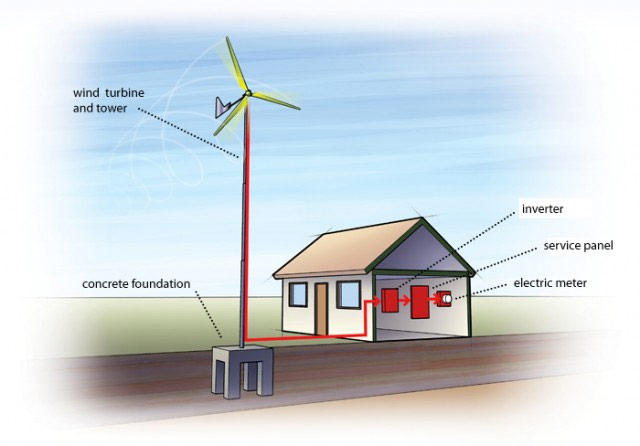
- Tower and Foundation: This is a significant cost. The tower needs to be tall enough to clear obstacles and robust enough to withstand high winds. Foundation work can involve substantial concrete. Costs vary greatly depending on tower height (e.g., 60-120 feet), type (guyed vs. freestanding), and soil conditions. Expect $10,000 – $40,000+.
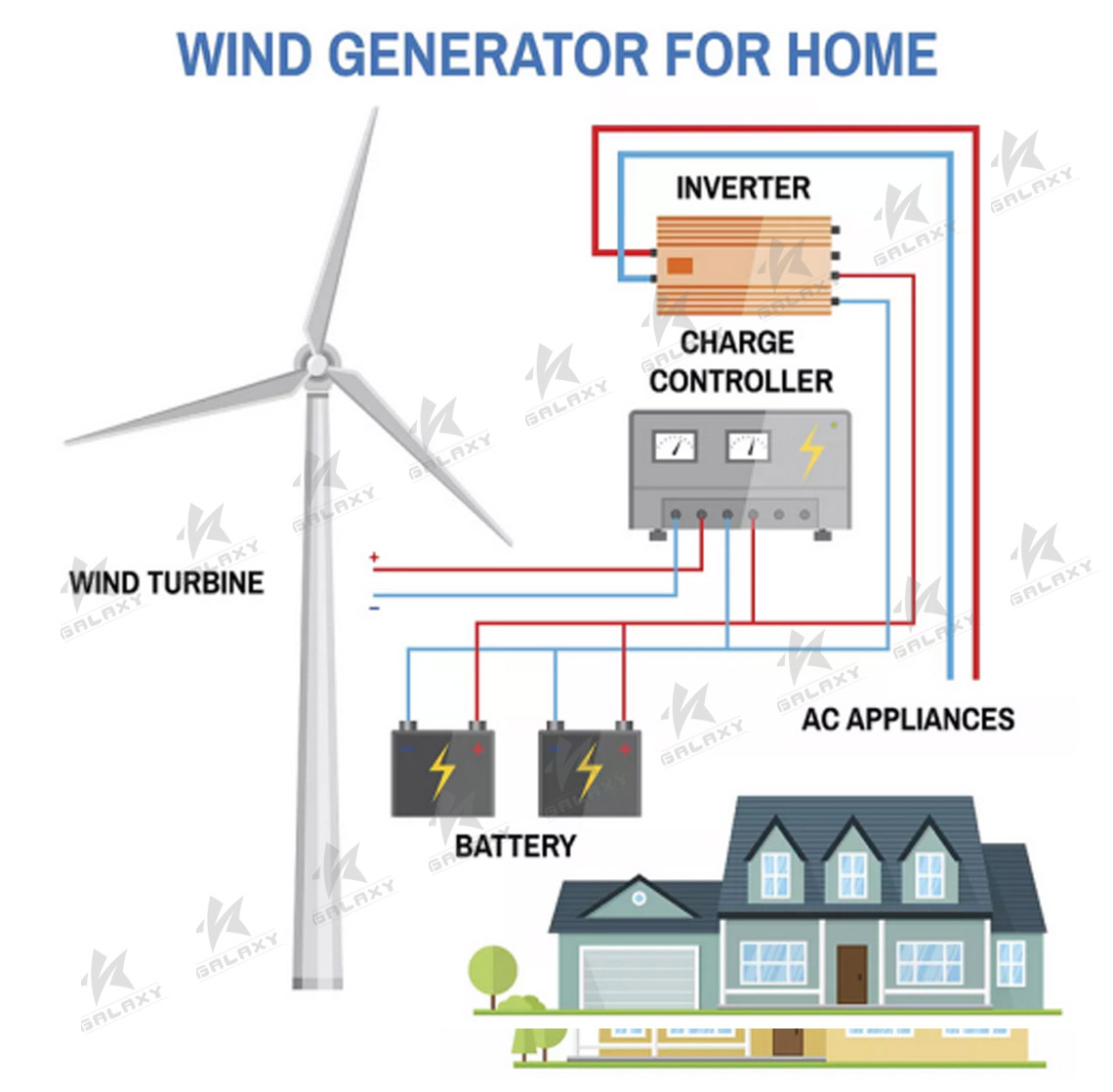
- Inverter and Electrical Components: Converts the turbine’s DC power to AC power usable by your home and the grid. Includes wiring, safety disconnects, and controllers. ~$3,000 – $10,000.
- Battery Storage (for off-grid or backup): If you want true energy independence or backup power during grid outages, a battery bank is essential. This can add another $10,000 – $30,000+ depending on capacity.
- Installation Labor: Highly specialized work, often requiring cranes and experienced technicians. Expect $10,000 – $30,000+.
- Permitting, Zoning, and Grid Interconnection Fees: These administrative costs can add thousands, depending on your local regulations and utility requirements. ~$1,000 – $5,000.
Estimating Total Investment: A Realistic Budget
Considering all components, here’s a rough estimate for a whole-house 5-10 kW residential wind system in the U.S.:
| Cost Item | Estimated Cost Range (USD) |
|---|---|
| Wind Turbine (5-10 kW) | $15,000 – $60,000 |
| Tower & Foundation | $10,000 – $40,000 |
| Inverter & Electrical Balance of System | $3,000 – $10,000 |
| Battery Storage (Optional but recommended) | $10,000 – $30,000+ |
| Installation Labor | $10,000 – $30,000 |
| Permits, Zoning, Interconnection Fees | $1,000 – $5,000 |
| TOTAL ESTIMATED COST (Before Incentives) | $49,000 – $175,000+ |
Incentives and Financial Aid: Making Wind Power More Affordable
The good news is that significant incentives can help offset these costs, making the investment more palatable and improving your return on investment (ROI).
- Federal Tax Credits (e.g., Residential Clean Energy Credit): Currently, the U.S. federal government offers a 30% tax credit for residential wind energy systems installed by a certain date. This is a dollar-for-dollar reduction in your income tax liability.
- State and Local Programs: Many states, counties, and even municipalities offer additional incentives, rebates, or property tax exemptions for renewable energy installations. Check the DSIRE database (Database of State Incentives for Renewables & Efficiency) for specifics in your area.
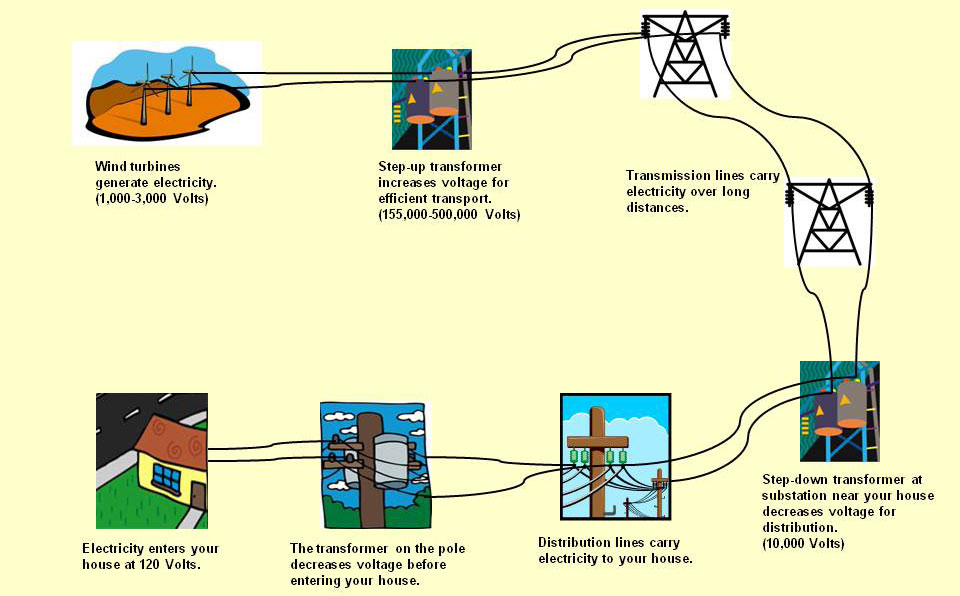
- Net Metering: If you’re connected to the grid, net metering allows you to send excess electricity generated by your turbine back to the utility grid for credits, effectively “spinning your meter backward.” This is crucial for maximizing the economic benefit of your system.
Installation Realities: What You Need to Know Before You Build
Installing a wind turbine is a major undertaking. It’s not a weekend DIY project. Understanding the practicalities upfront will save you headaches down the road.
Site Selection: More Than Just ‘Windy’
We’ve already touched on wind resource, but site selection involves more:
- Obstacles and Turbulence: Turbines need smooth, laminar wind flow. Any obstructions (trees, buildings, hills) create turbulence, which not only reduces efficiency but can also cause excessive wear and tear on the turbine. As a rule of thumb, the turbine’s rotor should be at least 30 feet (9 meters) higher than any obstruction within a 500-foot (150 meter) radius.
- Tower Height: The taller the tower, the less turbulence and generally higher wind speeds. This is why tower height is so critical and often drives up costs.
- Setback Requirements: Local zoning laws often mandate how far a turbine must be from property lines, roads, and dwellings for safety and noise considerations.
Permitting and Zoning: Navigating Local Regulations
This is often the most challenging aspect of residential wind installation. Unlike solar, which is increasingly streamlined, wind turbines face more scrutiny.
- Noise Ordinances: While modern turbines are much quieter than older models, they still produce some noise, especially larger ones. Local ordinances may have limits on decibel levels at property lines.
- Height Restrictions: Building codes and zoning laws often have strict limits on structure height, which can make installing a sufficiently tall turbine tower difficult or impossible in some areas.
- Aesthetics and HOA Rules: Your neighbors and Homeowners’ Associations (HOAs) may have strong opinions about the visual impact of a wind turbine. Be prepared for potential pushback and ensure you understand any community covenants.
Always start by contacting your local planning department to understand specific regulations, setback requirements, and permitting processes for small wind energy systems in your area. Early engagement is key.
Grid-Tied vs. Off-Grid Systems: Choosing Your Path
Your connection to the electrical grid dictates your system design:
- Grid-Tied Benefits: Most residential systems are grid-tied. This means your home remains connected to the utility grid.
- Net Metering: You can sell excess power back to the grid and draw power from it when your turbine isn’t producing enough. This eliminates the need for expensive battery banks (unless you want backup power).
- Reliability: You always have a power source, even if your turbine is down for maintenance or there’s no wind.
- Off-Grid Considerations: If you’re in a remote location or desire complete energy independence, an off-grid system is an option.
- Battery Bank: Essential for storing excess energy for use when the wind isn’t blowing. This is a significant additional cost and requires maintenance.
- Generator Backup: Many off-grid systems include a fossil-fuel generator as a backup for extended periods of low wind or high consumption.
- Higher Complexity and Cost: Generally more expensive and complex to design and maintain than grid-tied systems.
Finding a Qualified Installer: Vetting Your Pros
This is not a DIY job for a whole-house system. You need experienced professionals:
- Look for installers certified by the Small Wind Certification Council (SWCC) or the North American Board of Certified Energy Practitioners (NABCEP).
- Request references and check their portfolio of past wind installations.
- Ensure they are licensed and insured to perform work in your state and locality.
- A good installer will handle the wind resource assessment, system design, permitting, installation, and interconnection process.
The Pros and Cons of Residential Wind Energy: A Balanced View
Like any major investment, residential wind power comes with its own set of advantages and challenges.
Advantages: Why Go Wind?
- Renewable, Clean Energy: Wind is an inexhaustible resource that produces no greenhouse gas emissions or air pollutants once installed.
- Reduced Electricity Bills: Significantly lower or even eliminate your monthly electricity costs, offering long-term savings.
- Energy Independence: Less reliant on utility companies and susceptible to price hikes. Potentially provides power during grid outages (if equipped with battery storage).
- Consistent Power Output: Often complements solar by producing power at night and during winter months when solar output is lower.
- Property Value: Can increase your home’s value and appeal to environmentally conscious buyers.
Disadvantages: The Challenges
- Intermittency and Variability: Wind doesn’t blow constantly or consistently. You’ll need grid-tie, battery storage, or another backup to ensure continuous power.
- High Upfront Cost: As discussed, the initial investment is substantial, often higher than a comparable solar system.
- Noise and Visual Impact: Turbines can be noisy (though modern designs are quieter) and are visually prominent, which can lead to aesthetic concerns or neighbor disputes.
- Maintenance Requirements: Turbines require regular inspection and maintenance to ensure optimal performance and longevity, adding to ongoing costs.
- Site-Specific Constraints: Requires a highly suitable site with consistent, unobstructed wind. Many residential properties simply don’t qualify.
- Zoning and Permitting Hurdles: Local regulations can be complex, restrictive, and time-consuming to navigate.
Is a Wind Turbine for Your Whole House a Realistic Dream?
So, can a wind turbine power your entire house? Yes, under the right conditions, it’s not just possible, but potentially highly rewarding. However, it requires a significant initial investment, a suitable property with excellent wind resources, and a willingness to navigate complex permitting and installation processes.
For most homeowners, especially those in suburban or urban areas, a whole-house wind turbine may not be the most practical or cost-effective solution. Solar power often provides a more accessible entry point into renewable energy due to its broader applicability and more streamlined installation.
However, if you live in a rural area with consistently strong, unobstructed winds, have a large property, and are committed to energy independence, then a residential wind turbine could be an incredibly powerful and fulfilling investment. Start with a thorough energy audit, a professional wind resource assessment, and a deep dive into your local regulations. This will give you the clearest path forward to determining if your whole-house wind turbine dream can become a reality.
Frequently Asked Questions
Can a single residential wind turbine power my entire house?
Yes, a single residential wind turbine can power an entire house, but only under specific conditions. You need a property with consistently strong, unobstructed wind, and a turbine appropriately sized to match your home’s average electricity consumption (typically 5-20 kW for an average U.S. home). A detailed site assessment and energy audit are crucial to determine feasibility.
How much does a wind turbine system for a whole house cost?
The total cost for a whole-house wind turbine system (5-10 kW) can range from $49,000 to over $175,000 before incentives. This includes the turbine, tower, foundation, inverter, electrical components, installation labor, permitting, and potentially battery storage for off-grid or backup power. Costs vary significantly based on turbine size, tower height, and site complexity.
What size wind turbine do I need to power my house?
The size of the wind turbine you need depends on your home’s average monthly energy consumption and your site’s average wind speed. An average U.S. home uses around 900 kWh per month, which typically requires a 5-10 kW wind turbine in a location with good average wind speeds (12-14 mph). An energy audit to reduce consumption is recommended before sizing.
Are residential wind turbines noisy?
Modern residential wind turbines are significantly quieter than older models, but they do produce some noise. Horizontal axis turbines can create a ‘swooshing’ sound, while vertical axis turbines are generally quieter. Local zoning laws often have noise ordinances that must be met, and proper siting away from dwellings can mitigate concerns.
How do residential wind turbines compare to solar panels?
Wind turbines and solar panels are complementary. Wind often produces power at night, during winter, and on cloudy days when solar output is low, while solar excels during daylight hours. Wind turbines require specific site conditions (strong, unobstructed wind) and are typically more expensive to install than solar, but can offer more consistent power generation over 24 hours in suitable locations. Many homeowners consider a hybrid wind-solar system for optimal year-round energy production.
What are the biggest challenges of installing a home wind turbine?
The biggest challenges include finding a property with a strong, unobstructed wind resource, the high upfront cost, navigating complex local permitting and zoning regulations (especially regarding tower height and setbacks), and the visual and potential noise impacts on neighbors. Maintenance and system reliability also need to be considered.