Wind Turbines in the Ocean: Your Definitive Guide to Offshore Wind Power
Imagine harnessing the relentless power of the ocean, converting its ceaseless winds into clean electricity that powers our homes and industries. This isn’t science fiction; it’s the reality of wind turbines in the ocean, also known as offshore wind farms. As the quest for sustainable energy intensifies, offshore wind stands out as a colossal, untapped resource with the potential to transform our energy landscape. But how do these massive structures work? What are their benefits, and what challenges do they face?
Table of Contents
- Wind Turbines in the Ocean: Your Definitive Guide to Offshore Wind Power
- What Exactly Are Wind Turbines in the Ocean?
- Defining Offshore Wind Energy
- The Core Mechanics: How They Capture Ocean Winds
- Fixed vs. Floating: Two Ways to Harness Ocean Wind
- Fixed-Bottom Foundations
- Floating Foundations
- The Power Journey: From Ocean Breeze to Your Home
- Generating Electricity at Sea
- The Underwater Grid: Bringing Power Ashore
- Why Build Wind Turbines in the Ocean? The Advantages
- Unmatched Wind Resources
- Scale and Energy Output
- Reduced Visual Impact (Relative)
- Economic Growth and Job Creation
- Navigating the Waves: Challenges of Offshore Wind
- High Installation and Maintenance Costs
- Environmental Concerns: Impact on Marine Life
- Siting, Permitting, and Public Perception
- The Future is Floating: Innovations Driving Offshore Wind Forward
- Advancements in Turbine Technology
- Grid Integration and Energy Storage Solutions
- Collaborative Research and Mitigation Efforts
- Offshore Wind in the USA: Current Landscape and Outlook
- Key Projects and Development Areas
- Government Support and Policy
- Is Offshore Wind Worth It? A Balanced Perspective
- The Unseen Giants: Powering a Sustainable Future
If you’ve ever wondered about the towering giants silently spinning miles off our coasts, you’re in the right place. This guide will take you deep into the world of offshore wind power, explaining everything from their intricate mechanics to their environmental impact, and the groundbreaking innovations that are shaping their future.
What Exactly Are Wind Turbines in the Ocean?
Defining Offshore Wind Energy
At its core, offshore wind energy is the generation of electricity using wind farms located in bodies of water, primarily the ocean. While the basic principle is the same as onshore wind – wind turns blades, which spin a generator – the marine environment presents both unique advantages and significant engineering challenges. These turbines are designed to withstand harsh oceanic conditions, from powerful storms to corrosive saltwater, making them marvels of modern engineering.
The Core Mechanics: How They Capture Ocean Winds
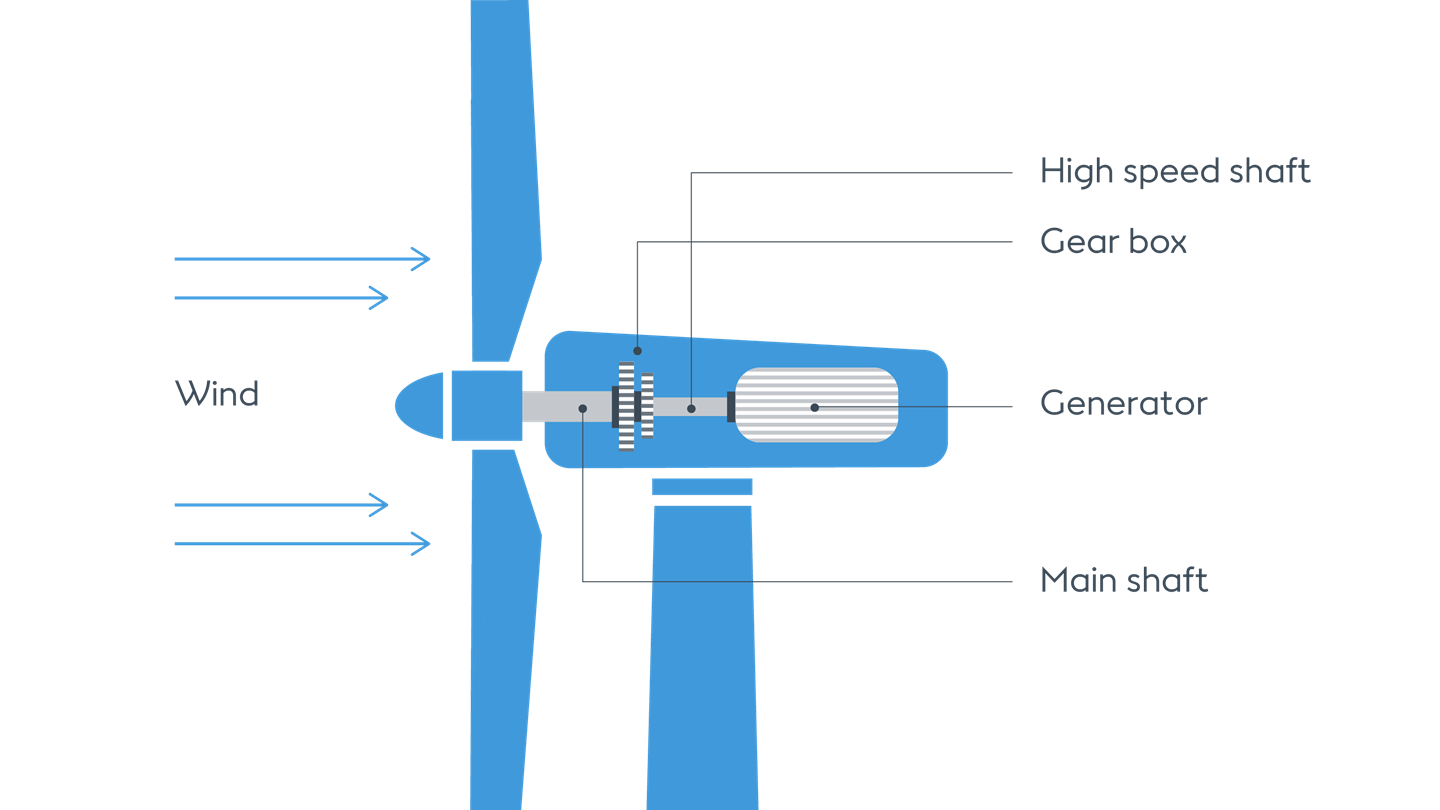
An offshore wind turbine is a sophisticated machine, much larger and more robust than its land-based counterparts. Here’s a breakdown of its main components and how they work together:
- Blades: These massive aerodynamic structures capture the wind’s kinetic energy. Modern offshore turbine blades can be over 100 meters long, designed to be highly efficient even in varying wind speeds. The longer the blade, the larger the swept area, and thus, the more energy captured.
- Nacelle: Perched atop the tower, the nacelle houses the critical generating components: the gearbox (though some modern turbines are direct-drive, eliminating the need for a gearbox), the generator, and the control systems. This is the ‘brain’ of the turbine, converting the rotational energy of the blades into electricity.
- Tower: A colossal steel structure, the tower lifts the nacelle and blades to heights where winds are stronger and more consistent, often exceeding 150 meters (nearly 500 feet) above sea level.
- Foundation: This is where offshore turbines truly differ. The foundation anchors the entire structure to the seabed, or in deeper waters, allows it to float. We’ll dive deeper into this crucial component next.
When the wind pushes the blades, they rotate, spinning a shaft inside the nacelle. This shaft is connected to a generator, which uses electromagnetic induction to convert mechanical energy into electrical energy. Simple in concept, but incredibly complex in execution when you’re dealing with oceanic forces.
Fixed vs. Floating: Two Ways to Harness Ocean Wind
The type of foundation used is arguably the most critical design decision for an offshore wind turbine, dictated primarily by water depth. This choice impacts everything from installation costs to environmental footprint and where these projects can be located.
Fixed-Bottom Foundations
These are the most common type for offshore wind farms today, suitable for shallower waters, typically up to 60 meters (about 200 feet) deep. They literally fix the turbine’s tower directly to the seabed.
- Monopiles: The simplest and most widely used, a large steel pile is driven directly into the seabed. Imagine a giant pole holding up the turbine.
- Jacket Foundations: Used in slightly deeper waters or where seabed conditions require more stability. These resemble lattice structures, like miniature oil rigs, with legs anchored to the seabed.
- Gravity-Based Foundations: Massive concrete or steel structures that sit on the seabed, held in place by their sheer weight. They are often filled with ballast material like sand or gravel.
Floating Foundations
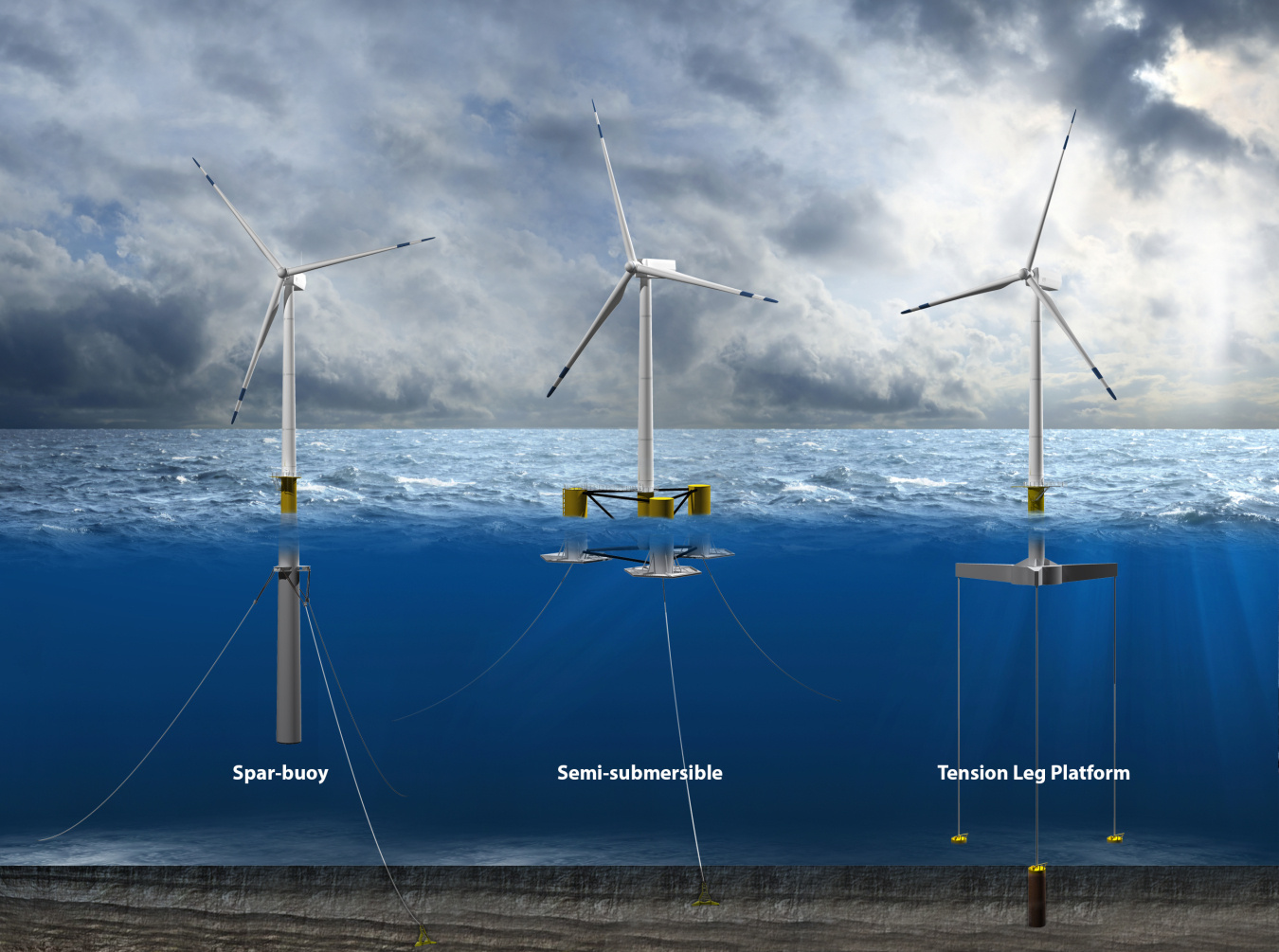
The game-changer for deeper waters, often exceeding 60 meters, where fixed-bottom solutions become economically unfeasible or technically impossible. Floating turbines open up vast new areas of the ocean for wind energy development, including much of the US West Coast and deep Atlantic waters.
- Semi-Submersible: A common design consisting of a buoyant platform partially submerged, anchored to the seabed with mooring lines. Think of a catamaran-like structure.
- Spar Buoy: A large, slender column weighted at the bottom, extending deep into the water, with a small waterline area. It achieves stability through ballast and mooring lines.
- Tension-Leg Platform (TLP): A floating platform held in place by taut mooring lines (tethers) secured to the seabed. These tethers eliminate vertical movement and reduce horizontal motion.
Here’s a quick comparison to clarify the differences:
| Foundation Type | Water Depth | Suitability | Key Advantages | Key Challenges |
|---|---|---|---|---|
| Fixed-Bottom (Monopile, Jacket) | Up to ~60m (200ft) | Shallower coastal areas | Proven technology, lower manufacturing cost (currently) | Limited to shallower waters, complex installation |
| Floating (Semi-Submersible, Spar, TLP) | Over ~60m (200ft), virtually unlimited | Deeper waters, further offshore | Accesses stronger, more consistent winds; less visual impact; easier decommissioning | Higher upfront costs, complex dynamics, less mature technology (though rapidly advancing) |
The Power Journey: From Ocean Breeze to Your Home
It’s one thing to generate electricity miles out at sea, but how does that power actually make it to your wall socket? This journey involves a sophisticated grid of cables and substations.

Generating Electricity at Sea
Each individual turbine produces electricity, usually at a medium voltage. This power then travels through internal array cables, laid on or buried beneath the seabed, connecting all the turbines within the wind farm. These cables lead to an offshore substation, a robust platform that collects the electricity from all the turbines. Here, transformers step up the voltage significantly, preparing the power for its long journey to shore.
The Underwater Grid: Bringing Power Ashore
From the offshore substation, high-voltage export cables carry the electricity across the seabed to an onshore substation. These cables are critical infrastructure, often requiring careful routing to avoid sensitive marine habitats and existing infrastructure. Once the power reaches the shore, the onshore substation converts it to the appropriate voltage for the national or regional electricity grid, where it can then be distributed to homes, businesses, and industries.
Why Build Wind Turbines in the Ocean? The Advantages
The push for offshore wind isn’t just about diversification; it’s driven by compelling benefits that address many of the limitations of other energy sources.
Unmatched Wind Resources
Simply put, winds over the ocean are generally stronger and more consistent than on land. Without obstacles like buildings, hills, or forests, wind flows freely, leading to higher capacity factors (the actual power produced divided by the maximum possible power) for offshore turbines. This means they generate electricity for more hours and at higher outputs compared to their onshore counterparts.
Scale and Energy Output
The open ocean allows for the deployment of truly massive turbines – far larger than what’s practical on land. These colossal machines, with their immense blades, can generate significantly more electricity per turbine. A single modern offshore wind turbine can power thousands of homes, and an entire farm can meet the energy needs of hundreds of thousands, or even millions, of households.
Reduced Visual Impact (Relative)
One common objection to onshore wind farms is visual pollution. By placing turbines miles offshore, their visual impact on coastal communities is significantly reduced, often rendering them mere specks on the horizon, if visible at all. This helps mitigate some public opposition, allowing for larger-scale projects.
Economic Growth and Job Creation
Developing offshore wind is a massive undertaking that fuels economic activity. It creates a robust supply chain, leading to thousands of jobs in manufacturing (turbines, cables, foundations), port infrastructure development, construction, installation, operation, and maintenance. These are often highly skilled, well-paying jobs, providing a significant boost to coastal economies and helping to transition workforces from fossil fuel industries to renewable energy sectors.
Navigating the Waves: Challenges of Offshore Wind
Despite its immense promise, offshore wind is not without its hurdles. These challenges require significant investment, careful planning, and innovative solutions.
High Installation and Maintenance Costs
Building an entire power plant in the middle of the ocean is incredibly complex and expensive. Specialized vessels are needed for transportation and installation of components weighing hundreds of tons. The harsh marine environment means higher costs for durable materials, corrosion protection, and more frequent, challenging maintenance. Operating costs are also elevated due to logistics and specialized personnel required to work offshore.
Environmental Concerns: Impact on Marine Life
This is a critical area of concern and active research. While offshore wind is a clean energy source, its development can have impacts on the delicate marine ecosystem:
- Noise During Construction: Pile driving for fixed-bottom foundations creates intense underwater noise that can affect marine mammals (whales, dolphins) that rely on sound for communication, navigation, and hunting.
- Habitat Disruption: Laying cables and installing foundations can disturb seabed habitats. However, once installed, the foundations themselves can act as artificial reefs, attracting marine life and creating new habitats, though this ‘reef effect’ has mixed ecological implications.
- Bird and Bat Collision Risks: Migratory birds and bats are a concern, particularly with larger turbines. Siting projects carefully, implementing mitigation strategies like deterrents, and even temporary shutdowns during peak migration periods are crucial.
- Impact on Fisheries and Vessel Traffic: Wind farms occupy vast areas, potentially displacing fishing grounds or altering traditional fishing patterns. Increased vessel traffic during construction and operation can also pose risks. Careful spatial planning and engagement with stakeholders are essential.
Organizations like NOAA Fisheries are actively researching these impacts to develop effective mitigation strategies and ensure responsible development.
Siting, Permitting, and Public Perception
Identifying suitable areas for offshore wind farms involves balancing numerous factors: wind resources, water depth, grid connection points, shipping lanes, fishing grounds, military zones, and environmental sensitivities. The permitting process is often lengthy and complex, requiring coordination across multiple federal and state agencies. Additionally, while far offshore projects have less visual impact, some coastal communities may still raise concerns about viewsheds, or the potential for local environmental impacts, leading to “Not In My Backyard” (NIMBY) sentiment.
The Future is Floating: Innovations Driving Offshore Wind Forward
The offshore wind industry is a hotbed of innovation, constantly pushing boundaries to address challenges and maximize potential.
Advancements in Turbine Technology
Turbines are getting bigger, smarter, and more efficient. We’re seeing:
- Larger Rotors and Higher Capacities: Turbines with capacities of 15-20 MW (and beyond) are in development, featuring blades that can span over 200 meters. These giants can capture even more energy from slower wind speeds, increasing overall output.
- Advanced Materials and Manufacturing: Lighter, stronger, and more durable materials for blades and components are reducing weight and extending lifespan, crucial for the harsh marine environment.
- Digitalization and AI: Smart sensors, AI-powered predictive maintenance, and digital twins are optimizing operations, detecting issues before they become critical, and improving overall efficiency and reliability.
Grid Integration and Energy Storage Solutions
As more intermittent renewable energy sources come online, integrating them into the grid and ensuring grid stability becomes paramount. Innovations include:
- Smart Grids: Technologies that allow for better management and balancing of electricity supply and demand.
- Energy Storage: Large-scale battery storage solutions, or even green hydrogen production directly at sea, could store excess offshore wind energy for use when the wind isn’t blowing, ensuring a consistent power supply.
- Meshed Grids: Instead of point-to-point connections, future offshore grids might be ‘meshed,’ interconnecting multiple wind farms and countries, increasing reliability and resilience.
Collaborative Research and Mitigation Efforts
Addressing environmental concerns is a top priority. Scientists, industry, and government agencies are collaborating on:
- Wildlife Monitoring: Advanced radar, acoustic sensors, and AI are being used to track bird and marine mammal movements, allowing for real-time mitigation measures.
- Noise Reduction Technologies: Innovations like bubble curtains (which create a barrier of air bubbles around pile-driving operations) are significantly reducing underwater noise during construction.
- Ecosystem Research: Long-term studies are assessing the true ecological impacts and benefits, helping to inform best practices and regulatory frameworks.
Offshore Wind in the USA: Current Landscape and Outlook
While Europe has led the way in offshore wind development, the United States is rapidly catching up, recognizing its vast potential.
Key Projects and Development Areas
The US East Coast, with its relatively shallow continental shelf, has been the initial focus. The first commercial offshore wind farm, the Block Island Wind Farm in Rhode Island, came online in 2016. More recently, projects like Vineyard Wind 1 off Massachusetts (the first utility-scale offshore wind farm in the US) are spearheading the industry’s growth. Future development is planned across designated Wind Energy Areas (WEAs) stretching from New England down to the Carolinas. The West Coast, with its deep waters, is poised for significant development of floating offshore wind in the coming decade.
Government Support and Policy
Both federal and state governments are strongly supporting offshore wind. The Biden administration has set ambitious goals, aiming for 30 gigawatts (GW) of offshore wind capacity by 2030, enough to power over 10 million homes. Policies include:
- Lease Sales: The Bureau of Ocean Energy Management (BOEM) conducts regular lease sales for offshore wind development areas.
- Tax Incentives: Federal tax credits and grants incentivize investment in offshore wind projects.
- State-Level Mandates: Many coastal states have set their own procurement targets for offshore wind, creating demand and driving development.
Here’s a glimpse at some notable US offshore wind projects:
| Project Name | Location | Capacity (MW) | Status | Foundation Type |
|---|---|---|---|---|
| Block Island Wind Farm | Rhode Island | 30 | Operational (2016) | Jacket |
| Vineyard Wind 1 | Massachusetts | 800 | Partial Operation (2024), fully operational soon | Monopile |
| South Fork Wind Farm | New York | 132 | Operational (2024) | Monopile |
| Empire Wind 1 & 2 | New York | 810 (EW1), 1224 (EW2) | Under Development | Monopile (planned) |
Is Offshore Wind Worth It? A Balanced Perspective
Considering the pros and cons, the question remains: is offshore wind truly a viable and beneficial path forward for our energy needs? Here’s a concise summary:
| Category | Advantages | Disadvantages |
|---|---|---|
| Energy Production | Stronger, more consistent winds; high capacity factors; massive scale potential; reduced CO2 emissions | Intermittent power generation (wind doesn’t always blow); grid integration challenges |
| Economics | Job creation; energy independence; long-term stable energy prices; declining LCOE (Levelized Cost of Energy) | Very high upfront capital costs; complex O&M; supply chain bottlenecks; higher cost than onshore (though narrowing) |
| Environment | No air pollution; reduced greenhouse gas emissions; potential for artificial reef effect | Underwater noise during construction; habitat disruption; bird/bat collision risk; impact on fisheries; potential for vessel traffic increase |
| Societal | Reduced visual impact compared to onshore; boosts coastal economies | Siting and permitting complexities; potential public opposition; limited access to certain marine areas |
When weighing these factors, the general consensus among energy experts is that offshore wind is not just a viable, but a necessary component of a diversified, clean energy portfolio. The advantages in terms of massive, consistent renewable energy generation and economic benefits often outweigh the challenges, especially as technology improves and costs decrease. Crucially, the environmental impacts are being rigorously studied and mitigated through ongoing research and best practices.
The commitment to innovation and responsible development is key to unlocking offshore wind’s full potential.
The Unseen Giants: Powering a Sustainable Future
Wind turbines in the ocean are more than just steel and blades; they represent a bold step towards a sustainable future. They embody humanity’s ingenuity in harnessing nature’s raw power to meet our ever-growing energy demands without relying on fossil fuels.
From the foundational engineering that allows them to stand firm (or float gracefully) against the ocean’s might, to the intricate network that brings their clean power to your home, offshore wind is a testament to what’s possible when we commit to innovation. While challenges remain – and they are significant – the rapid advancements in technology, coupled with a global push for decarbonization, mean that these unseen giants will play an increasingly vital role in powering a greener, more resilient world. As research continues and more projects come online, we’re learning how to build and operate these farms in harmony with the marine environment, paving the way for a truly sustainable energy revolution.
Frequently Asked Questions
How deep can offshore wind turbines be installed?
Fixed-bottom offshore wind turbines, using monopiles or jacket foundations, are typically installed in water depths up to 60 meters (about 200 feet). Floating offshore wind turbines, however, can be deployed in much deeper waters, essentially limited only by the anchoring technology, opening up vast new ocean areas for development.
Do offshore wind turbines harm marine life?
While offshore wind farms are a clean energy source, their construction and operation can have impacts. Concerns include underwater noise during pile driving (affecting marine mammals), habitat disruption on the seabed, and potential collision risks for birds and bats. However, extensive research and mitigation strategies (like bubble curtains and careful siting) are being developed and implemented to minimize these impacts. Turbines can also create artificial reefs, though the ecological implications of this are still being studied.
How much electricity can an offshore wind turbine generate?
A single modern offshore wind turbine is significantly larger and more powerful than its onshore counterpart. Turbines with capacities of 10-15 megawatts (MW) are common, and units of 20 MW or more are in development. A single 15 MW turbine can potentially power over 15,000 homes annually, depending on average wind speeds and local energy consumption.
What is the lifespan of an offshore wind farm?
Offshore wind farms are designed for a long operational life, typically 25 to 30 years. Regular maintenance, advanced monitoring, and robust engineering are crucial to withstand the harsh marine environment throughout this period. After their operational life, wind farms can either be decommissioned and removed, or repowered with newer, more efficient turbines.
Is offshore wind more expensive than onshore wind?
Historically, offshore wind has been significantly more expensive than onshore wind due to the complexities of construction, installation, and maintenance in a marine environment. However, costs are rapidly decreasing as technology matures, supply chains develop, and project scales increase. While still generally higher than onshore, the gap is narrowing, and the benefits of stronger, more consistent winds and larger energy output often justify the investment.
What are the main advantages of offshore wind compared to onshore?
The primary advantages of offshore wind include access to stronger and more consistent winds, leading to higher energy output and capacity factors. Offshore locations also allow for the deployment of much larger turbines and farms, scaling up energy production. Additionally, they have a reduced visual impact on populated areas compared to onshore farms.
What happens to old offshore wind farms?
At the end of their operational life, offshore wind farms undergo a decommissioning process. This typically involves removing the turbines, foundations, and cables, and restoring the seabed to its original state where feasible. Alternatively, some sites may be ‘repowered,’ meaning the old turbines are replaced with newer, more efficient models to extend the life and increase the capacity of the wind farm.