Windmills for Home Energy: The Definitive Guide to Residential Wind Power
Dreaming of a future where your home runs on the clean, free energy of the wind? The image of a sleek wind turbine gracefully turning in your backyard is certainly appealing. But is powering your home with a personal windmill a realistic goal, or a pipe dream? Let’s cut through the hype and get to the truth.
Table of Contents
- Windmills for Home Energy: The Definitive Guide to Residential Wind Power
- Understanding Home Wind Power: Is it Right for You?
- The Allure vs. The Reality: Separating Fact from Fiction
- Key Factors for Success: Wind Resource, Space, and Regulations
- How Do Home Wind Turbines Work? The Basics
- Components of a Small Wind Energy System
- Grid-Tied vs. Off-Grid Systems: What’s the Difference?
- Types of Home Wind Turbines: HAWT vs. VAWT
- Sizing Your Home Wind Turbine: How Much Power Do You Really Need?
- Calculating Your Energy Needs (kWh)
- Estimating Wind Turbine Output
- Example Sizing Scenarios
- The Cost of Residential Wind Power: Beyond the Turbine Price Tag
- Upfront Costs: Equipment, Installation, and Permitting
- Ongoing Costs: Maintenance and Insurance
- Incentives and Rebates: Lowering Your Investment
- Wind vs. Solar: Which Renewable Energy is Best for Your Home?
- Installation & Permitting: What You Need to Know
- Site Assessment: Finding the Optimal Location
- Zoning Laws and Building Codes
- Working with Certified Installers
- Advantages and Disadvantages of Home Wind Turbines
- The Upsides: Clean Energy, Energy Independence
- The Downsides: Noise, Aesthetics, Intermittency, Wildlife
- Making the Decision: Is a Home Windmill Worth It for You?
- Scenarios Where Home Wind Makes Sense
- When to Consider Alternatives (or Hybrid Systems)
I get it. The allure of energy independence, lower utility bills, and a smaller carbon footprint is powerful. However, unlike solar panels which have become a common sight on rooftops, home wind turbines come with a unique set of considerations. This guide will help you understand the practical realities, costs, benefits, and challenges of residential wind power, so you can make an informed decision about whether it’s right for your home.
Understanding Home Wind Power: Is it Right for You?
The Allure vs. The Reality: Separating Fact from Fiction
The concept of harnessing wind power at home sparks a lot of interest, and rightly so. Wind is a powerful, renewable resource. But for residential applications, it’s often misunderstood. Many envision a small, quiet turbine that can effortlessly power an entire household. The reality, however, is more nuanced.
Home wind turbines, often referred to as small wind energy systems, are designed to supplement your existing power supply or, in specific off-grid scenarios, provide primary power. They are not a one-size-fits-all solution, and their effectiveness hinges on several critical factors. Before you even start looking at models, you need to assess if your property meets the fundamental requirements for successful wind energy generation.
Key Factors for Success: Wind Resource, Space, and Regulations
Three main pillars determine the viability of a home wind system:
- Wind Resource: This is non-negotiable. If you don’t have consistent, strong wind, a turbine simply won’t generate enough electricity to justify the investment. An annual average wind speed of at least 10-12 mph (4.5-5.5 m/s) is generally considered the minimum for practical residential systems.
- Available Space: Wind turbines need space, and lots of it. This isn’t just for the turbine itself, but for its tower and a clear buffer zone away from obstacles like trees, buildings, and property lines. You’ll need enough land to install a tall tower (often 80-120 feet or more) without encroaching on neighbors or disrupting views.
- Local Regulations: Zoning laws, building codes, and homeowners’ association (HOA) rules can be significant hurdles. Permitting for a tall structure like a wind turbine often involves lengthy processes, noise restrictions, setback requirements, and aesthetic considerations.
How Do Home Wind Turbines Work? The Basics
At its core, a wind turbine converts the kinetic energy of wind into electrical energy. Here’s a simplified breakdown:
- Wind turns the blades: The wind pushes against the turbine blades, causing them to rotate.
- Rotor spins a shaft: The rotating blades are connected to a central shaft (the rotor).
- Shaft drives a generator: The spinning shaft turns a generator, which produces electricity.
- Electricity is managed: The electricity generated is then sent through various components to power your home, charge batteries, or feed back into the grid.
Components of a Small Wind Energy System
A complete residential wind system typically includes:
- Turbine (Rotor & Nacelle): The blades and the housing that contains the gearbox, generator, and other electrical components.
- Tower: Supports the turbine and elevates it high enough to capture cleaner, less turbulent wind. Tower height is critical for efficiency.
- Charge Controller: Regulates the voltage and current from the turbine, preventing overcharging if batteries are used.
- Inverter: Converts the direct current (DC) electricity produced by the turbine into alternating current (AC) that your home appliances use and that the utility grid accepts.
- Batteries (Optional): For off-grid systems or grid-tied systems with battery backup, these store excess energy for use when the wind isn’t blowing.
- Grid Interconnection Equipment: For grid-tied systems, this includes meters, disconnects, and safety mechanisms to connect to the utility grid.
Grid-Tied vs. Off-Grid Systems: What’s the Difference?
Understanding these two configurations is crucial for planning your home wind system:
- Grid-Tied (or Grid-Connected): Most common for residential use. Your wind turbine is connected to the utility grid. When your turbine produces more electricity than your home consumes, the excess is fed back into the grid, often earning you credits (net metering). When the wind isn’t blowing, you draw power from the grid. This eliminates the need for expensive batteries for daily use but means you’ll lose power during a grid outage unless you have a battery backup system specifically designed for that purpose.
- Off-Grid (or Stand-Alone): Your home is completely independent of the utility grid. These systems always require batteries to store power for periods when the wind isn’t available. They are more complex and expensive due to the battery bank and often require a larger, more robust system to handle all your energy needs. Ideal for remote cabins or locations where grid extension is prohibitively expensive.
Types of Home Wind Turbines: HAWT vs. VAWT
When you look at small wind turbines, you’ll primarily encounter two types:
)
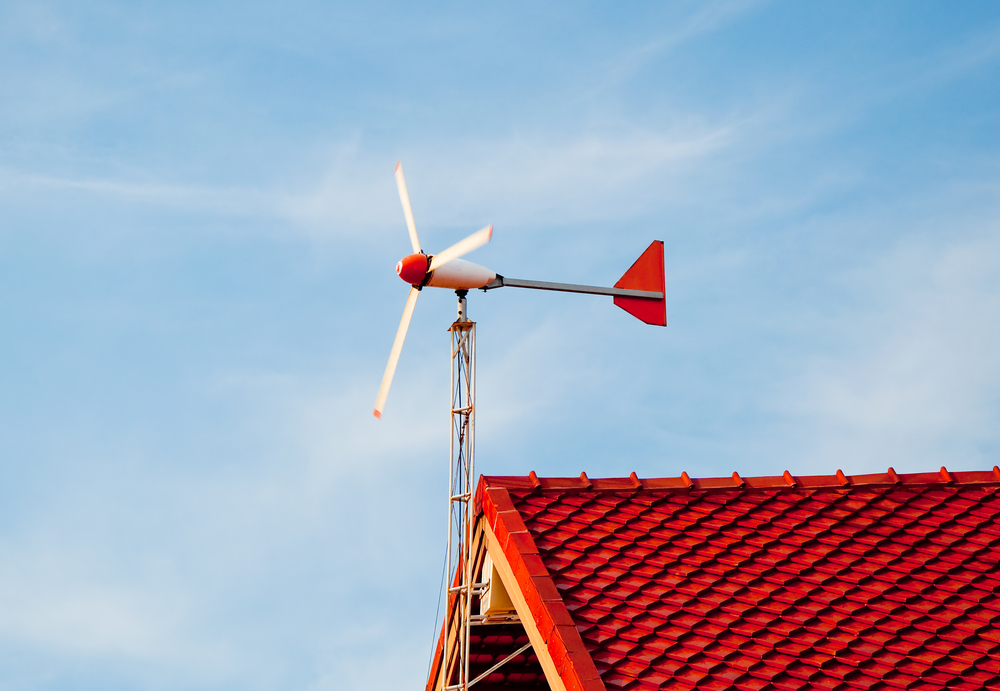
- Horizontal Axis Wind Turbines (HAWTs): These are what most people visualize when they think of a wind turbine – propeller-like blades rotating around a horizontal axis. They are highly efficient and capture the most energy from the wind.
- Vertical Axis Wind Turbines (VAWTs): These turbines have blades that rotate around a vertical axis. They often have a more compact, cylindrical appearance and can be more visually discreet.
Here’s a direct comparison:
| Feature | Horizontal Axis Wind Turbines (HAWT) | Vertical Axis Wind Turbines (VAWT) |
|---|---|---|
| Efficiency | Generally higher, more energy capture for a given wind speed. | Lower efficiency, but perform better in turbulent or gusty wind conditions. |
| Wind Direction | Needs to yaw (turn) into the wind, often with a tail fin or active control. | Omnidirectional; captures wind from any direction without needing to yaw. |
| Noise | Can produce noticeable noise, especially larger models, from blade rotation and mechanical components. | Generally quieter due to lower tip speeds and different aerodynamic profiles. |
| Mounting | Requires tall, sturdy towers for optimal performance, away from ground turbulence. | Can potentially be mounted on shorter towers, rooftops (with careful structural assessment), or even ground level, but still benefits from height. |
| Aesthetics | The classic ‘windmill’ look, can be a visual concern for some communities. | Often perceived as more modern, compact, and less intrusive. |
| Maintenance | Generator and gearbox are at the top of the tower, requiring specialized equipment for servicing. | Many mechanical components are at the base of the tower, simplifying maintenance. |
Sizing Your Home Wind Turbine: How Much Power Do You Really Need?
This is where the rubber meets the road. A common mistake is to buy a turbine that’s either too small to make a difference or too large and expensive for your actual needs. Sizing correctly requires understanding your energy consumption and your local wind resource.
Calculating Your Energy Needs (kWh)
Start by looking at your utility bills. Most bills show your monthly electricity consumption in kilowatt-hours (kWh). An average U.S. home uses around 893 kWh per month, but this varies wildly by region, home size, and lifestyle. Multiply your monthly average by 12 to get your annual kWh usage. For example, if you use 1,000 kWh/month, you need 12,000 kWh/year.
You can also perform an energy audit by listing all your appliances, their wattage, and how many hours per day they run to get a more precise figure.
Estimating Wind Turbine Output
The energy output of a wind turbine is highly dependent on two main factors: its rated power (kW) and the average wind speed at your specific location. A 1.5 kW turbine, for example, will produce vastly different amounts of energy in a location with 10 mph average wind versus 15 mph average wind.
Manufacturers provide power curves that show how much energy a turbine will generate at different wind speeds. A certified installer or a wind resource assessment tool can help you estimate the potential annual energy production (AEP) for your site.
Example Sizing Scenarios
- Supplemental Power (e.g., offsetting 25-50% of usage): For an average home aiming to reduce bills, a 1-5 kW turbine might be appropriate in a good wind resource. This could generate 1,500-7,500 kWh annually.
- Primary Power for Small Home/Cabin (Off-Grid): A 5-10 kW turbine, combined with a robust battery bank, might be needed to cover all loads in a highly windy location. This could generate 7,500-15,000 kWh annually.
- Full Power for Large Home (Off-Grid): This is very ambitious and expensive. You might be looking at 10-20 kW or even multiple turbines, generating 15,000-30,000 kWh+ annually, alongside significant battery storage and possibly solar for a hybrid system.
Important: Always aim to make your home as energy-efficient as possible *before* sizing a renewable energy system. The less energy you need, the smaller and more affordable your system can be.
The Cost of Residential Wind Power: Beyond the Turbine Price Tag
This is often the biggest hurdle for homeowners. The initial investment in a small wind system is substantial, and it’s not just the turbine itself.
Upfront Costs: Equipment, Installation, and Permitting
Here’s a breakdown of what contributes to the total cost:
- Turbine: A small 1-10 kW turbine can range from $3,000 to $30,000+. Factors include brand, quality, type (HAWT/VAWT), and rated power.
- Tower: The tower can be as expensive as the turbine itself. A good quality, tall tower (80-120 ft) can cost $5,000 – $15,000+, depending on height, construction (guyed vs. freestanding), and foundation work.
- Balance of System (BOS) Components: Inverter, charge controller, wiring, disconnects, grounding equipment – these can add $2,000 – $10,000+.
- Batteries (for off-grid or backup): A significant expense. A decent residential battery bank can range from $10,000 to $30,000+, depending on capacity and chemistry (e.g., lead-acid vs. lithium-ion).
- Installation Labor: Professional installation is crucial for safety and efficiency. This can range from $5,000 to $15,000+, depending on system size, site complexity, and local labor rates.
- Site Assessment & Permitting: Wind resource assessment, engineering studies, zoning applications, and building permits can cost $1,000 – $5,000+.
Total Installed Cost: For a grid-tied 5 kW residential wind system, you’re realistically looking at an all-in cost of $30,000 – $80,000 before incentives. Off-grid systems with batteries will be on the higher end, often exceeding $100,000.
:max_bytes(150000):strip_icc()/wind-turbine-generator-on-house-roof-90967703-b9619befbf954726ae92dfb6154711f2.jpg "Is a Home Wind Turbine Right for You?")
Ongoing Costs: Maintenance and Insurance
- Maintenance: Turbines require regular inspection (annually) and maintenance (every 3-5 years) for things like lubrication, bolt tightening, and blade checks. This can cost a few hundred dollars to over a thousand annually, depending on what’s needed.
- Insurance: Your homeowner’s insurance policy will likely need to be updated to cover the turbine.
- Repair/Replacement: Like any mechanical system, components will eventually wear out.
Incentives and Rebates: Lowering Your Investment
The good news is that various incentives can help offset these costs:
- Federal Tax Credit: The Residential Clean Energy Credit (formerly the Investment Tax Credit) offers a 30% tax credit for qualifying renewable energy systems, including small wind turbines, through 2032.
- State and Local Incentives: Many states, municipalities, and utilities offer additional rebates, grants, or property tax exemptions for renewable energy installations. Check DSIRE (Database of State Incentives for Renewables & Efficiency) for what’s available in your area.
- Net Metering: While not a direct rebate, net metering policies allow you to receive credit for excess electricity you feed back to the grid, effectively reducing your utility bills.
Even with incentives, the payback period for a residential wind turbine can be 10-20 years or more, depending on your energy usage, electricity rates, and local wind resource. For some, the environmental benefits and energy independence are worth the longer payback.
| Component | Estimated Cost Range (USD) | Notes |
|---|---|---|
| 1-5 kW Turbine | $3,000 – $15,000 | Varies by brand, quality, and rated output. |
| 5-10 kW Turbine | $10,000 – $30,000 | Larger capacity, higher price. |
| Tower (80-120 ft) | $5,000 – $15,000 | Includes foundation, height, and type (guyed/freestanding). |
| Inverter & Charge Controller | $2,000 – $7,000 | Essential electrical components. |
| Battery Bank (Off-Grid/Backup) | $10,000 – $30,000+ | Capacity, chemistry (lead-acid vs. lithium-ion). |
| Installation Labor | $5,000 – $15,000 | Site complexity, system size. |
| Permits & Site Assessment | $1,000 – $5,000 | Zoning, engineering, wind study. |
| TOTAL GRID-TIED SYSTEM (5kW example) | $30,000 – $80,000 | Before incentives. |
Wind vs. Solar: Which Renewable Energy is Best for Your Home?
Often, homeowners considering wind also look at solar. Both have their merits, and sometimes a hybrid system is the optimal solution. Here’s a quick comparison:
| Feature | Wind Power | Solar Power |
|---|---|---|
| Resource Need | Consistent, strong average wind speed. | Good sun exposure (minimal shading). |
| Space Requirement | Large property for tall tower and setback. | Suitable roof space or ground area. |
| Visibility/Aesthetics | Tall, prominent structure; can be a visual concern. | Generally less intrusive, flush-mounted on rooftops. |
| Intermittency | Generates power when wind blows (often stronger at night, winter). | Generates power when sun shines (strongest midday, summer). |
| Noise | Can generate mechanical and aerodynamic noise. | Virtually silent operation. |
| Installation Complexity | High; heavy machinery for tower, extensive permitting. | Moderate; roof work, electrical connections. |
| Cost (per kW installed) | Generally higher for residential scale. | Generally lower and more predictable. |
| Maintenance | Requires periodic mechanical checks. | Minimal, occasional cleaning. |
In many residential settings, solar power is often the more straightforward and cost-effective option due to its wider applicability, lower visual impact, and simpler installation process. However, for homes in truly windy, open locations, wind can be a powerful complement or even primary source.
Installation & Permitting: What You Need to Know
Installing a home wind turbine is a significant construction project, not a DIY weekend task. Professional expertise is essential.
Site Assessment: Finding the Optimal Location
Before any digging begins, a thorough site assessment is crucial. This typically involves:
- Wind Resource Assessment: Measuring actual wind speeds and directions at your property over time (ideally a year) using an anemometer, or relying on nearby weather station data and wind maps.
- Turbulence Analysis: Identifying obstacles (trees, buildings, hills) that create turbulent, less productive wind. Turbines need to be installed significantly higher than these obstructions (at least 20-30 feet above the tallest one within 300-500 feet).
- Structural Feasibility: Assessing the ground for tower foundation, and proximity to your home for electrical connections.
Zoning Laws and Building Codes
This is frequently the biggest hurdle. Most municipalities have strict rules regarding tall structures. You’ll likely need to navigate:
- Zoning Ordinances: These dictate where structures can be built, their height, and setbacks from property lines. Some zones may prohibit wind turbines entirely.
- Building Permits: Requiring detailed engineering plans for the tower and foundation to ensure structural integrity and safety.
- Noise Regulations: Turbines, especially older or cheaper models, can generate noise. Local ordinances may have limits.
- Aesthetic Controls: Some communities or HOAs have strict rules about visual impact, which can be challenging for a tall turbine.
Start these inquiries early. Contact your local planning department and HOA (if applicable) long before you commit to any purchases.
Working with Certified Installers
Choose an installer with experience in small wind energy systems. Look for certifications like those from the North American Board of Certified Energy Practitioners (NABCEP). A good installer will:
- Help with the site assessment and sizing.
- Guide you through the permitting process.
- Handle all electrical and structural work safely and to code.
- Provide warranties and maintenance information.
Advantages and Disadvantages of Home Wind Turbines
Let’s weigh the pros and cons honestly.
The Upsides: Clean Energy, Energy Independence
- Renewable and Clean: Wind is a limitless resource that produces electricity without greenhouse gas emissions once installed.
- Reduced Electricity Bills: Significantly lowers or even eliminates your reliance on grid power, protecting you from future energy price increases.
- Energy Independence: Offers a greater sense of self-sufficiency, particularly valuable in remote or off-grid locations.
- Potential for Net Metering Credits: If grid-tied, you can get paid for excess electricity fed back to the grid.
- Can Complement Solar: Wind often blows strongest when the sun isn’t shining (e.g., at night, during winter months), making it a great complement to solar in a hybrid system.
The Downsides: Noise, Aesthetics, Intermittency, Wildlife
- High Upfront Cost: As discussed, the initial investment is substantial.
- Site-Specific Requirements: Only viable for homes with excellent wind resources and ample land. Not suitable for most suburban or urban areas.
- Intermittent Power: Wind doesn’t blow constantly. You’ll still need the grid or significant battery storage for consistent power.
- Noise: While modern turbines are quieter than older models, they can still produce a ‘whooshing’ sound or mechanical hum that some find disruptive, especially at lower heights or closer proximity.
- Visual Impact: A tall tower and rotating blades can be considered an eyesore by some, leading to neighborhood disputes or permitting rejections.
- Wildlife Impact: While less significant for small residential turbines than large wind farms, there is a risk of bird and bat collisions.
- Maintenance: Requires periodic professional servicing, which adds to ongoing costs.
- Permitting Challenges: Navigating local regulations can be time-consuming and frustrating.
Making the Decision: Is a Home Windmill Worth It for You?
After considering all the factors, the decision boils down to your specific circumstances and priorities. Residential wind power is not for everyone, but for the right homeowner, it can be an excellent investment in sustainable living.
Scenarios Where Home Wind Makes Sense
- Rural Properties with Abundant Wind: If you live in an open, rural area with an annual average wind speed of 12+ mph, away from obstacles, your site is a strong candidate.
- High Electricity Rates: In areas with expensive grid electricity, the financial payback period for a wind turbine can be more attractive.
- Off-Grid Living: For those seeking complete energy independence in remote locations, a wind turbine (often paired with solar) is a vital component of a self-sufficient power system.
- Environmental Commitment: For homeowners whose primary motivation is reducing their carbon footprint and embracing renewable energy, even a longer financial payback might be acceptable.
- Complementary to Solar: In hybrid systems, wind can generate power during times when solar is less effective (night, cloudy days, winter), creating a more consistent energy supply.
When to Consider Alternatives (or Hybrid Systems)
- Suburban/Urban Homes: Lack of space, insufficient wind resource, and stringent zoning laws make wind turbines impractical for most city or suburban dwellers.
- Limited Budget: If your budget is constrained, solar panels generally offer a lower entry cost and quicker payback for grid-tied systems.
- Low Wind Speeds: If your site analysis reveals average wind speeds below 10-12 mph, your turbine will likely be an expensive lawn ornament.
- Aesthetic Concerns: If visual impact or potential noise are major concerns for you or your neighbors, a turbine might not be worth the potential conflict.
Ultimately, a home wind turbine is a powerful tool for energy generation, but it requires careful consideration, a suitable location, and a significant investment. It’s a journey best undertaken with thorough research, professional guidance, and realistic expectations.
Frequently Asked Questions
How much does a home wind turbine typically cost?
The total installed cost for a grid-tied 5 kW residential wind system in the USA can range from $30,000 to $80,000 before incentives. This includes the turbine, tower, balance of system components, installation labor, and permitting. Off-grid systems with batteries will be significantly more expensive.
Is my home suitable for a wind turbine?
Home suitability primarily depends on consistent, strong wind (ideally 12+ mph average annually), sufficient clear land for a tall tower (80-120+ feet) away from obstacles, and local zoning/permitting regulations that allow such structures. Most suburban or urban homes are not suitable.
How much power can a residential wind turbine generate?
The power generated varies greatly by turbine size and wind speed. A 1-5 kW turbine in a good wind location might produce 1,500-7,500 kWh annually, which can supplement a significant portion of an average home’s energy needs. Larger 5-10 kW systems could generate 7,500-15,000 kWh annually.
Are home wind turbines noisy?
Modern small wind turbines are quieter than older models, but they can still produce a ‘whooshing’ sound from the blades and a mechanical hum. Noise levels are a common concern and can be a factor in permitting, especially in residential areas. Proper placement and choosing a high-quality, certified turbine can mitigate noise.
Can I go completely off-grid with a home wind turbine?
Yes, but it’s complex and expensive. Going completely off-grid with wind power requires a large, robust wind system, a substantial battery bank for energy storage, and often a backup generator or a hybrid system with solar panels to ensure consistent power supply, as wind is intermittent.
What’s the difference between HAWT and VAWT for home use?
Horizontal Axis Wind Turbines (HAWTs) are the classic propeller-style, generally more efficient, but require taller towers and need to yaw into the wind. Vertical Axis Wind Turbines (VAWTs) are often quieter, omnidirectional (no yawing needed), and can be more compact, but are typically less efficient for the same rated power.
Are there incentives for installing home wind turbines?
Yes, the federal Residential Clean Energy Credit offers a 30% tax credit through 2032 for qualifying small wind systems. Many states, local governments, and utilities also offer additional rebates, grants, or net metering programs. It’s crucial to research incentives available in your specific area.